A backyard-keeper’s comparison of bantam and standard chickens, including coop space, feed cost, egg production, personality, and best fits for small yards.
The Cluck Loom
Chicken Coop Size Calculator
Use this chicken coop size calculator to estimate coop space, run area, roost length, and nesting boxes for your flock, with simple formulas, examples, and real-world sizing tips.

Maggie Harper
Maggie Harper is a passionate backyard chicken keeper with over a decade of hands-on experience raising mixed flocks. Through CluckLoom, she shares practical advice on coop building, flock health, and egg production to help beginners and seasoned enthusiasts alike raise happy, healthy chickens.
Published
October 22, 2026
Last updated
October 22, 2026
If you have ever stood in the backyard with a tape measure thinking, “Surely this is enough room for six chickens,” you are in excellent company. I started with three Rhode Island Reds in a coop that was basically a glorified garden shed. It worked… until winter hit, everyone was stuck inside more, and the pecking order turned into a full-time sport.
The good news: you do not need fancy math or a perfect blueprint to get coop sizing right. You just need a few solid rules of thumb, and a willingness to size up when your gut says, “We might add two more later.” Because you will.
The quick calculator
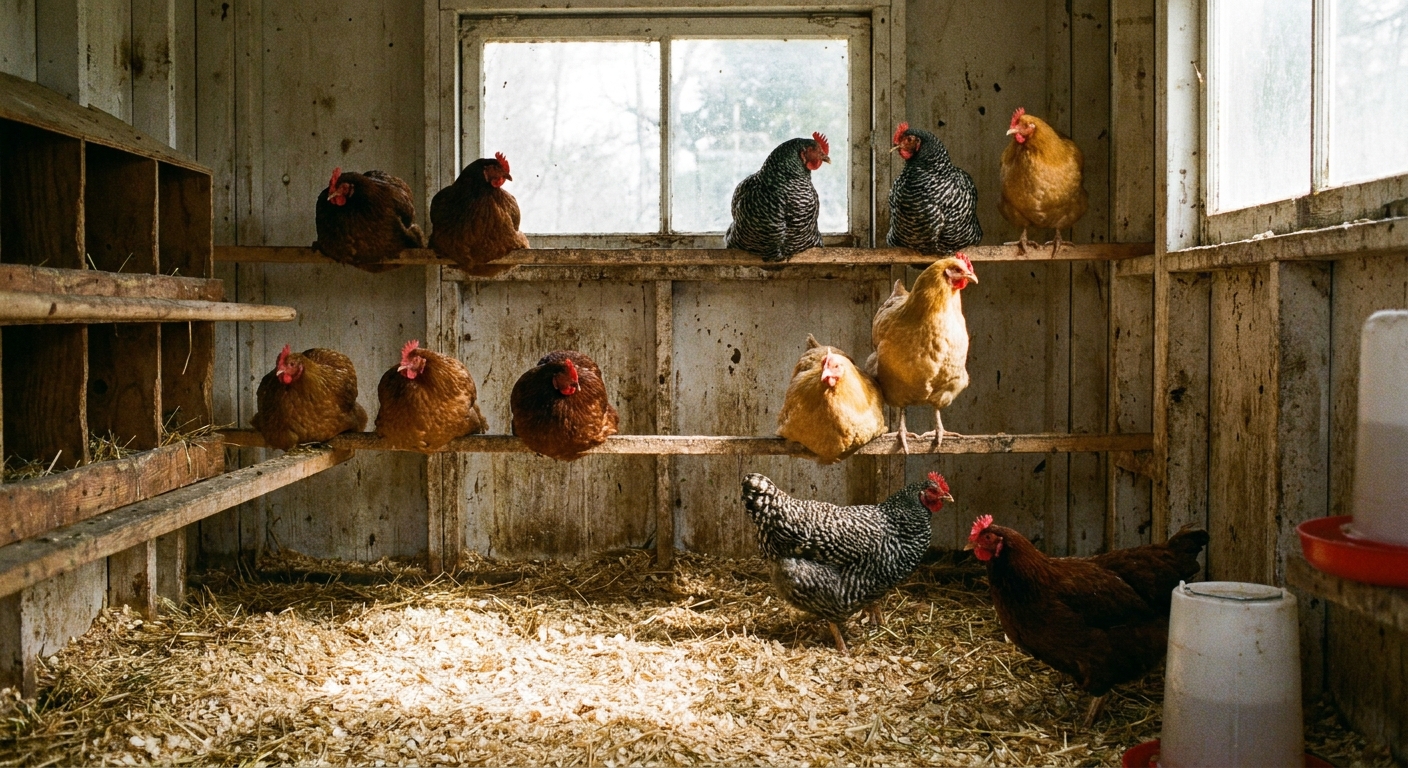
Use these baseline numbers as your “calculator.” They work well for standard-sized laying hens like Orpingtons, Wyandottes, Rhode Island Reds, Plymouth Rocks, Easter Eggers, and most mixed flocks. Many extension services and experienced keepers land in this range, but treat it as a starting point. Local ordinances, climate, predator pressure, breed size, and how often your birds are confined can push the minimum up.
- Coop floor space (inside): 4 sq ft per standard hen (rule-of-thumb minimum). 5 to 6 sq ft per hen is calmer, cleaner, and more forgiving when birds are stuck inside.
- Run space (outside run): 10 sq ft per standard hen (rule-of-thumb minimum). 15 to 25 sq ft per hen means less mud, less feather pecking, and fewer “friendship issues.”
- Roost bar space: 8 to 12 inches per standard hen (use 10 inches as a simple average).
- Nesting boxes: 1 box per 4 hens (or 2 boxes for up to 8 hens, because they love sharing one anyway).
Bantams: You can typically use about half the floor and run space, but keep roost spacing generous if you are mixing bantams with full-sized birds.
Step 1: Coop floor space
Formula: Number of chickens × 4 sq ft = minimum coop floor space.
That number is for indoor space chickens can stand and move around on. It does not include elevated droppings boards, wall-mounted shelves, or the “air space” above their heads.
One key detail
If your birds use the coop mostly to sleep and then spend the day outside (run or free range), you can sometimes get closer to minimums. If there is any chance they will be confined for weather, predators, biosecurity, injury, or “today we are not free-ranging,” plan bigger.
Example calculations
- 4 hens: 4 × 4 = 16 sq ft (minimum). I would aim for 20 to 24 sq ft if you have winters, rain weeks, or bored birds.
- 6 hens: 6 × 4 = 24 sq ft (minimum). A 4×6 coop is a common sweet spot.
- 10 hens: 10 × 4 = 40 sq ft (minimum). At this point, bigger really helps with odor control and squabbles.
My “real life” adjustment
If your chickens will ever be confined for any stretch, use 5 to 6 sq ft per hen instead. Crowding is the fastest route to feather picking and ammonia smell.
Step 2: Roost space
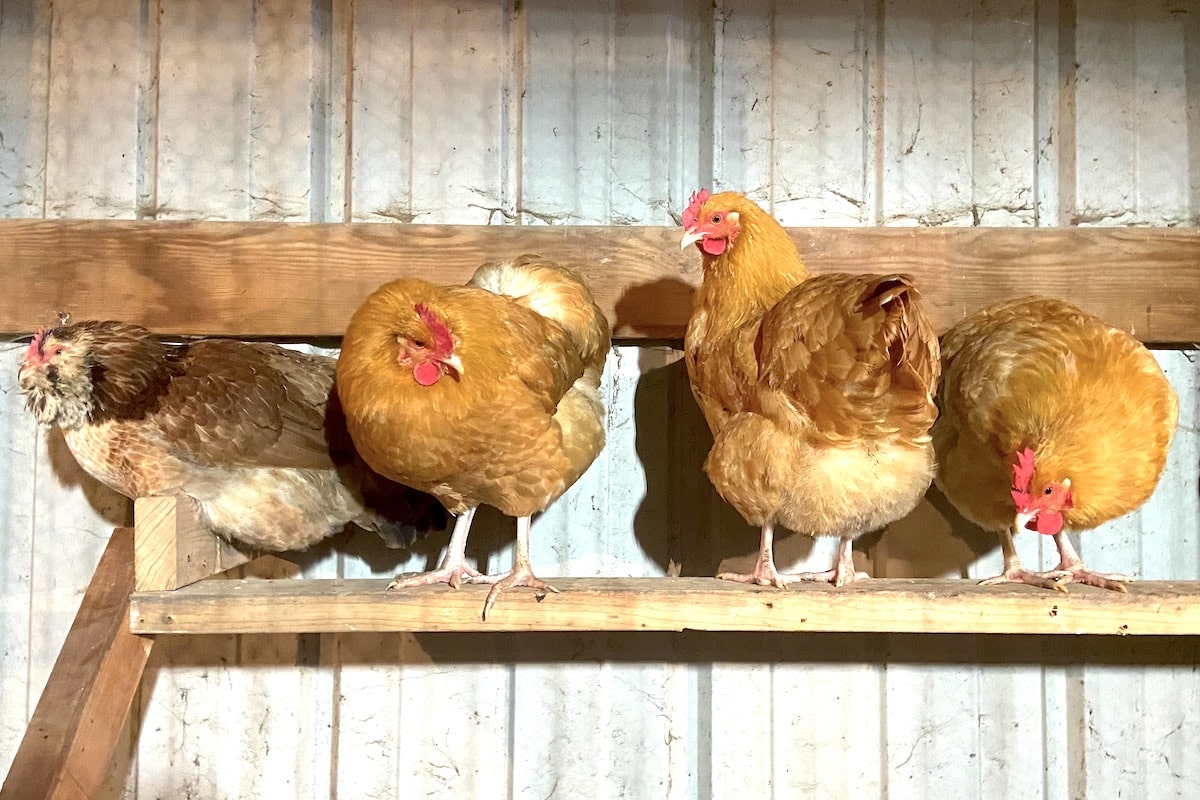
Chickens sleep on the roost. Not the floor. Not the nesting box. At least, not if we set them up for success.
Formula: Number of chickens × 10 inches = total roost length needed.
- 6 hens: 6 × 10 inches = 60 inches of roost (5 feet total).
- 10 hens: 10 × 10 inches = 100 inches (about 8.5 feet total).
Roost setup that works
- Width: Use a 2×4 laid flat (so the top is about 3.5 inches wide). It is kinder on feet in cold weather.
- Height: About 18 to 36 inches off the floor is a common, comfortable range for most backyard coops. Heavy breeds often do better lower, and deep-litter setups may change the “real” floor height as the season goes on.
- Spacing: If you have multiple roosts, give birds 12 to 18 inches of horizontal space between parallel bars. Also pay attention to the vertical layout: either keep roosts at the same height (side-by-side) or stagger them so no one is directly underneath another bird.
- Distance from wall: About 12 inches keeps tail feathers from getting smashed and dirty.
Step 3: Nesting boxes
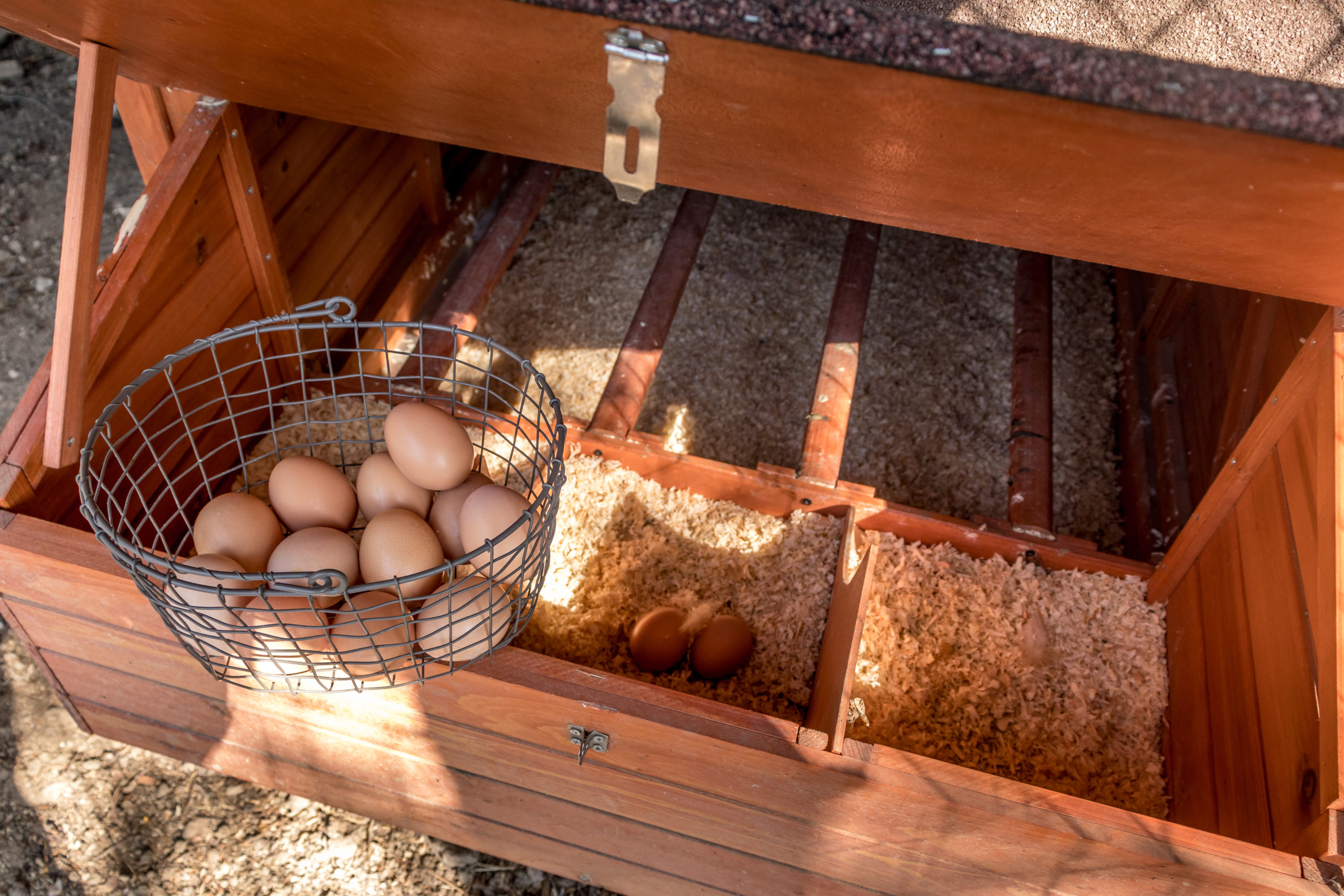
This is where chicken math gets funny. You can provide a lovely row of boxes and they will still line up to use the same one like it is the hottest brunch spot in town.
Formula: Number of hens ÷ 4 = number of nesting boxes (round up).
- 4 hens: 1 box (I still prefer 2 for flexibility).
- 6 to 8 hens: 2 boxes.
- 9 to 12 hens: 3 boxes.
Nesting box dimensions
- Standard hens: about 12×12×12 inches per box (give or take by breed).
- Large, fluffy breeds (like Orpingtons): 12×14 inches or a roomy community nest can work well if you keep bedding clean and collect eggs often.
Placement tips
- Set boxes lower than the roost so nobody tries to sleep in them.
- Keep them in a dimmer corner of the coop if possible.
- Add a lip (2 to 4 inches) to keep bedding from being kicked out.
Step 4: Run size
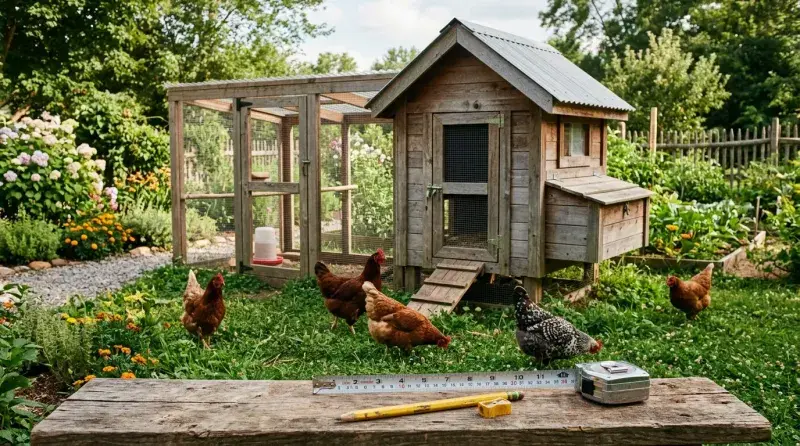
Run size is where most coops get undersized, especially when the package says “fits 6 chickens” and the footprint is about the size of a welcome mat.
Formula: Number of chickens × 10 sq ft = minimum run area.
Example calculations
- 6 hens: 6 × 10 = 60 sq ft minimum (like a 6×10 run).
- 10 hens: 10 × 10 = 100 sq ft minimum (like a 10×10 run).
When to aim higher
- No free ranging: Go 15 to 25 sq ft per bird if the run is their main outdoor space.
- Wet climates: More space helps prevent a muddy, smelly, parasite-friendly mess.
- Flock drama: Crowding makes bullying worse. Space gives lower-ranking hens escape routes.
- Predators and rules: If you must keep birds contained because of neighborhood rules, hawks, dogs, or foxes, your run needs to be both larger and stronger (think hardware cloth, a covered top, and a dig-resistant edge).
Space by flock size
| Flock size | Coop interior (minimum) | Run (minimum) | Roost length | Nesting boxes |
|---|---|---|---|---|
| 3 hens | 12 sq ft | 30 sq ft | 30 inches | 1 |
| 4 hens | 16 sq ft | 40 sq ft | 40 inches | 1 to 2 |
| 6 hens | 24 sq ft | 60 sq ft | 60 inches | 2 |
| 8 hens | 32 sq ft | 80 sq ft | 80 inches | 2 |
| 10 hens | 40 sq ft | 100 sq ft | 100 inches | 3 |
| 12 hens | 48 sq ft | 120 sq ft | 120 inches | 3 |
What changes the numbers
Those calculator rules are a great baseline. These are the situations where I intentionally oversize.
1) Breed size and temperament
- Heavy breeds (Orpingtons, Jersey Giants, Brahmas) appreciate extra space and lower roosts.
- Active or assertive breeds can get snippy when crowded. More run space helps.
2) Climate and indoor time
If you have long winters, rainy seasons, extreme heat, or wildfire smoke days, your chickens will spend more time in the coop and run. Plan space as if confinement will happen, because it will.
3) Integration and flock changes
Adding chicks, integrating new hens, or separating a bully is much easier when your coop is not packed to the inch. A little extra square footage gives you options.
4) Ventilation and ammonia
Space is not a substitute for ventilation, but cramped coops get stinky faster. As a practical rule, aim for high ventilation openings above roost level on at least two sides for crossflow, while avoiding a direct draft blasting your birds where they sleep.
If you can smell ammonia, take it as an “act now” signal: improve ventilation, refresh litter, and check for wet spots. Chickens live at nose level with that air.
Common sizing mistakes
- Counting the run as coop space: “Total area” listings can be misleading. Chickens still need proper indoor square footage.
- Forgetting headroom and access: A coop can meet square footage minimums and still be miserable to clean. If you cannot comfortably reach everywhere, cleaning gets skipped.
- Too little roost room: Tight roosting space causes nighttime shoving and stress.
- Nesting boxes too high: Chickens choose the highest safe spot to sleep. If boxes are higher than roosts, they become toilets.
- Underbuilding “because we only want four hens”: Chicken math is undefeated.
Practical layouts
Small flock (4 to 6 hens)
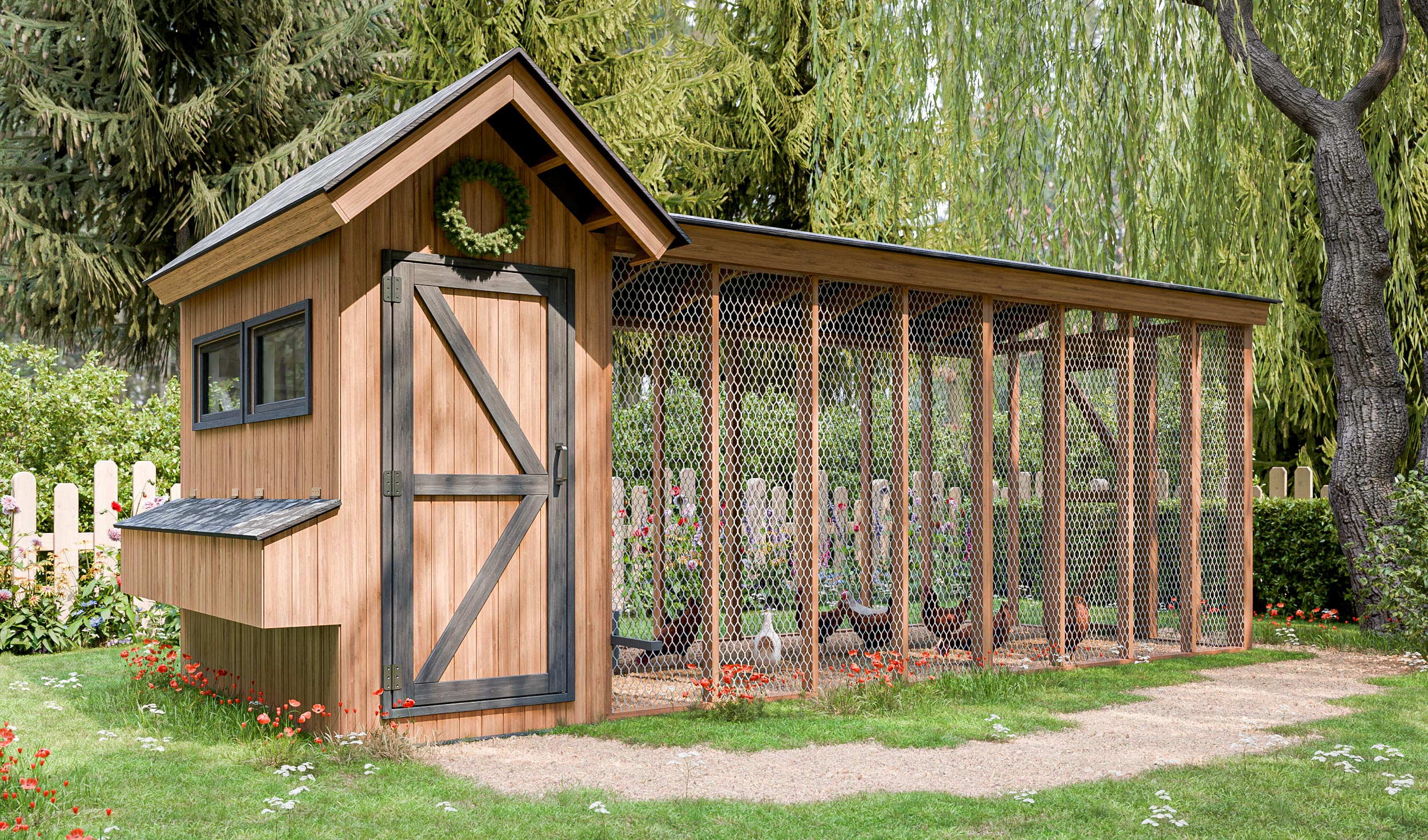
- Coop: 4×6 (24 sq ft) is a classic.
- Run: 6×10 (60 sq ft) minimum, bigger if no free range.
- Roost: Two 3-foot roost bars, parallel and spaced apart.
Medium flock (8 to 12 hens)
- Coop: 6×8 (48 sq ft) is roomy and easy to manage.
- Run: 10×12 (120 sq ft) minimum for 12 hens.
- Roost: Multiple bars with good spacing, plus a droppings board (poop board) for easier cleaning.
FAQ
Is 2 sq ft per chicken enough inside the coop?
For standard-sized laying hens, 2 sq ft per bird is usually too tight for typical backyard life. In some setups it can work if birds only sleep in the coop, have excellent ventilation, and reliably spend most days outside. But if weather, predators, or schedule ever force confinement, that margin disappears fast. Four sq ft per standard hen is a safer minimum for real life.
Do chickens need more space in winter?
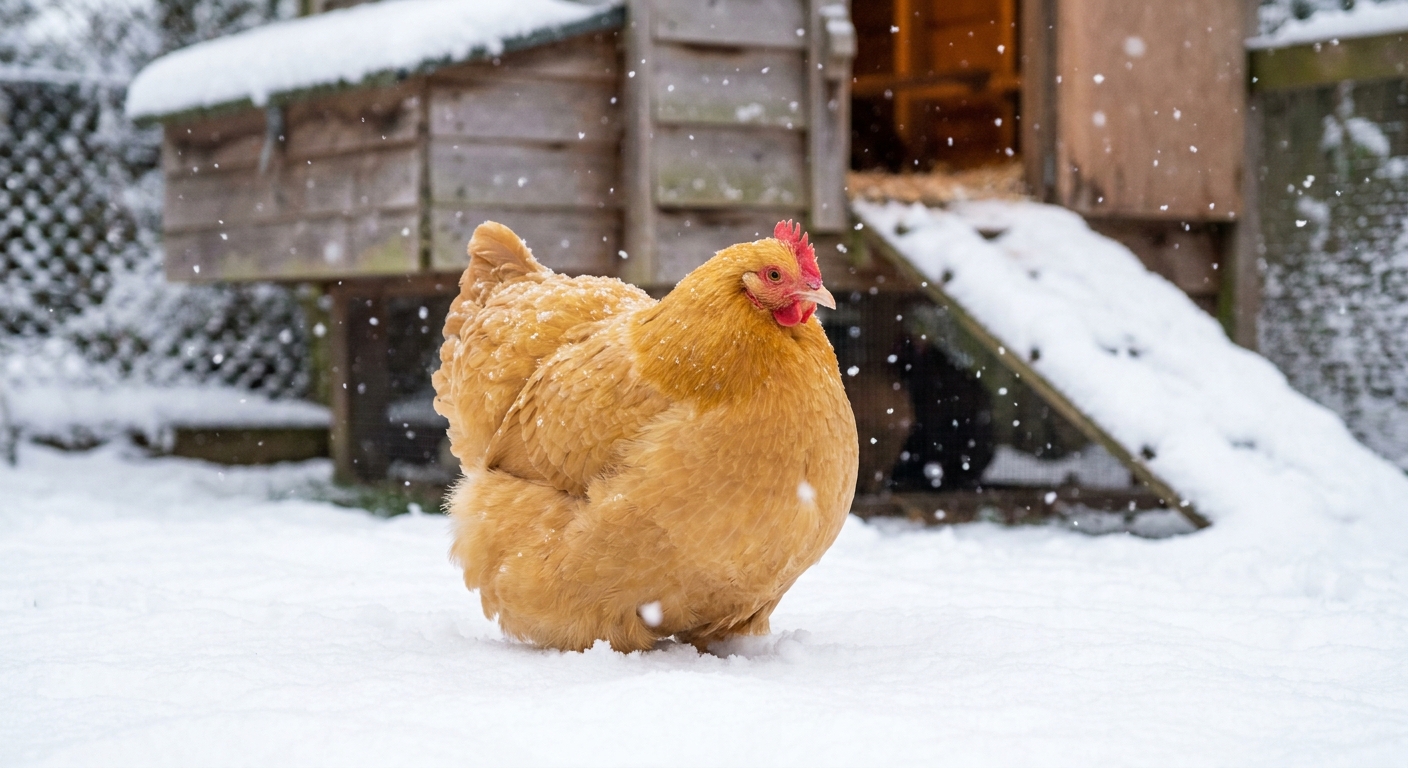
They often use the coop more in winter, especially in wet, windy, or snowy climates. If your run is unusable for days at a time, extra indoor space helps prevent stress and keeps litter drier.
How big should a coop be for 6 chickens?
A good target is 24 sq ft minimum inside (a 4×6 coop) with 60 sq ft minimum in the run (a 6×10 run). If your birds will not free range, aim bigger on the run.
How many nesting boxes for 10 hens?
Three nesting boxes is the standard recommendation. Many flocks can make do with two if you collect eggs frequently, but three reduces lineups and helps keep eggs cleaner.
How much roost space for 12 hens?
Plan for about 120 inches total (10 feet) of roost length, split across multiple bars with good spacing.
My best sizing advice
If you are torn between two sizes, choose the larger one. Extra space is not wasted space in chicken keeping. It buys you cleaner air, calmer flock dynamics, easier cleaning, and room for the inevitable “just two more” moment.
If you want, tell me your flock size (and breeds if you know them), whether they free range, what your winters are like, and whether you have HOA or city rules to work around. I can sanity-check your numbers before you start cutting lumber.