A backyard keeper’s guide to when to use chick starter, move to grower, and switch to layer feed, plus safe timing, typical protein ranges, calcium, and comm...
The Cluck Loom
DIY Organic Chicken Feed: Beginner Recipe Guide
Learn the key grains, protein ingredients, minerals, and premixes needed for a balanced DIY organic-style chicken feed, plus a beginner layer recipe, mixing tips, and safety notes.

Maggie Harper
Maggie Harper is a passionate backyard chicken keeper with over a decade of hands-on experience raising mixed flocks. Through CluckLoom, she shares practical advice on coop building, flock health, and egg production to help beginners and seasoned enthusiasts alike raise happy, healthy chickens.
Published
October 22, 2026
Last updated
October 22, 2026
When I started keeping chickens, I assumed “homemade feed” meant tossing cracked corn in a bucket and calling it a day. My hens disagreed loudly and immediately. Real DIY feed can absolutely work, but only if it is balanced. Chickens do not just need “grain”. They need the right mix of energy, protein, amino acids, minerals, and vitamins so they can lay, molt, grow feathers, and stay healthy.
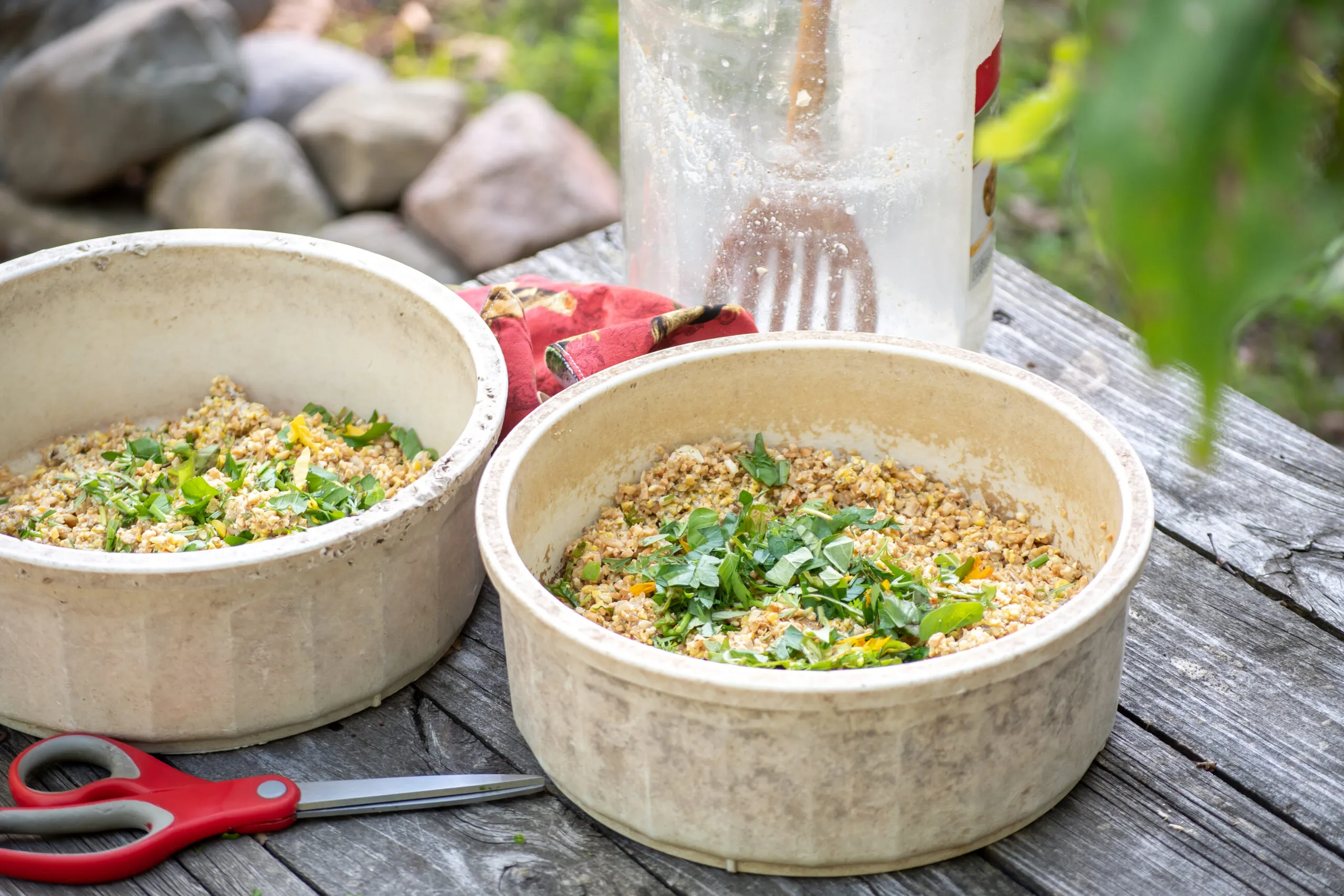
This guide walks you through the building blocks of a balanced DIY organic-style feed, then gives you a simple beginner recipe you can mix in a tote bin on a Saturday morning. It is a strong starting point, and I will also show you how to sanity-check it so you do not accidentally build a corn-and-sunflower buffet with a premix sprinkled on top.
Before you mix: what “complete” means
Most store-bought layer pellets are formulated to hit key targets consistently. When you make your own, you are taking over that job. For adult laying hens, common guidance generally lands in these typical ranges:
- Laying hens: about 15% to 17% crude protein, roughly 3.5% to 4.5% calcium, and a full vitamin and trace mineral package.
- Chicks (0 to 6 weeks): typically 20% to 22% protein, with balanced amino acids and lower calcium than layers.
- Growers (6 to 14 weeks): often 16% to 18% protein.
- Developers (14 weeks to point of lay): commonly 15% to 16% protein, with calcium still kept lower than true layer feed until they start laying.
- Roosters and non-layers: similar protein needs to adult hens, but lower calcium long term is generally safer.
Those numbers are broadly consistent with widely used poultry nutrition references and extension-style guidance for small flocks. If you want a credible baseline to cross-check against, two go-to sources are the NRC Nutrient Requirements of Poultry (National Research Council) and land-grant extension publications on poultry feeding.
The tricky part is that “protein” is not the whole story. Chickens also need specific amino acids, especially methionine and lysine. DIY mixes are where people accidentally short those and end up with poor feathering, slow molt recovery, and a drop in egg production.
Important reality check: If you want your mix to be truly “complete,” you have to either (1) calculate nutrients using ingredient analyses, or (2) have it reviewed by a poultry nutritionist or feed lab. A premix helps a lot, but it does not magically balance protein, calories, calcium, and phosphorus for you.
The essential ingredients (and why they matter)
1) Grains: the energy base
Grains are your calories. They keep your flock warm and moving, but grains alone are not a complete diet.
- Corn (cracked or whole): high energy, low protein. Great for calories, easy to overdo.
- Wheat: more protein than corn, good all-around grain.
- Oats (rolled or groats): good fiber, but can dilute protein if used too heavily.
- Barley: usable, but higher fiber. Best as part of a mix, not the whole base.
2) Legumes and oilseeds: the protein drivers
This is where DIY feed succeeds or fails. If your protein source is weak, everything else wobbles.
- Roasted or properly heat-treated soybeans (organic): a common backbone for balanced rations. Raw soybeans contain anti-nutrients like trypsin inhibitors that must be deactivated with adequate heat. In plain terms: buy soy labeled roasted, toasted, or heat-treated for feed.
- Field peas: helpful protein and energy. Often used alongside soy.
- Sunflower seeds (black oil): add fat and some protein. Hens love them, but they are not a stand-alone protein source. In hot or humid climates, go easy on high-fat seeds because they can turn rancid faster.
- Fish meal (if you use it): strong amino acid profile, but it may affect egg flavor if overused. If you go this route, keep it conservative and use a quality product.
Important: If you are buying ingredients in small bags, check labels for “raw” versus “heat treated,” and avoid anything that smells musty or looks dusty or clumpy.
3) Calcium and grit: two different jobs
This trips up beginners constantly, so I say it the same way every time over the fence:
- Calcium (for shells): offer oyster shell free choice to laying hens, and include a calcium source in layer feed if you are formulating a true layer ration.
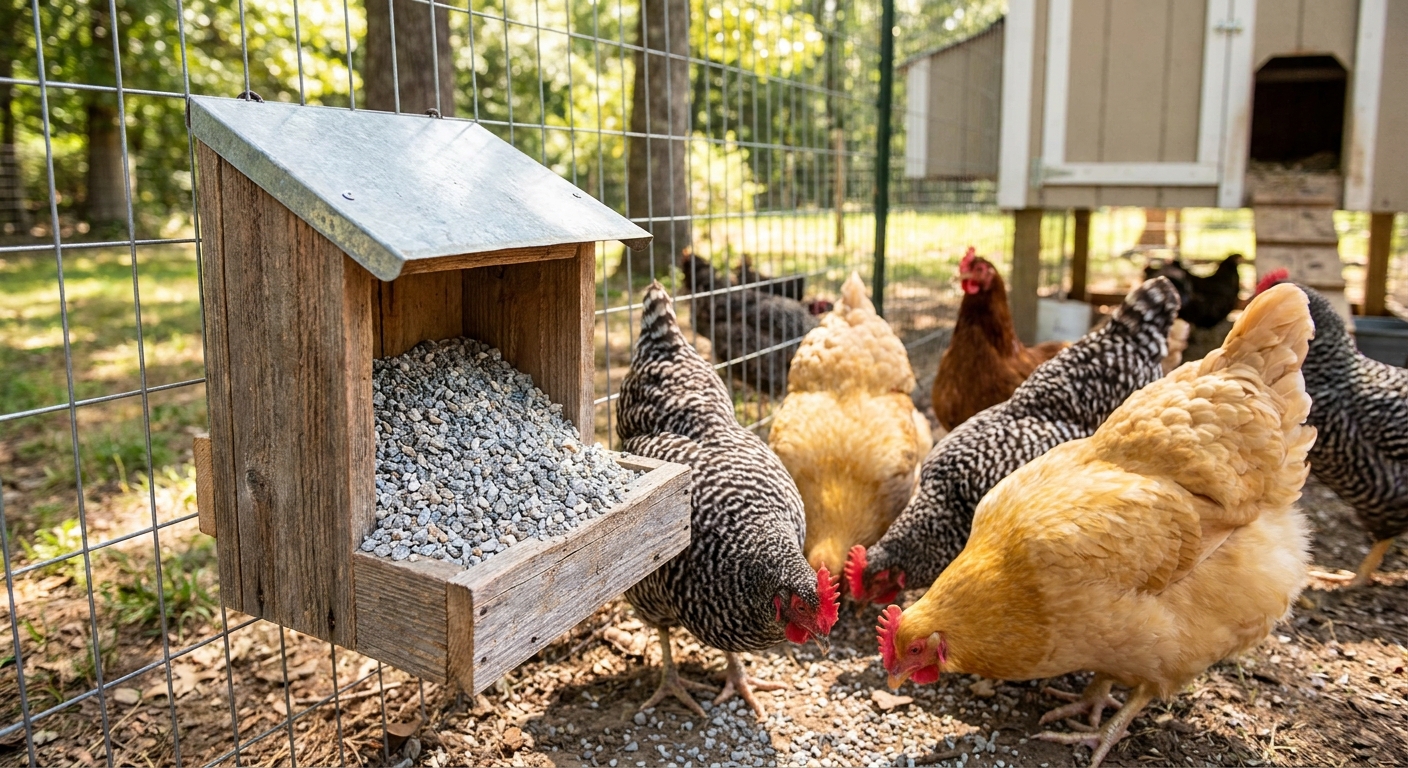
- Grit (for grinding food): offer insoluble granite grit if your birds are eating whole grains or lots of fibrous greens.
Crushed eggshells can be used as supplemental calcium, but they vary and I do not rely on them as the main calcium source in a DIY feed. If you use eggshells, bake them dry and crush them well.
4) Phosphorus: the missing half of the shell story
Calcium gets all the attention, but phosphorus is part of the skeleton and the whole mineral balance picture. Layer diets are typically formulated around a calcium to phosphorus balance, not “as much calcium as possible.”
Here is the part that makes DIY feel like homework: phosphorus needs are often discussed as available phosphorus (also called non-phytate phosphorus), not just total phosphorus. Grains and legumes contain plenty of phosphorus, but a chunk of it is tied up as phytate, which chickens do not use efficiently unless the diet is formulated with enzymes like phytase.
Here is the practical backyard version:
- If you are mixing from straight grains and home ingredients, you may eventually need a phosphorus source (like dicalcium phosphate or defluorinated phosphate) depending on what your premix provides and what your base ingredients analyze at.
- Do not assume your vitamin-mineral premix covers phosphorus. Many premixes focus on vitamins and trace minerals and include little to no calcium or phosphorus unless they are labeled as a complete supplement for those macro-minerals.
If you are not ready to deal with calcium and phosphorus math, the safest beginner move is an all-flock pellet as a base, plus oyster shell on the side for active layers.
5) Vitamin-mineral premix: the non-negotiable insurance
If you want a nutritionally complete DIY feed, a poultry vitamin-mineral premix is what keeps your flock out of the slow, mysterious deficiency zone. You are looking for a premix labeled for poultry (and ideally for layers if you are feeding adult hens), with vitamins A, D, E, K, B-complex, plus trace minerals like copper, iodine, manganese, selenium, and zinc.
What premix does not do: it does not automatically fix protein, amino acids, calories, or the calcium and phosphorus foundation unless it is specifically designed to supply those at an inclusion rate you can actually use in a small-batch mix.
Use the premix exactly at the manufacturer’s inclusion rate. More is not better. It is just more expensive, and with some nutrients it can become unsafe.
6) Salt: tiny amount, big impact
Chickens need sodium and chloride, but the line between “enough” and “too much” is not wide. Typical complete rations often land around 0.2% to 0.4% salt of the finished feed, but do not treat that as a freestyle target. Follow your premix and supplement directions.
- Use plain livestock salt if your formula calls for salt.
- Many premixes already contain salt or sodium. Do not add extra unless the label explicitly tells you to.
- Iodized table salt is not automatically “poison,” but it is not what most feed formulas are built around. If you are not comfortable measuring precisely, do not guess.
If salt makes you nervous, that is a good instinct. Use a formulated base (like an organic all-flock pellet) and customize with scratch-style add-ins instead.
7) Optional helpers: probiotics and herbs
I love my kitchen-sink homestead vibes as much as the next chicken person, but I treat extras as extras.
- Probiotics: can help during stress, heat, or after medication, but they do not replace balanced nutrition.
- Herbs: fun, sometimes useful, never a substitute for premix and protein.
Beginner DIY layer mix (small batch)
This is a starter blend for backyard keepers who want to begin mixing while keeping nutrition realistic. It is designed for adult laying hens, and it assumes you will also offer oyster shell free choice.
Plain-language disclaimer: This recipe is not a guarantee of a perfectly complete ration in every backyard, because ingredient protein and mineral levels vary by region, crop, and processing. If you want true precision, run the numbers using an ingredient analysis or have a feed lab evaluate your mix.
What you will need
- A clean tote bin with a tight lid or a feed-grade bucket
- A kitchen scale or hanging scale (highly recommended)
- A scoop or small shovel reserved for feed
Simple DIY layer mix (by weight)
For a 20-pound batch:
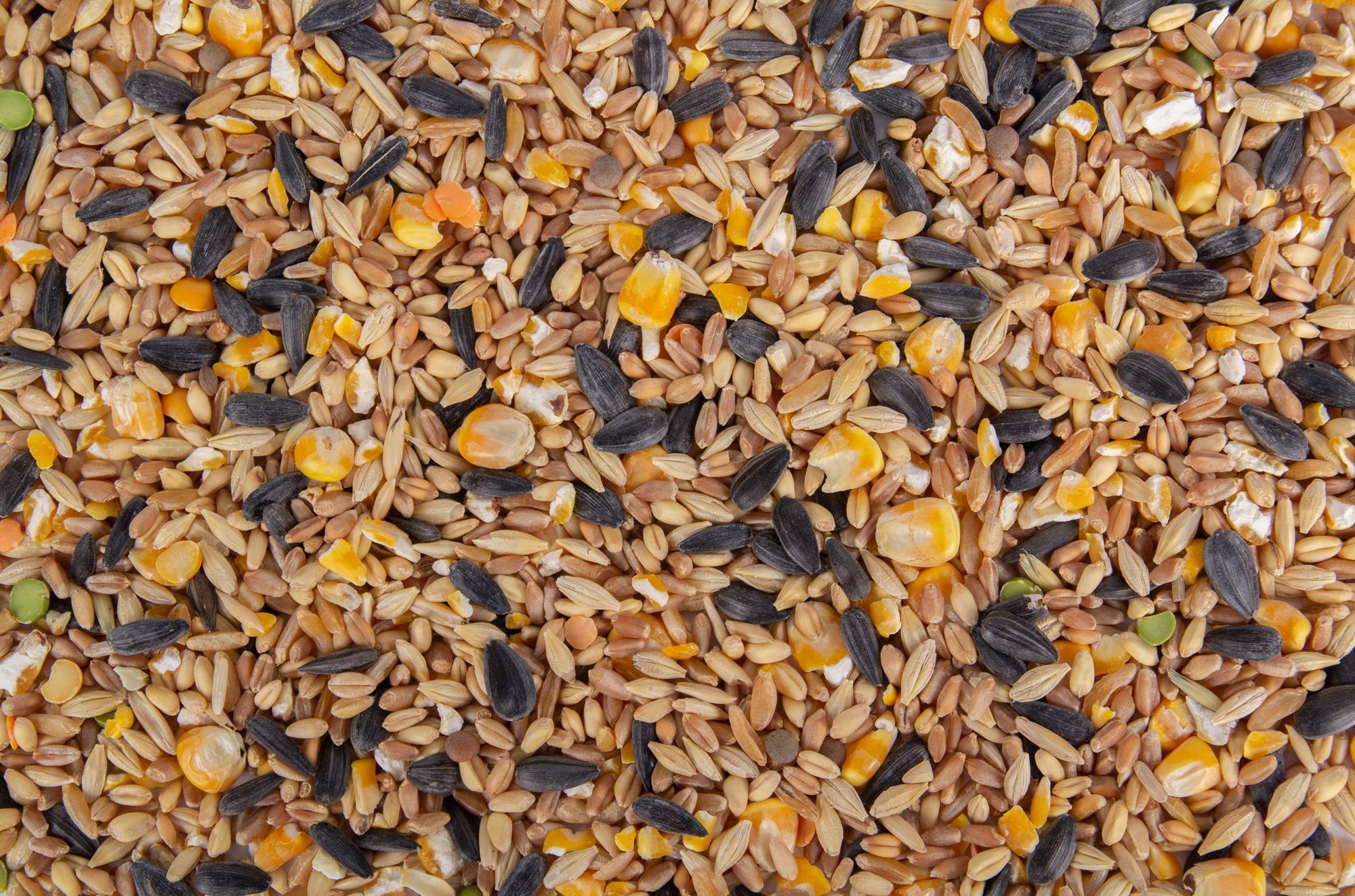
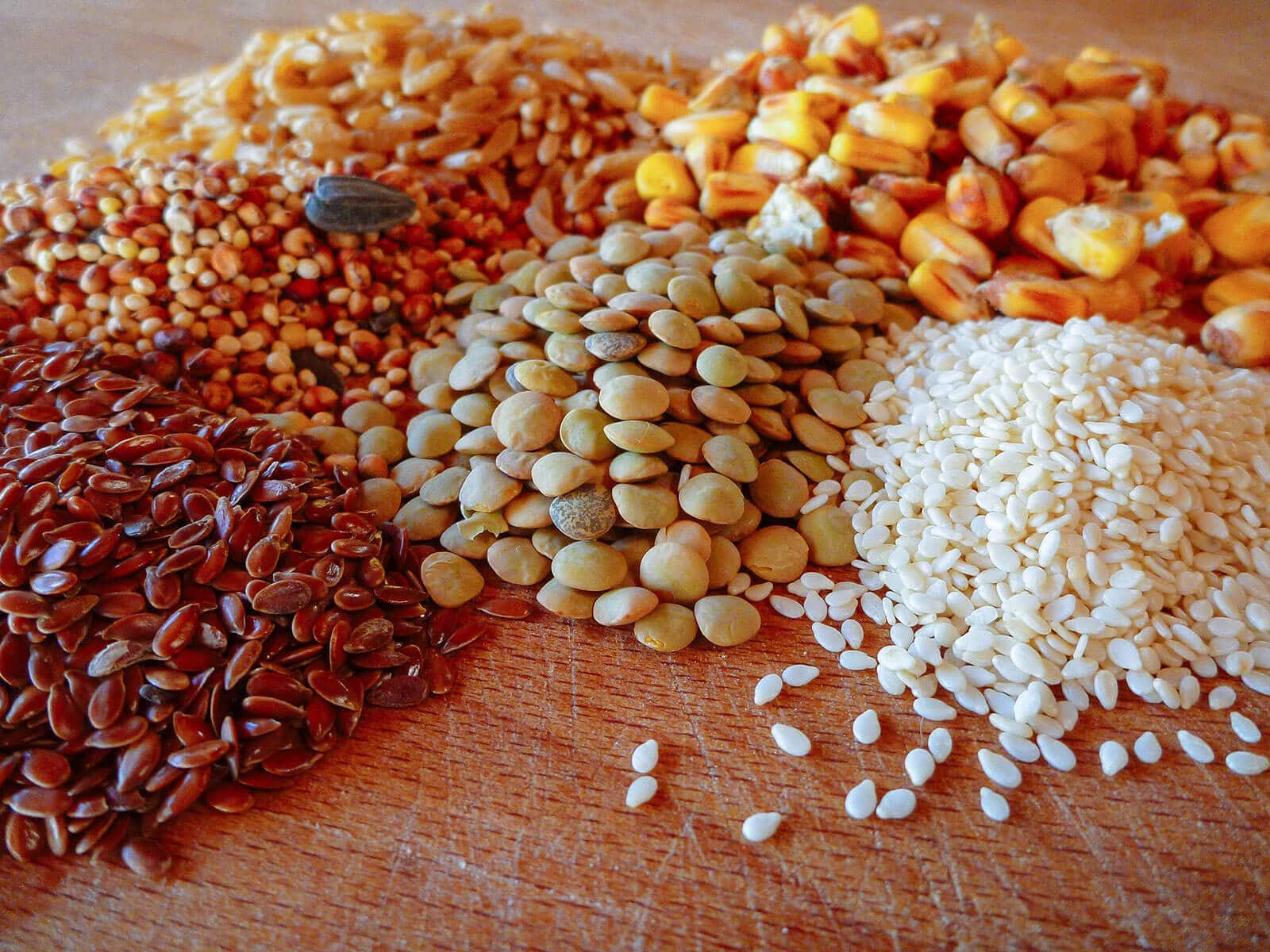
- 8 lb cracked or whole organic corn
- 6 lb organic wheat
- 4 lb organic roasted soybeans (or organic soybean meal if that is what you can source)
- 1.5 lb organic field peas
- 0.75 lb black oil sunflower seeds
- Poultry vitamin-mineral premix at label rate for a 20 lb batch
- Salt only if your premix or formulation calls for it, measured carefully
Quick protein estimate (rough math)
DIY feed lives and dies by math, so here is a back-of-the-envelope crude protein estimate using common “typical” numbers. This is only an estimate, and your actual ingredients can run higher or lower.
- 8 lb corn at 9% CP = 0.72 lb protein
- 6 lb wheat at 13% CP = 0.78 lb protein
- 4 lb roasted whole soybeans at 36% CP = 1.44 lb protein
- 1.5 lb peas at 22% CP = 0.33 lb protein
- 0.75 lb sunflower at 16% CP = 0.12 lb protein
Total estimated protein = about 3.39 lb protein in 20 lb feed, or roughly 17% CP. Again, label this as a ballpark. It says nothing about methionine, lysine, calcium, or available phosphorus, which is why premix choice and mineral planning still matter.
What this mix is likely to do well (and where to watch)
Protein tends to land in that mid-teens range many backyard layers do well on, assuming decent ingredients and no aggressive sorting. Where DIY mixes can drift is amino acids, calcium, phosphorus, and energy.
Also keep an eye on calories. Corn and sunflower are tasty and energy-dense. If your hens start getting soft and over-conditioned, or egg production dips while waistlines rise, you may need to reduce corn or sunflower and rebalance.
How to feed it: Offer as the main ration. Keep clean water available at all times, and offer oyster shell in a separate dish so only the hens who need it will take it. If you have roosters or juveniles eating alongside layers, consider switching to an all-flock base and offering oyster shell on the side.
Mixing steps
- Weigh everything. DIY feed works by weight, not coffee cans and vibes.
- Pre-blend the premix. In a small bowl, stir the premix into a few cups of grain first so it distributes evenly.
- Layer and stir. Add half your grains to the tote, pour in your premix blend, add the remaining grains and protein ingredients, then mix thoroughly.
- Check the bottom corners. Premix likes to settle. Scrape and fold until the mix looks uniform.
- Label the bin. Write the date and what you mixed. Future you will thank you.
Prevent picky eating
One of the quiet ways DIY feed becomes unbalanced is selective feeding. Chickens are professionals at eating the best parts first, which usually means corn and sunflower seeds, then looking at you like the empty feeder is your fault.
- If your birds are sorting the mix, try using cracked grains instead of whole, and keep sunflower seeds modest.
- Consider grinding or rolling some ingredients so the texture is more uniform.
- If you want the lowest-stress option, use a pelleted or crumbled all-flock feed as the base and add limited whole-grain extras.
Ingredient swaps
Backyard reality: sometimes the feed store is out of what you planned. Here are reasonable swaps that keep your mix sensible.
Grain swaps
- Wheat can be partially replaced with oats or barley, but do not let high-fiber grains take over the blend.
- If you reduce corn, replace those pounds with wheat or milo (sorghum) if available, not with more sunflower seeds.
Protein swaps
- Field peas can replace a portion of soy, but peas alone usually will not match soy’s amino acid profile.
- Sunflower seeds can increase palatability and fat, but they are not a complete protein solution.
If you make big substitutions, expect that egg production and feather quality will tell on you in a few weeks. Chickens are honest like that.
Organic: what it really means
A quick clarification, because “organic” gets used a lot in chicken circles.
- If you are feeding at home for your own family and you want an organic-style ingredient list, buying certified organic grains and supplements is a reasonable approach.
- If you want to market eggs or meat as certified organic, that is a different lane. Certification requires certified inputs and specific management rules. In that world, you need to source a premix and minerals that are approved for your certification program and keep records.
Most backyard keepers are not certifying, and that is fine. Just be clear with yourself about whether you mean “certified organic” or “ingredients I trust.”
Sourcing and safety tips
- Buy fresh. Whole grains can go rancid, especially anything oily (sunflower, soy). If it smells off, do not feed it.
- Look for clean storage. Bags should be dry, intact, and not stored directly on concrete where moisture wicks up.
- Avoid medicated ingredients. DIY is usually the opposite of medicated feed. Check labels.
- Keep rodents out. A “rustic” feed corner quickly becomes a mouse buffet. Use tight lids and clean up spills.
Storage and shelf life
I treat DIY feed like flour. It is food, it absorbs odors, and it can spoil.
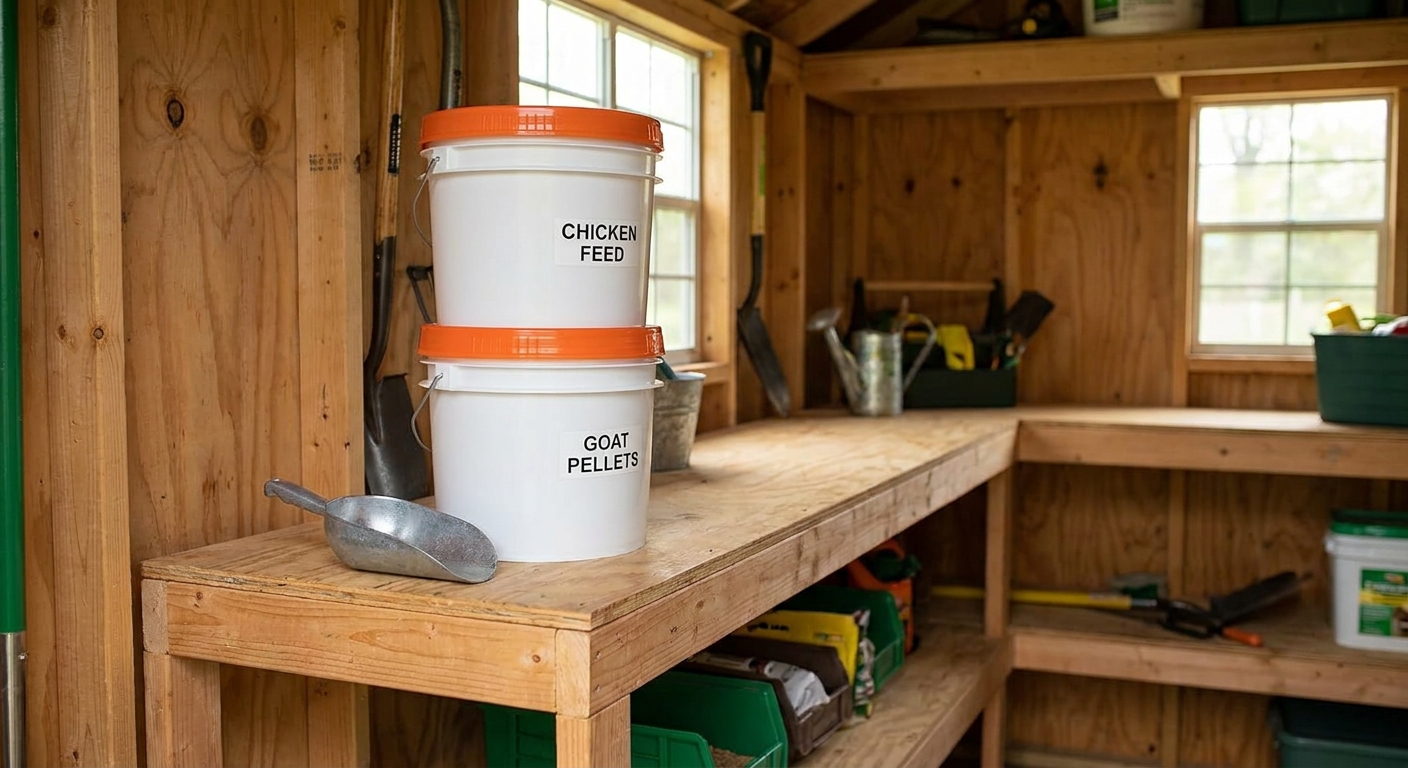
- Best container: sealed feed bin or feed-grade bucket with a gasketed lid.
- Best location: cool, dry, and dark.
- Typical shelf life: aim to use within 3 to 6 weeks, sooner if your mix contains oily seeds and you live somewhere hot or humid.
If your feed smells sour, “paint-like,” or just wrong, toss it. Chickens are not compost bins.
Common DIY mistakes
Too much corn
What happens: weight gain, fatty hens, fewer eggs, and a lot of “treat expectation screaming.” Keep corn as a portion of the ration, not the whole plan.
Skipping the premix
What happens: gradual drop in laying, poor feather quality, pale combs, and vague “my flock seems off” issues that are hard to troubleshoot later.
Protein too low
What happens: slow molts, feather picking, small eggs, inconsistent laying.
Calcium confusion
What happens: thin shells, soft-shelled eggs, or too much calcium exposure for birds that are not laying.
Forgetting phosphorus
What happens: you can see weak performance that does not respond to “more oyster shell,” because oyster shell solves calcium, not phosphorus. And because a lot of grain phosphorus is tied up as phytate, “but grains have phosphorus” is not the same thing as “my hens can use it.”
Accidentally double-salting
What happens: one premix plus “just a little salt” can stack up fast. Always confirm whether your premix already includes salt or sodium before you add anything.
Mixed flocks
If you have a mixed flock like I do most years, you will eventually hit the “layers versus everyone else” problem.
- All-flock base + oyster shell on the side: simplest solution for mixed ages and roosters.
- Separate feeding zones: possible if you have space and patient birds, but most backyard flocks treat gates like a fun puzzle.
If you are determined to DIY a true layer ration, consider feeding it only to your adult laying group and keep youngsters or roosters on an all-flock feed with calcium offered separately.
Mini FAQ
Can I make feed without soy?
Yes, but it gets harder to balance amino acids. You will need a strong alternative protein plan (peas plus another high-protein ingredient, or a formulated organic base feed) and you still need a vitamin-mineral premix.
Do I need grit if my chickens free-range?
Often they find small stones on their own, but not always. If you feed whole grains or notice undigested grain in droppings, offer granite grit free choice.
Is scratch the same as feed?
No. Scratch is basically chicken snacks, mostly grains. A balanced feed is nutrition. Scratch can be part of your routine, but it cannot be the routine.
How do I know if my DIY mix is working?
Watch egg production, shell quality, feather condition, and body condition. Healthy hens have good energy, clean feathering, and consistent shells. If shells go thin or laying drops after a few weeks on a new mix, revisit protein and calcium first, then check whether your birds are sorting the mix, and finally confirm you are following premix directions exactly.
Final note
DIY organic-style feed can be deeply satisfying, especially when you know exactly what is in the bucket. Start small, weigh your ingredients, and do not skip the premix. If you want true “complete feed” confidence, run the numbers or have the blend reviewed. Your hens will reward you with the kind of eggs that make you feel smug in the best possible way.