A backyard keeper’s guide to when to use chick starter, move to grower, and switch to layer feed, plus safe timing, typical protein ranges, calcium, and comm...
The Cluck Loom
Grit vs. Oyster Shell for Chickens
Grit and oyster shell do different jobs in your flock: grit helps digestion, oyster shell supports eggshell strength. Learn who needs what, when, and how to offer both free-choice.

Maggie Harper
Maggie Harper is a passionate backyard chicken keeper with over a decade of hands-on experience raising mixed flocks. Through CluckLoom, she shares practical advice on coop building, flock health, and egg production to help beginners and seasoned enthusiasts alike raise happy, healthy chickens.
Published
October 22, 2026
Last updated
October 22, 2026
The first time I brought home a bag of “chicken grit,” I assumed it was basically the same thing as oyster shell. Crunchy mineral stuff in a bag, right?
Nope. They are completely different tools for two different jobs. One helps chickens grind food. The other helps hens build strong eggshells. If you swap them, skip them, or feed them the wrong way, you can end up with wasted money, thin shells, or a feeder full of stuff nobody needs. In some cases, the wrong setup can also contribute to digestive hiccups.
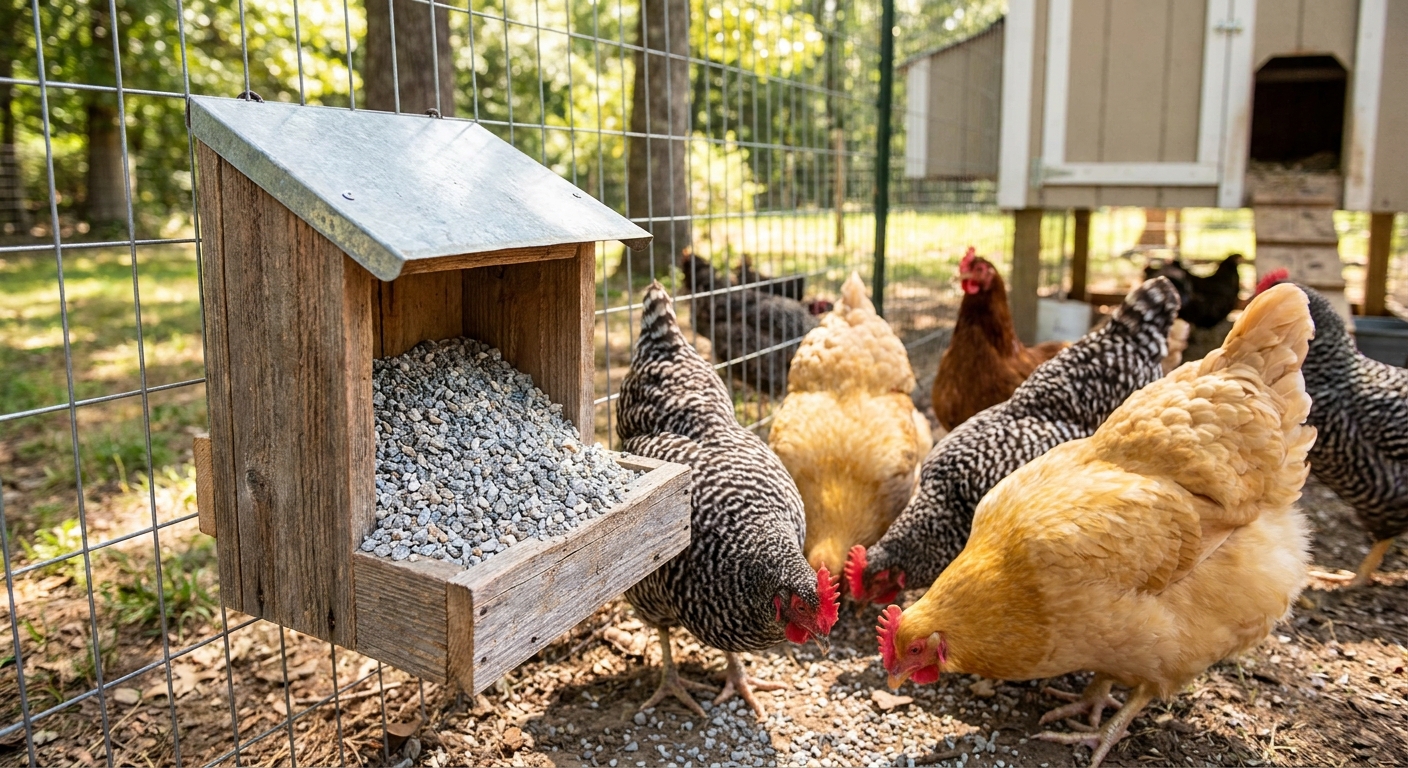
Here’s the neighborly, no-drama breakdown of grit vs. oyster shell, plus the easiest way to offer both so your birds can regulate what they need.
Quick difference
- Insoluble grit (granite, flint) stays in the gizzard and acts like tiny teeth to grind food. It does not dissolve.
- Oyster shell (calcium carbonate) dissolves and supplies calcium for strong eggshells. It is soluble.
If you remember nothing else: grit is for digestion, oyster shell is for eggshells.
What grit does
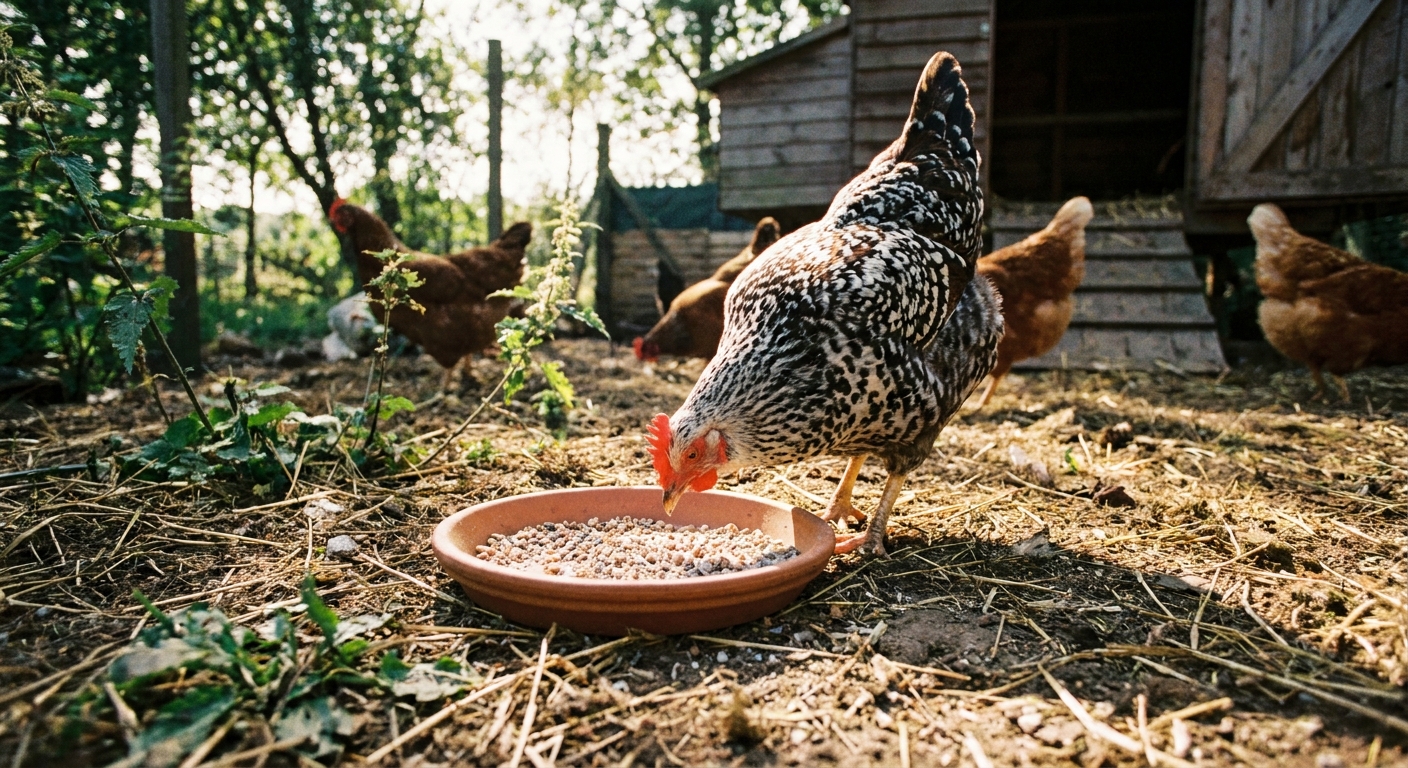
Chickens do not have teeth. Instead, they rely on the gizzard, a muscular little grinder that uses grit to crush food before it moves through the digestive tract.
When grit matters most
- Free-ranging birds eating whole foods: bugs, seeds, grass, garden scraps, and anything fibrous or chunky.
- Flocks getting scratch grains: especially larger or tougher pieces like whole grains, cracked corn, and mixed scratch.
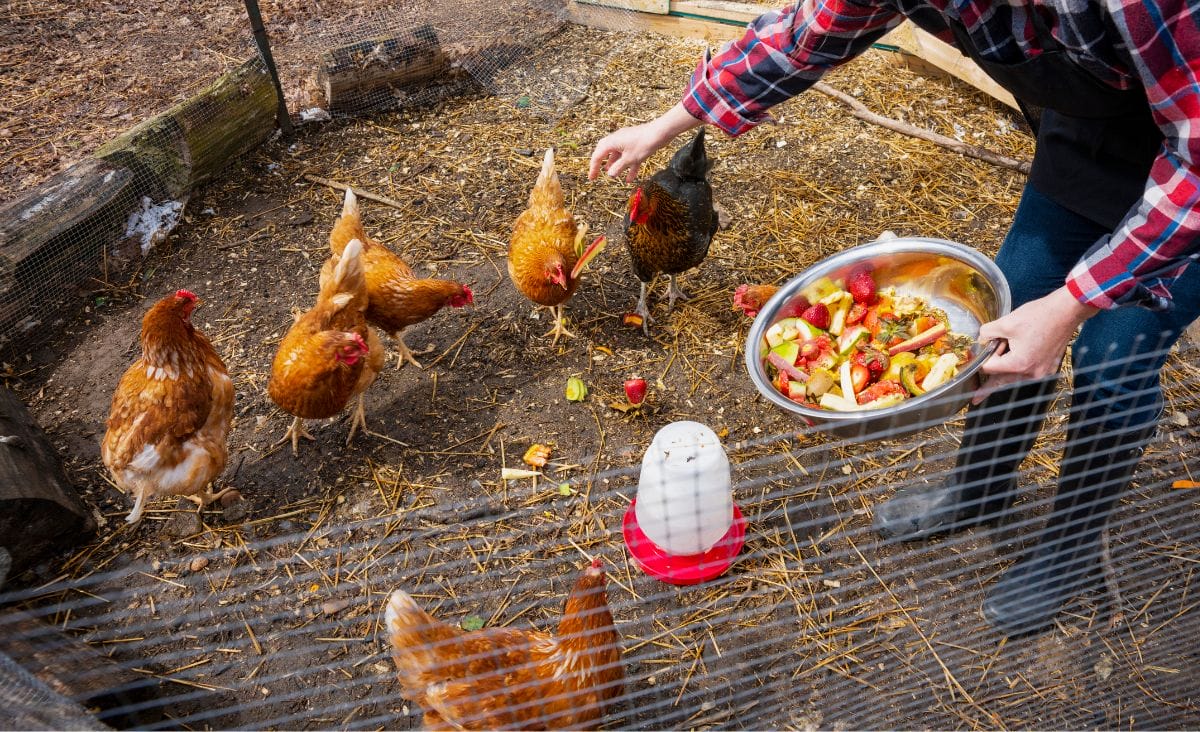
- Kitchen scraps and produce: especially tougher peels and stems.
- Young birds transitioning off crumble: once they start eating bigger particles and foraging more.
When grit might not be necessary
If your chickens eat only commercial feed (pellets, crumbles, mash) and do not get scratch or table scraps, they usually do fine without extra grit. Commercial feed is formulated to be digestible as-is.
That said, most backyard flocks get at least some treats and yard time. In real life, grit ends up being useful in most coops.
What oyster shell does
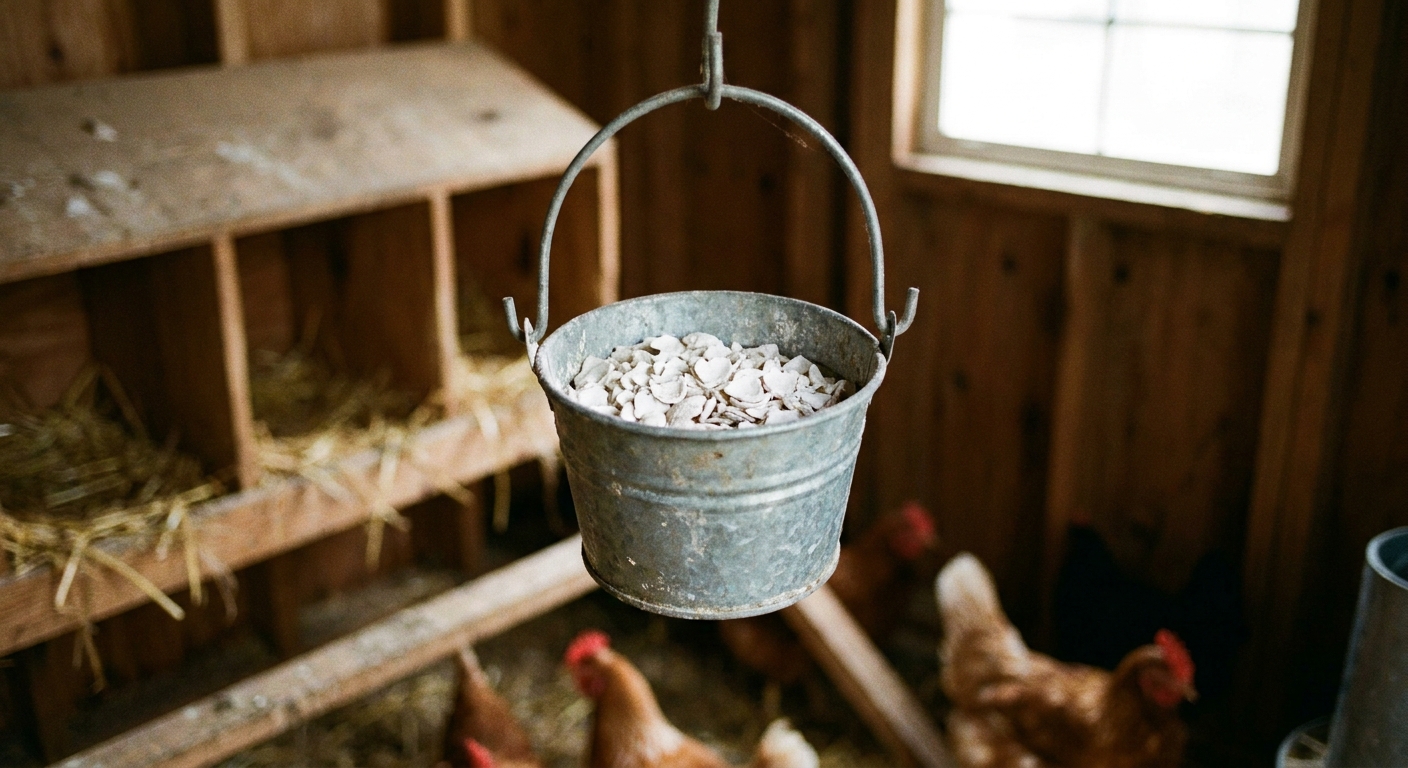
Oyster shell is essentially a slow-release calcium source. Laying hens pull a lot of calcium from their diet to build shells. If they do not get enough, their bodies will borrow it from their bones, which is not a road you want to go down.
Who needs oyster shell
- Laying hens once they are actively producing eggs.
- Heavy layers or hens laying through winter (with lights or naturally persistent laying).
- Hens with recurring thin shells even on a quality layer feed.
Who should not be pushed to eat oyster shell
- Roosters (they do not make shells).
- Chicks and growing pullets: extra calcium is not appropriate as a “supplement plan,” and routinely overdoing calcium can be hard on developing bodies (including the kidneys).
- Non-laying hens in molt or long seasonal breaks (they usually will not take much if offered free-choice, which is exactly why free-choice works so well).
Most adult laying hens do best on a complete layer feed plus free-choice oyster shell. Many layer feeds already provide enough calcium for plenty of hens, and oyster shell works best as a simple top-up for the birds that need more.
Free-choice works best
I am a big fan of letting chickens manage their own intake when it comes to grit and oyster shell. The key phrase is free-choice, meaning available all the time in a separate container, not mixed into their feed.
Why not to mix supplements into feed
- They cannot self-regulate. A bird that does not need calcium can still consume it if it is blended into the ration.
- Bossy hens can hog it. With free-choice, you can add a second station if you notice crowding.
- It gets wasted. Mixed products end up in bedding, scratched out of feeders, or turned into clumps after moisture hits.
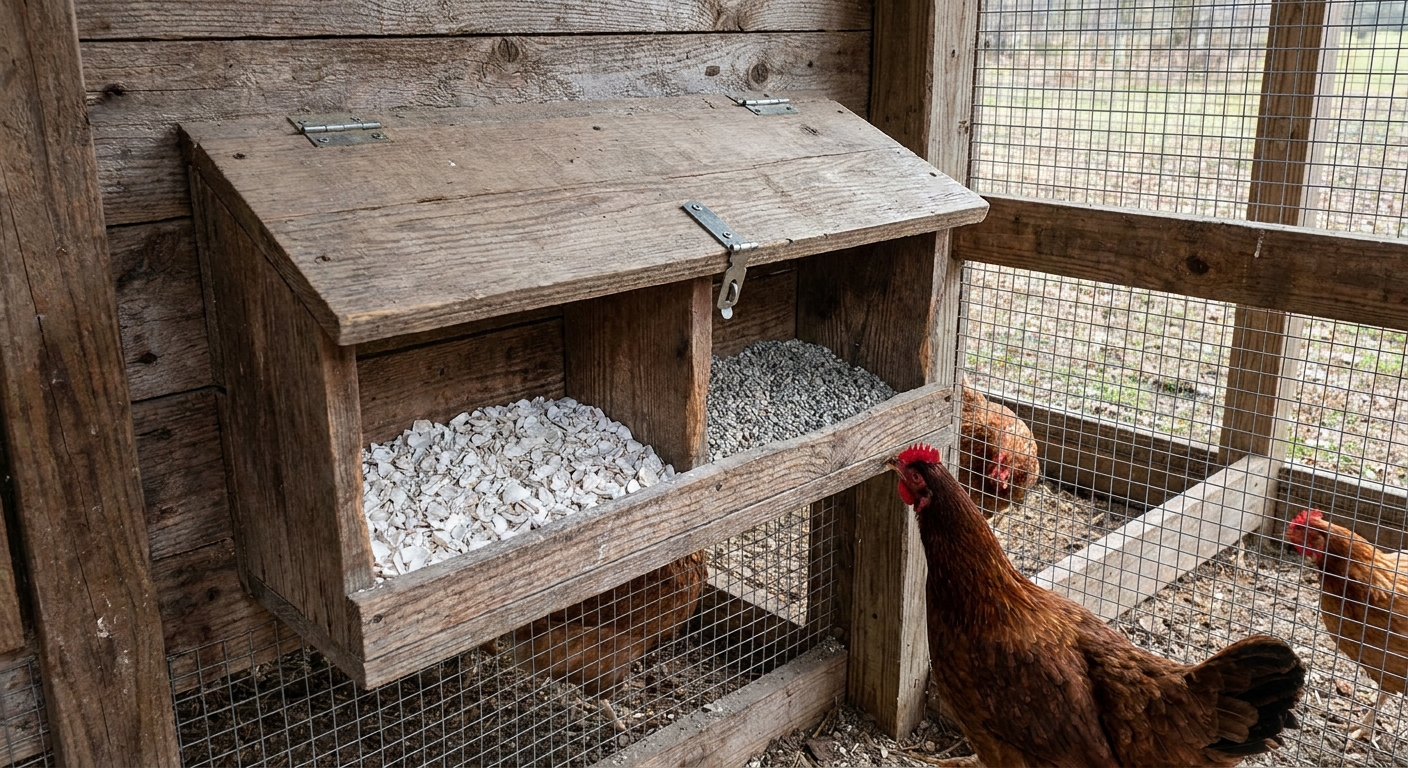
The simplest setup
- Offer grit in one container.
- Offer oyster shell in a separate container.
- Keep both dry, elevated, and covered if possible.
I like small, lidded mineral feeders mounted to the run wall, or sturdy cups hung at shoulder height for your birds. Less poop, less moisture, less waste.
Choosing the right kind
Grit options
- Chick grit: very small particles for chicks and young growers eating anything beyond starter crumble.
- Grower or all-purpose grit: medium size for juveniles and adults.
- Hen-sized grit: coarser grit for adult birds, especially if they eat whole grains and lots of forage.
Look for insoluble granite grit. Some products are labeled “grit with oyster shell.” That blend can be convenient for an all-hen flock, but it is not ideal if you have roosters or growing birds because it removes your ability to control calcium exposure. Also note that some “grit” products are actually limestone or other soluble calcium sources. If it dissolves, it is a calcium supplement, not true grinding grit.
Oyster shell options
- Crushed oyster shell: the standard, slow-release calcium source.
- Other calcium supplements: useful in certain cases, but oyster shell is usually the most straightforward for backyard flocks.
Choose a clean, feed-grade product. Keep it dry so it does not turn into a damp, clumpy mess that nobody wants.
How much to offer
With free-choice, you do not need to measure daily doses. Just keep it available and refill as needed.
- Grit: Keep a small feeder topped off. Many flocks barely touch it for weeks, then suddenly go through a bunch after you start giving more scratch or garden goodies.
- Oyster shell: A laying flock will often consume it steadily. If you notice a sudden spike, check whether you recently switched feeds, started feeding more treats, or had a wave of new layers come online.
One practical tip: if your birds are demolishing oyster shell, that can be a clue that your base diet is short on calcium or that you are giving too many low-nutrient treats.
Troubleshooting
Thin shells or shell-less eggs
- Check the feed first: Are you feeding a complete layer ration to active layers, or are you using an all-flock feed without a calcium plan?
- Offer oyster shell free-choice: Keep it separate from grit.
- Watch treat overload: Scratch and bread do not build shells.
- Consider stress and age: Heat waves, illness, and older hens can produce occasional wonky shells even with solid nutrition.
Undigested feed in droppings
- Add or refresh grit if your birds eat anything other than commercial feed.
- Check for sudden diet changes and keep treats modest.
- Rule out health issues if it persists: worms, coccidia, and other problems can mimic simple digestion trouble.
They will not touch grit or oyster shell
This is often normal. Chickens do not snack on these constantly. They dip in when they need it. Make sure the supplements are:
- Dry (clumps are a turn-off).
- Easy to access (not blocked by dominant birds in a tight corner).
- Separate (so they can choose one without being forced into the other).
Special situations
Mixed flocks
If you keep a rooster or two, the easiest approach is:
- Feed an all-flock feed (lower calcium) as the base ration.
- Offer oyster shell free-choice so only the laying hens top up calcium.
- Offer grit free-choice for everyone.
This setup is also helpful if you have older hens taking long breaks, or a batch of growers sharing space with adults.
Chicks and pullets
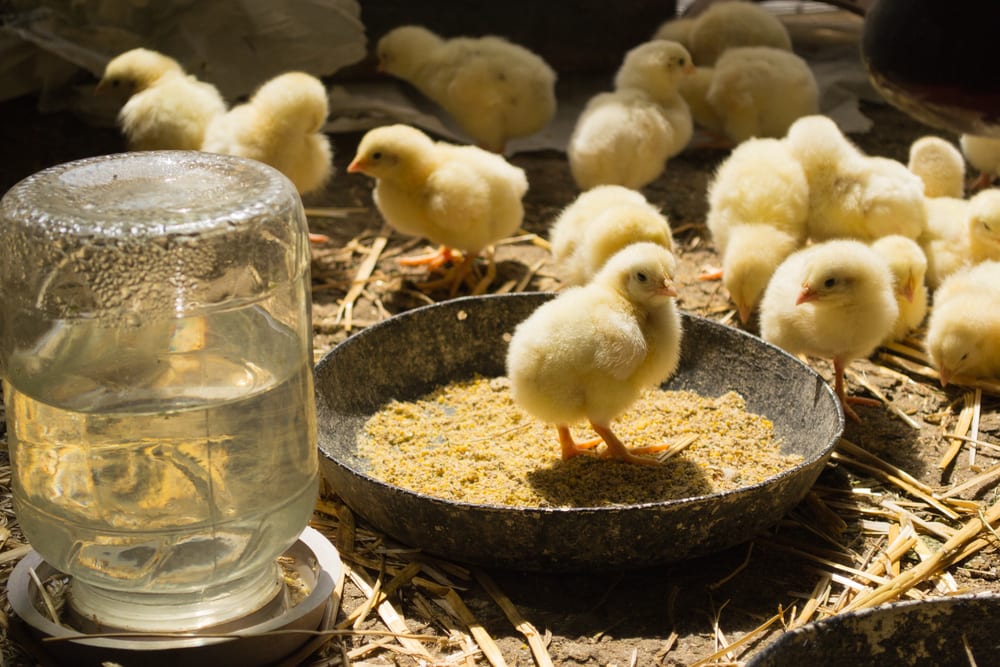
Chicks on starter feed do not need extras. If you are using medicated chick starter for coccidiosis prevention, follow the label directions and do not stack other supplements “just in case.” Once chicks begin eating treats or foraging (even tiny bits), offer chick-sized grit. Skip oyster shell until they are actively laying. When in doubt, let the layer feed and oyster shell wait until you see those first eggs.
Free-range vs. runs
Free-ranging birds may find small stones on their own, but do not assume they always get enough, especially in grassy yards or soft garden beds. Confined runs with deep litter often have less natural grit available, so a feeder is extra helpful.
Clean ways to offer both
- Covered wall-mounted feeder: my favorite for keeping things dry and clean.
- Hanging cup feeder: great inside the coop or under a roofed run.
- Heavy ceramic or rubber bowl: works if it is protected from rain and you do not mind occasional litter kicked in.
If you have a larger flock, set up two stations. It cuts down on traffic jams and lets timid hens get what they need without negotiating with the boss ladies.
FAQ
Can I use eggshells instead of oyster shell?
You can offer clean, baked, and crushed eggshells, and some keepers have good luck with it. The downside is consistency. Oyster shell is more uniform and tends to be easier for hens to use as a steady calcium source. If you do feed eggshells, crush or grind them down very fine so they are not recognizable as “egg shell.”
Is sand the same as grit?
Not exactly. Some coarse sands can function similarly, but purpose-made insoluble granite grit is more reliable in size and performance. Very fine sand is often too small to do much gizzard grinding.
Do ducks need grit and oyster shell too?
Ducks also use grit for digestion, and laying ducks benefit from calcium. The products are similar, but ducks eat differently and can make a wet mess fast, so containers and placement matter. If you keep mixed poultry, prioritize keeping supplements dry and separate.
Can oyster shell replace grit?
No. Oyster shell dissolves and is used for calcium. Grit stays in the gizzard to grind food. They are not interchangeable.
Do I need grit if I only feed pellets?
If pellets are truly the only thing they eat, you usually do not need grit. The moment you add scratch, scraps, weeds, or free-ranging, grit becomes helpful.
Bottom line
If you want the simplest, safest approach that covers almost every backyard situation:
- Offer insoluble grit free-choice if your birds eat anything besides commercial feed.
- Offer oyster shell free-choice to active layers for shell strength.
- Keep them separate, keep them dry, and let the chickens decide.
It is one of those small “set it and forget it” coop upgrades that quietly prevents a lot of head-scratching later, right up there with a good latch and a rainproof feed bin.