Confused about grit and oyster shell? Here’s the practical backyard guide: what each does, which birds need them, and the simplest free-choice setup for a he...
The Cluck Loom
Egg-Bound Chicken: Signs and Safe Treatment
Egg binding can turn deadly fast. Learn the early warning signs, how to do a warm soak, when liquid calcium may help, safe lubrication, and when it’s time to call an avian vet.

Maggie Harper
Maggie Harper is a passionate backyard chicken keeper with over a decade of hands-on experience raising mixed flocks. Through CluckLoom, she shares practical advice on coop building, flock health, and egg production to help beginners and seasoned enthusiasts alike raise happy, healthy chickens.
Published
October 22, 2026
Last updated
October 22, 2026
Egg binding is one of those chicken emergencies that can go from “she seems off” to life-threatening in a shockingly short window. I learned that the hard way years ago with a sweet Rhode Island Red who looked like she was just taking an extra-long break in the nesting box. She was not. If you catch egg binding early, you can often help at home. If you miss the signs, a hen can crash from shock, dehydration, or infection.
This is my calm, step-by-step “do this now” guide for backyard keepers. You do not need fancy equipment. You do need to move quickly, keep her warm, and know when to stop and call a vet.
What egg binding is, and why it’s so dangerous
An egg-bound hen has an egg stuck in her oviduct. Sometimes it is low in the tract near the vent, and sometimes it is retained higher up. Either way, she cannot pass it normally. A stuck egg can press on nerves and blood vessels, interfere with pooping, and quickly dehydrate her because she is straining instead of eating and drinking.
The biggest risk is time. A stuck egg can lead to:
- Exhaustion and shock from constant straining
- Dehydration and electrolyte imbalance
- Vent prolapse from severe pushing
- Internal infection if tissue gets damaged or an egg breaks internally
If your hen looks very weak, cold, or unresponsive, skip the home remedies and go straight to a veterinarian.
Early warning signs you should not ignore
Egg binding does not always look dramatic at first. Many hens try to hide illness, so subtle changes matter.
Common signs
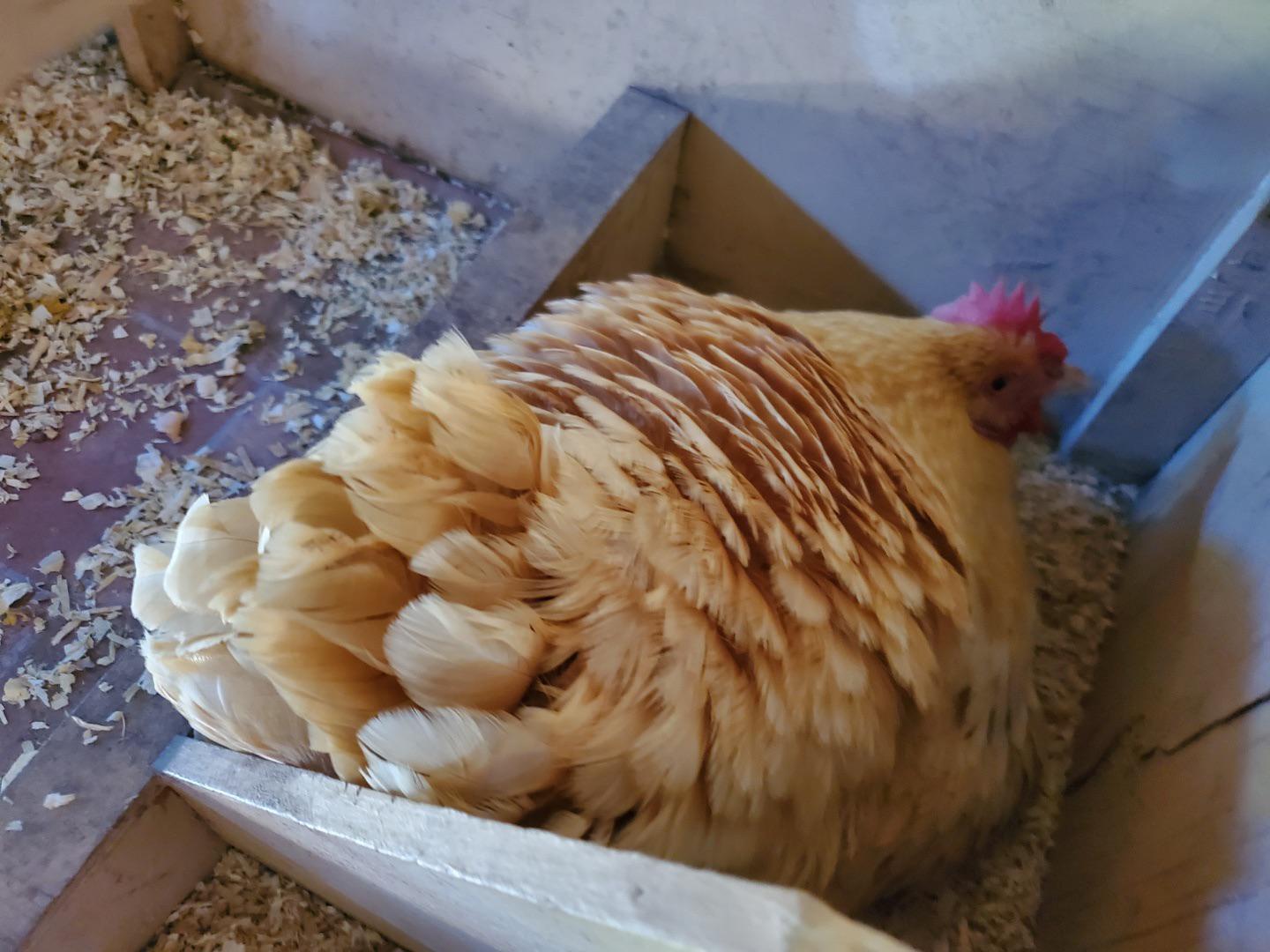
- Spending a long time in the nesting box without laying
- Repeated straining, crouching, or tail pumping
- Walking stiffly like a penguin, or refusing to walk
- Fluffed feathers, closed eyes, “not herself” posture
- Loss of appetite, refusing treats
- Less poop, very small poops, or no poop
- Swollen vent area, or vent pulsing with effort
One quick check (gentle)
Bring her somewhere warm and quiet. With clean hands, gently feel the lower abdomen just in front of the vent. You are looking for a firm, egg-shaped bulge. Sometimes you can feel it, sometimes you cannot, especially if it is higher up.
Important: Do not squeeze. If she reacts strongly or seems painful, stop. You are gathering clues, not trying to push anything out from the outside.
Also important: “Hen looks egg-bound” symptoms can overlap with other serious problems (reproductive infection, egg yolk peritonitis or internal laying, constipation, or heat stress). If you are not sure, treat it as urgent and call a vet.
Red flags: when to go to the vet immediately
I am very pro DIY for a lot of chicken keeping. Egg binding is where I draw a hard line on “know when to escalate.” Seek urgent veterinary care if you see any of the following:
- She cannot stand, is collapsing, or seems limp
- Heavy open-mouth breathing or gasping
- Blue or very pale comb
- Vent prolapse (tissue protruding from the vent)
- Blood from the vent, or you suspect a broken egg inside
- Foul smell from the vent area
- She is getting weaker at any point, even if you just started home care
- No improvement after warmth and one proper soak (roughly an hour of active supportive care)
- You have a hen who is very young, unusually small, or has a history of laying problems
If you have an avian vet within driving distance, it is never “overreacting” to call and ask if they want you to come in.
First response: set up a warm, quiet “spa box”
Before baths and lubricants, do the basics. These steps buy you time and give her body a better chance of passing the egg.
What to do right away
- Isolate her in a dim, quiet spot indoors. A dog crate, large tote, or laundry basket lined with towels works.
- Add warmth. Aim for cozy, not hot. A heating pad on low under half the crate, or a hot water bottle wrapped in a towel, lets her choose a comfortable spot. If you use a heat lamp, be extremely careful about fire risk and keep it securely mounted well away from bedding and walls.
- Offer water first. Dehydration makes everything harder. If she will drink, great. If not, offer water with poultry electrolytes.
If you use a dropper or syringe (no needle), only offer tiny drops at the side of the beak if she is fully alert and swallowing. Never force fluids into a struggling, limp, or gasping bird because aspiration can be fatal.
Helpful supplies
- Clean towels
- Disposable gloves
- Epsom salt (plain, unscented)
- Lubricant: plain KY Jelly or sterile water-based lubricant
- Optional: poultry electrolytes
- Optional: oral liquid calcium (see calcium section below)
Avoid: forcing food, trying to manually pull anything from the vent, or relying on a single supplement as the main fix. Support her, keep her warm, and be ready to go to the vet.
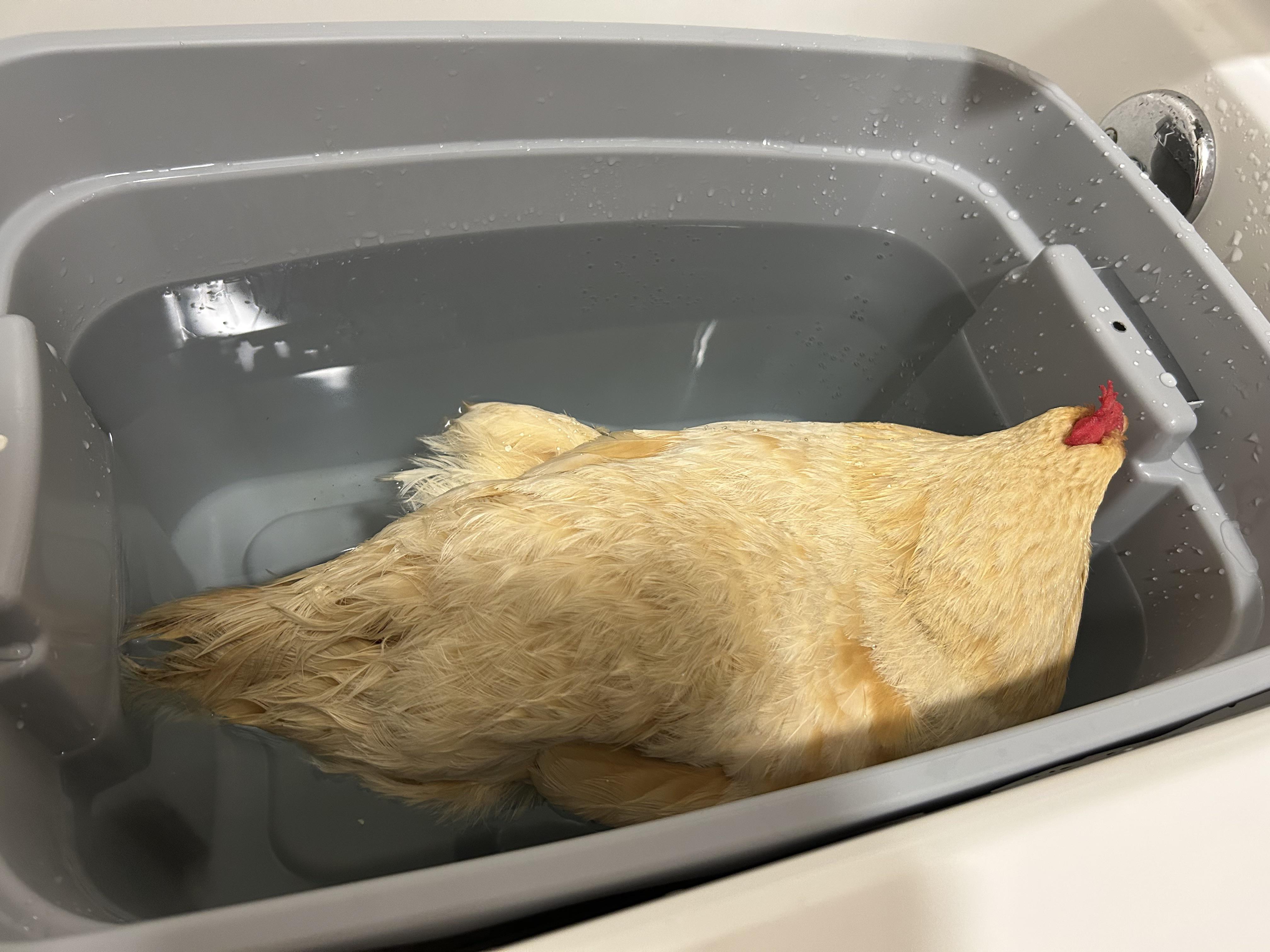
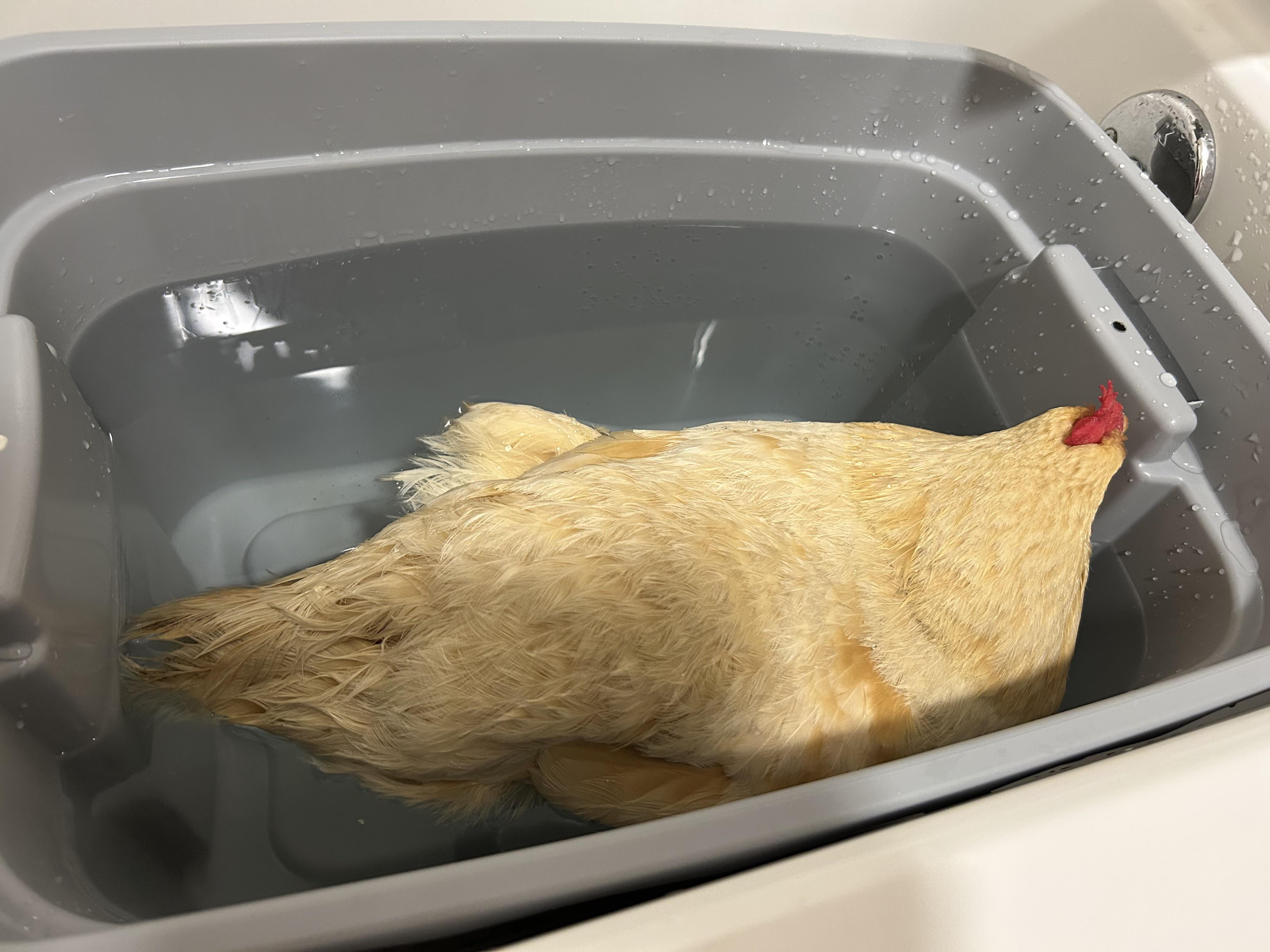
Warm soak (with or without Epsom): step-by-step
A warm soak relaxes the muscles around the vent and can help some hens settle enough to pass the egg. Many keepers add Epsom salt. The warm water is the key part, and the Epsom piece is more “common backyard practice” than proven medicine.
How to do it
- Fill a basin with warm water deep enough to cover her vent area, but not so deep she struggles to balance. A safe target is about 98 to 102°F (37 to 39°C). Warm, not hot.
- Optional: add Epsom salt. If you use it, keep it light. A common backyard amount is roughly 1/4 to 1/2 cup per gallon, but do not stress about perfect measuring.
- Support her in the bath. Some hens relax; others panic. Keep a hand under her body so she feels stable.
- Soak 15 to 20 minutes, supervised the whole time.
- Dry her thoroughly. Wet hens chill fast. Pat dry with a towel, then return her to the warm spa box.
While she is warm and relaxed after the soak, many hens will pass the egg within the next 30 to 60 minutes. If she is declining at any point, do not wait. Go.
Liquid calcium: when it helps and when it doesn’t
This is the nuance a lot of guides miss: solid calcium (like oyster shell) is not a fast emergency tool, but oral liquid calcium (such as calcium gluconate made for poultry or birds) is commonly used by avian vets and experienced keepers as first aid because it can help support muscle contractions in a stable hen.
- What it can do: help if uterine inertia (weak contractions) is part of the problem.
- What it cannot do: fix an oversized egg, a malformed egg, dehydration, infection, or an egg that is physically stuck for other reasons.
If your hen is alert and swallowing, giving an appropriate poultry liquid calcium product can be reasonable while you are also doing warmth and arranging vet care. If you are not sure what product to use or how to dose it, call an avian vet. If she is limp, gasping, very cold, or unresponsive, skip supplements and go now.
Safe lubrication: what to use and how
Lubrication can help if the egg is close to the vent and she is straining but not progressing. The goal is to reduce friction, not to push or pry.
What lubricant is safest
- Water-based sterile lubricant (like KY Jelly) is my go-to.
- Do not use products with numbing agents, fragrances, essential oils, or medicated creams unless your vet directs it.
- If you do not have KY, a very small amount of plain cooking oil is sometimes used in a pinch, but it is not sterile. Use minimally and prioritize vet care if things are not moving quickly.
External lubrication (best starting point)
- Put on gloves.
- Apply a small amount of lubricant around the vent.
- Let her rest in the warm box for 10 to 15 minutes.
Internal lubrication (only for experienced hands)
If you strongly suspect the egg is just inside the vent, you can very carefully place a small amount of lubricant just inside using a gloved fingertip.
- Be extremely gentle. The tissue is delicate.
- Do not go digging. If you cannot immediately feel the egg just inside, stop.
- If you are inexperienced, skip this step and go to the vet. It is easy to cause injury when you are stressed and rushing.
- Never try to break the egg. Broken egg inside can lead to infection and serious complications.
After lubrication, return her to warmth and quiet. Many hens need privacy. Yes, even in an emergency, they can be modest little weirdos.
What not to do (common panic moves that backfire)
- Do not squeeze her abdomen to “help” push the egg out. You can rupture the egg or injure internal tissue.
- Do not pull on anything at the vent.
- Do not give human painkillers. Many are toxic to birds.
- Do not keep soaking for hours. If warmth and one to two short soaks are not working, it is time to escalate.
- Do not delay vet care if she is worsening, prolapsing, bleeding, or becoming weak.
How long can a chicken be egg-bound?
This is the question every keeper asks while staring at the clock. A hen can deteriorate within hours, especially if she is dehydrated, exhausted, or the egg is large or misshapen.
My backyard rule of thumb is this: if she is actively declining at any point, go immediately. If she is stable but clearly egg-bound, start supportive care right away and plan for vet escalation if there is no improvement after warmth and one good soak, or if you are simply not sure what you are dealing with.
After she passes the egg: what to do next
Sometimes the egg finally arrives and you want to celebrate with confetti and a tiny hen-sized medal. Instead, do the boring stuff that keeps her safe.
Immediate aftercare
- Keep her warm and quiet for the rest of the day.
- Offer water, then a small amount of feed when she is interested.
- Check her vent for swelling, redness, or any protruding tissue.
- Watch her droppings. Passing normal poop again is a very good sign.
Should you isolate overnight?
If she seems tired or sore, I usually keep her inside overnight with food and water. The next morning, if she is bright-eyed, walking normally, and eating, I reunite her with the flock.
Quick cleanup (worth doing)
Wash your hands, change towels, and disinfect the basin. If she had messy droppings or discharge, keep her separate until she is steady and acting normal. It protects her and it protects the flock.
Why egg binding happens (and how to prevent a repeat)
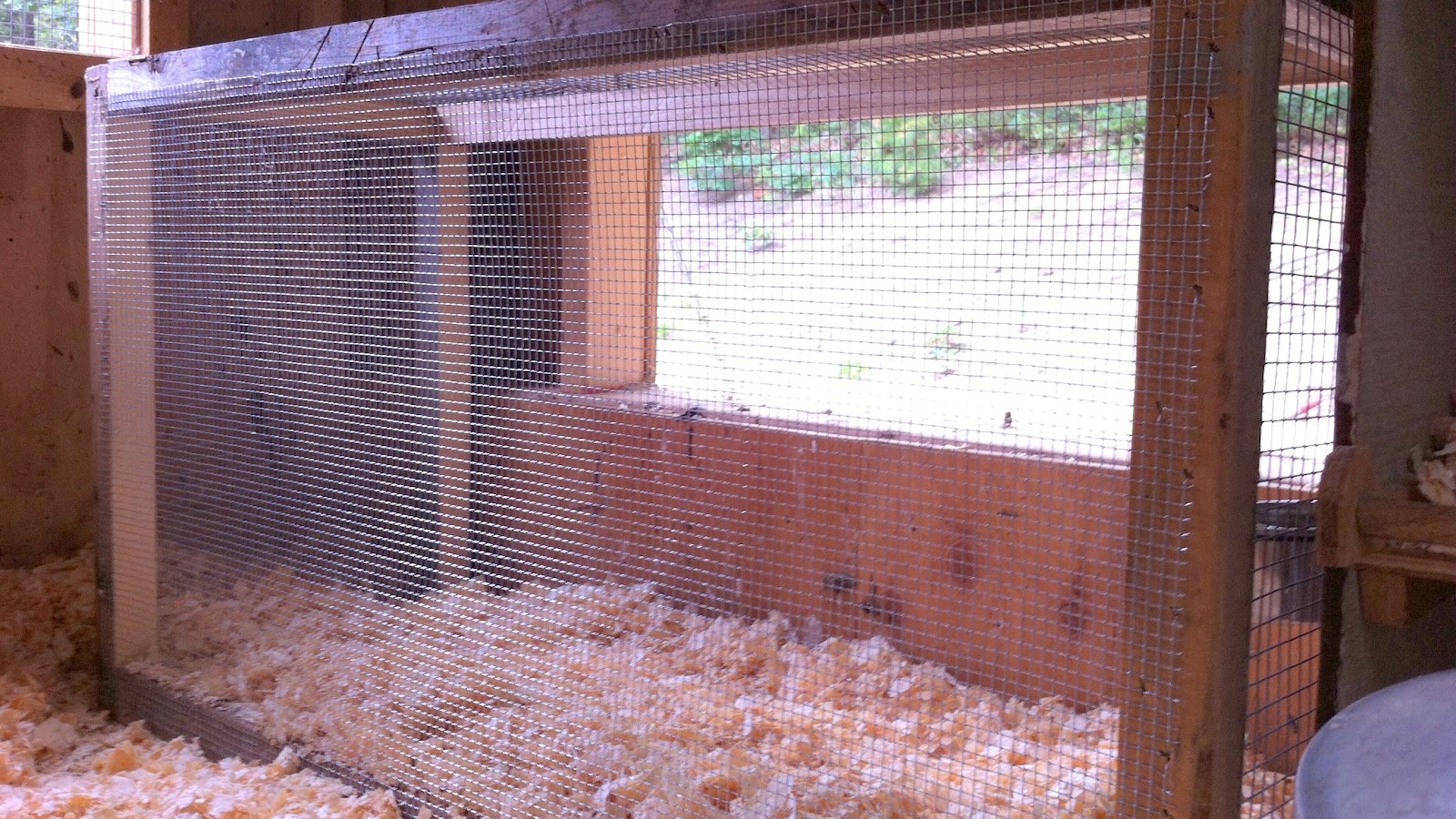
Egg binding is often a perfect storm of “too big, too dry, too stressed, too cold, or not enough muscle tone.” Sometimes you never find a single smoking gun, but you can lower the odds.
Common causes and risk factors
- Young pullets laying their first large eggs
- Large or oddly shaped eggs, including double-yolkers
- Dehydration, especially in heat waves or during winter when they drink less
- Obesity or poor muscle tone
- Low calcium or nutrition imbalance
- Cold weather and reduced activity
- Stress from bullying, predator scares, or coop changes
- Reproductive issues like inflammation or scarring
Prevention that actually helps in a backyard flock
- Fresh water always, and in winter make it easy to drink (lukewarm refills help).
- Feed a quality layer ration once they are actively laying.
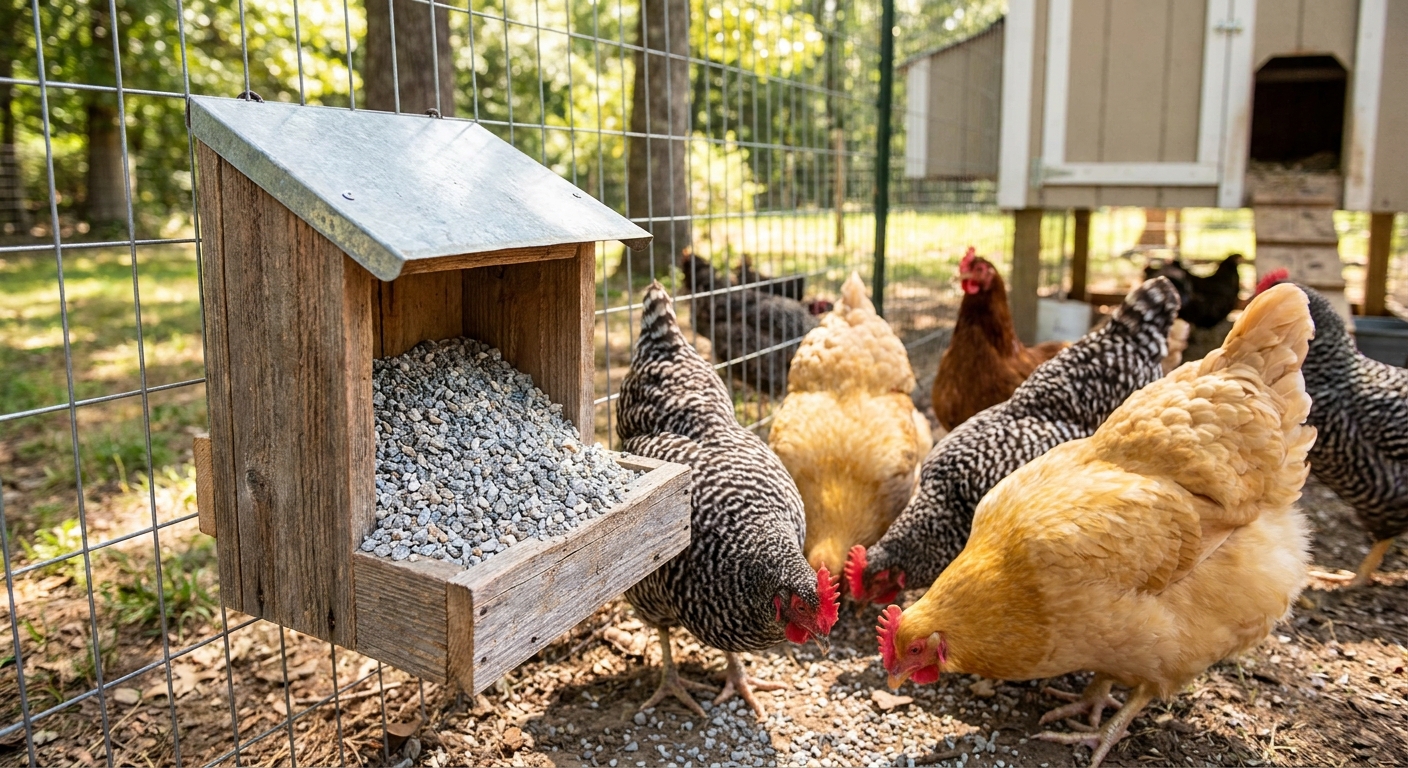
- Offer free-choice oyster shell in a separate dish so hens can self-regulate calcium.
- Limit scratch and treats so they do not crowd out real nutrition.
- Encourage movement: bigger run, scattered treats in bedding, perches at varying heights.
- Manage flock stress: enough nesting boxes, enough space, and quick action on bullying.
FAQ
Can I feel the egg if my hen is egg-bound?
Sometimes. If the egg is low, you may feel a firm oval near the vent area. If it is higher in the oviduct, you might not feel anything externally. Either way, the behavior signs and lack of laying matter.
Is a warm soak safe for chickens?
Generally, yes, when done correctly: warm water (not hot), shallow depth, supervised the whole time, and thorough drying afterward. Do not leave a hen unattended in water.
Should I give calcium during egg binding?
For prevention, free-choice oyster shell alongside a complete layer feed is a great approach. For an active emergency, solid calcium is not fast. Oral liquid calcium is often used as first aid to support contractions in a stable hen, but it is not a cure-all and it should not delay warmth, hydration, and timely vet care. When in doubt, call an avian vet for product and dosing guidance.
What if the egg breaks?
If you suspect a broken egg inside, or you see shell bits, foul odor, blood, or rapid decline, this is a veterinary emergency. Internal contamination can cause serious infection.
My simple “if this, then that” plan
- Hen straining, lethargic, not laying: bring her in, warm and quiet, offer water.
- Stable but still straining: do one 15 to 20 minute warm soak (Epsom optional), dry well, back to warmth.
- Egg seems close: consider gentle lubrication around the vent, then rest.
- Alert and swallowing, contractions seem weak: consider an oral liquid calcium product while you call the vet and keep her warm.
- Any red flags, any rapid worsening, or no improvement after warmth and one soak: call an avian vet and go.
I know this can feel scary. The most important thing is acting early and staying gentle. Your job is to support her body and recognize when she needs medical help, not to wrestle an egg out at all costs.