Apple cider vinegar, garlic, and electrolytes can support your flock through stress, heat, and recovery. Here’s how to dose responsibly, when to use them, an...
The Cluck Loom
Heat Stress in Chickens: Signs, First Aid, and Prevention
Learn the quick signs of heat stress in chickens, what to do right away to cool an overheated hen, and simple summer setups that keep your whole flock hydrated and safe.

Maggie Harper
Maggie Harper is a passionate backyard chicken keeper with over a decade of hands-on experience raising mixed flocks. Through CluckLoom, she shares practical advice on coop building, flock health, and egg production to help beginners and seasoned enthusiasts alike raise happy, healthy chickens.
Published
October 22, 2026
Last updated
October 22, 2026
When a summer heatwave hits, chickens do not “sweat it out” the way we do. They cool themselves mostly by panting and moving heat out through their comb, wattles, and legs. That system works fine on a warm day, but once it is truly hot (and especially when humidity climbs), heat stress can sneak up fast.
I learned this the hard way my first brutal July with three Rhode Island Reds and a coop that was basically a wooden toaster. The good news is that heat trouble is usually preventable, and if you catch it early, it is often reversible. Let’s talk about the signs, what to do in the moment, and how to set your coop and run up for safer summers.
Heat stress vs. heat stroke
Keepers and even vets do not always use these terms the exact same way, so do not get too hung up on labels. What matters is how the bird looks and how fast she is getting worse.
Heat stress is the early danger zone. The bird is struggling to cool down but can often recover quickly with shade, airflow, and water.
Severe heat stress is when you see weakness, poor coordination, and a bird that is no longer regulating her body temperature well.
Heat stroke is an emergency. Body temperature gets dangerously high and organs can start to fail. Any bird with collapse, seizures, gasping, or extreme lethargy should be treated as urgent and seen by an avian vet or emergency clinic if possible.
Quick signs of heat stress
Some signs look obvious, and some look like “my chicken is just being weird.” In summer, assume heat first and rule it out quickly.
Early warning signs
- Panting (open-mouth breathing), especially at rest
- Wings held away from the body to dump heat
- Less activity, standing in one spot, seeking shade
- Increased drinking, hanging around waterers
- Reduced appetite during the hottest part of the day
More serious signs (act now)
- Lethargy, sitting fluffed and unwilling to move
- Pale comb and wattles (or very dark, congested looking comb in some birds)
- Weakness, wobbling, or collapse
- Staring or less responsive than normal
- Watery droppings (heat can increase water intake and change droppings)
Emergency signs
- Gasping, labored breathing, neck stretched out
- Seizures or uncontrolled movements
- Unconsciousness
If you are seeing the serious or emergency signs, skip ahead to first aid. This is not the moment to reorganize your shade cloth situation.
First aid: cool her down fast
The goal is to lower body temperature steadily without shocking the bird. Think cooling, not freezing.
Step 1: Shade and airflow
Carry the chicken to the coolest spot you have: shaded porch, garage with a fan, breezy laundry room, even a bathroom with a tiled floor. Keep it calm and quiet.
Do not put her in an enclosed, stuffy space “out of the sun” like a closed car, hot sunroom, or shut garage. Shade without airflow can still overheat.
Step 2: Offer cool water
Hold a water cup to her beak if she is too out of it to find the waterer, but do not force water down her throat. If she is alert and drinking, let her sip as much as she wants.
Step 3: Cool feet and legs first
Chickens shed heat through their unfeathered parts. If I have one bird looking rough, I start with short cooling intervals and check her often:
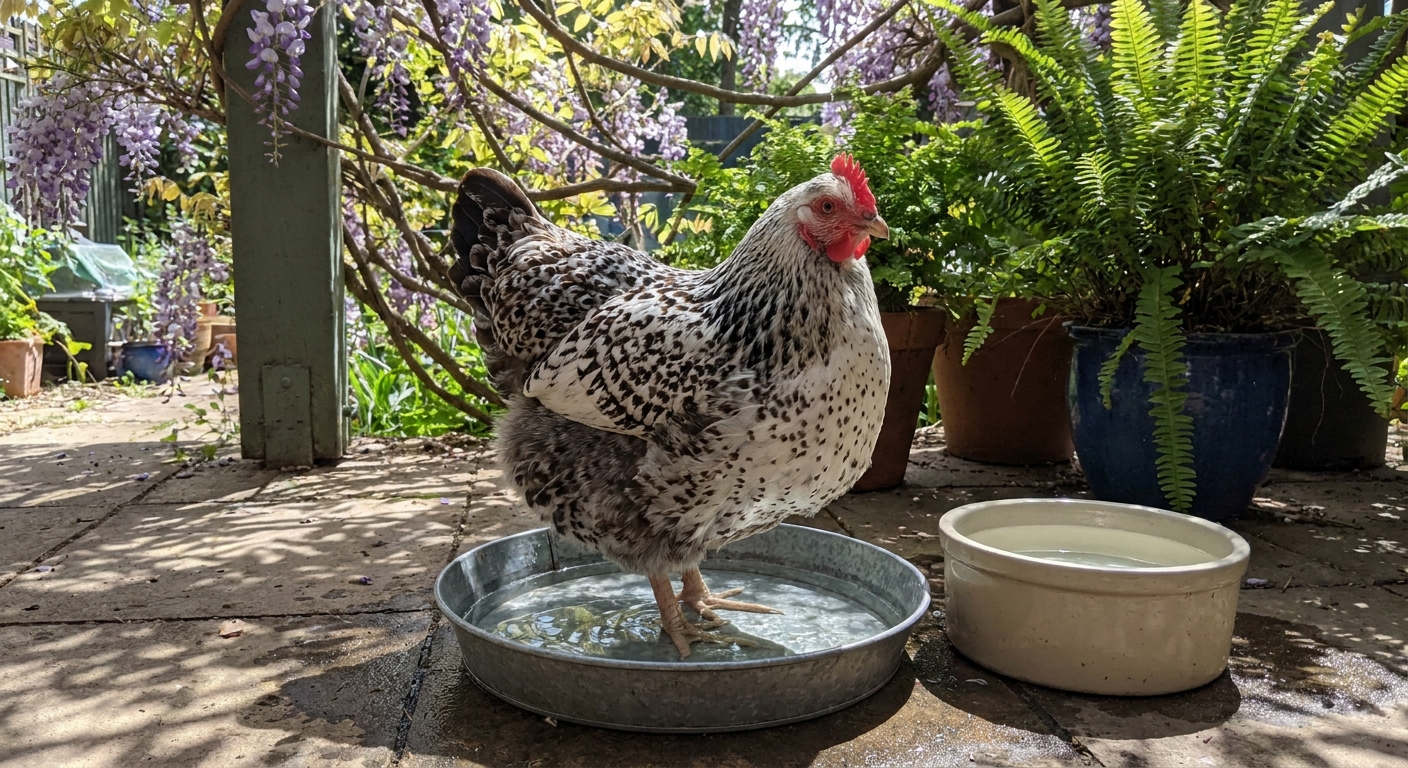
- Stand her in a shallow pan of cool water (not ice water) briefly, then reassess
- Use a wet cloth on legs and feet and refresh it as it warms
This is a gentle way to bring temperature down without soaking the whole bird.
Step 4: Lightly mist comb and wattles
A light mist on the comb and wattles can help because evaporation is what cools. Avoid drenching her feathers. If the air is humid and still, soaking does not evaporate well, and a wet bird can end up stressed or chilled later once the temperature drops or a breeze kicks up.
Step 5: Add moving air
A fan across the room (not blasting directly into her face) helps evaporative cooling. If you have multiple birds struggling, a box fan aimed across a shaded run can be a lifesaver.
Step 6: Watch recovery and escalate if needed
You want to see panting slow down, posture improve, and the bird become more alert. Keep her in the cool spot for at least 30 to 60 minutes after she looks “better,” because relapse is real once she goes back into the heat.
If she is not clearly improving after about 15 to 30 minutes in a cool, well-ventilated space, or if she worsens at any point (collapse, blue or gray discoloration, seizures, persistent severe breathing trouble), treat it as an emergency and contact a vet.
What not to do
- Do not dunk a hot chicken in ice water. Sudden temperature changes can cause shock.
- Do not force electrolytes or water if she cannot swallow well.
- Do not leave her alone in a closed carrier in the shade. She needs airflow.
Hydration that works
Heat stress prevention is mostly a water management game. In my flock, the birds that get in trouble first are the ones that stand around, panting, because the water is warm, crowded, or too far from the shade.
Set up a hydration grid
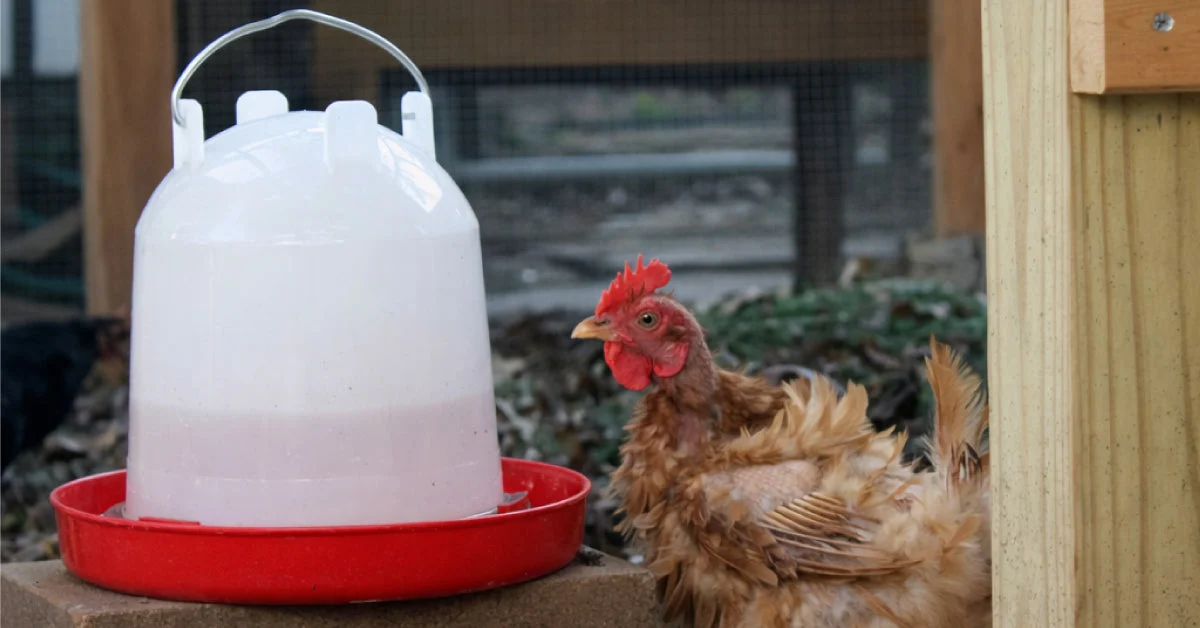
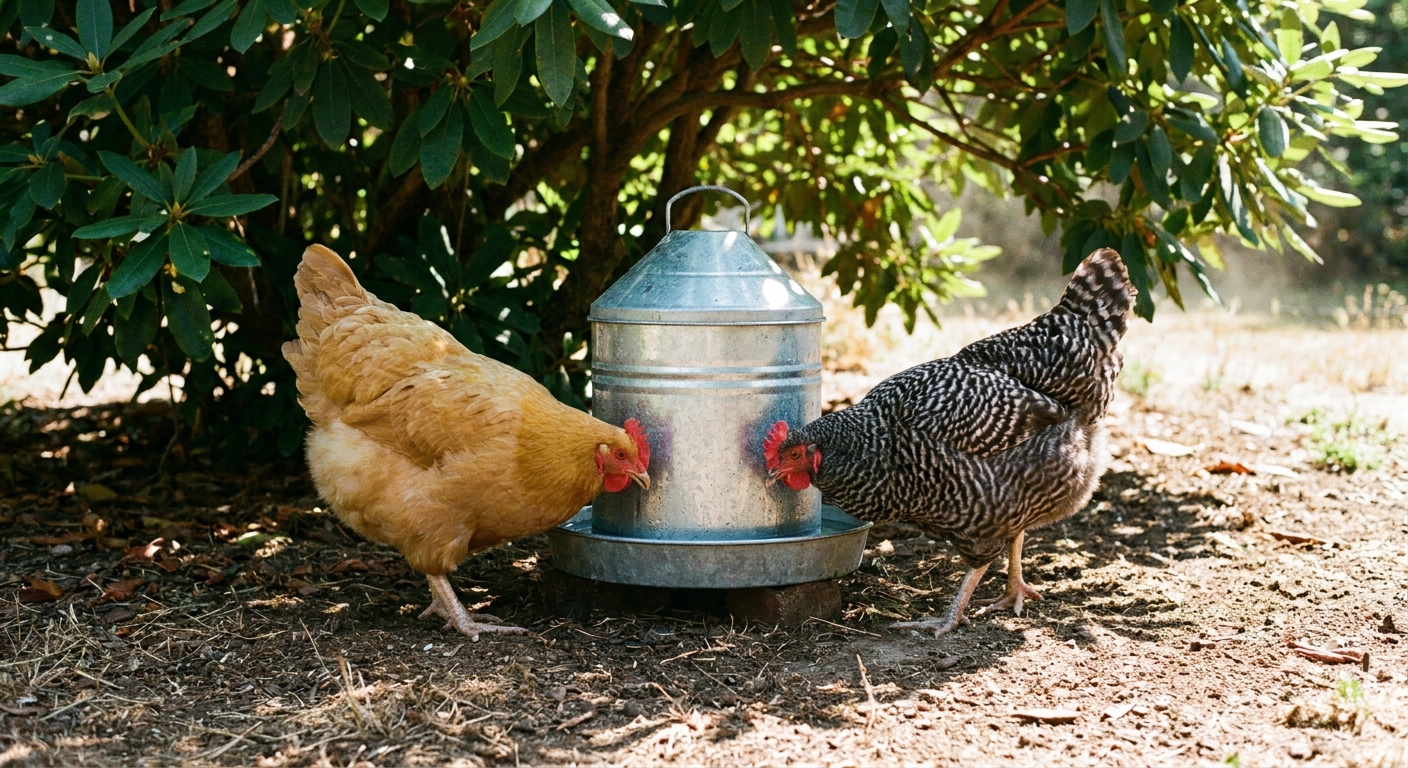
- More than one water station, spaced apart to reduce bullying and traffic jams
- At least one waterer in deep shade all day
- Refresh water midday during extreme heat. Lukewarm water gets ignored.
- Raise waterers to back height to keep bedding and dirt out
Electrolytes: helpful, but follow directions
Electrolytes can help after a hot day or during a multi-day heatwave when panting is constant. Panting can shift a bird’s body chemistry, so I use a poultry electrolyte mix exactly as directed and offer it for a short window, then switch back to plain water.
- Offer one electrolyte waterer and one plain waterer so birds can choose.
- Avoid giving sugary mixes day after day. Sugar can contribute to messy droppings and may encourage bacterial growth in warm waterers.
- Clean waterers more often in heat. Biofilm forms fast.
Water-rich treats (smart, not sloppy)
Yes, cold treats help, but treats should support hydration, not replace balanced feed.
- Chilled watermelon or cucumber chunks in the shade
- Frozen peas or corn tossed in a shallow pan (easy to portion)
- A “flock popsicle” made by freezing chopped produce in a container of water
Skip salty snacks and salt add-ons. Chickens do need sodium in a complete ration, but extra salt on top of their normal feed can worsen dehydration and make droppings messier in hot weather.
Coop and run cooling
You do not need a fancy setup to keep chickens safer in heat, but you do need to think like a chicken: shade, airflow, and cool ground beat “cute” every time.
Shade first
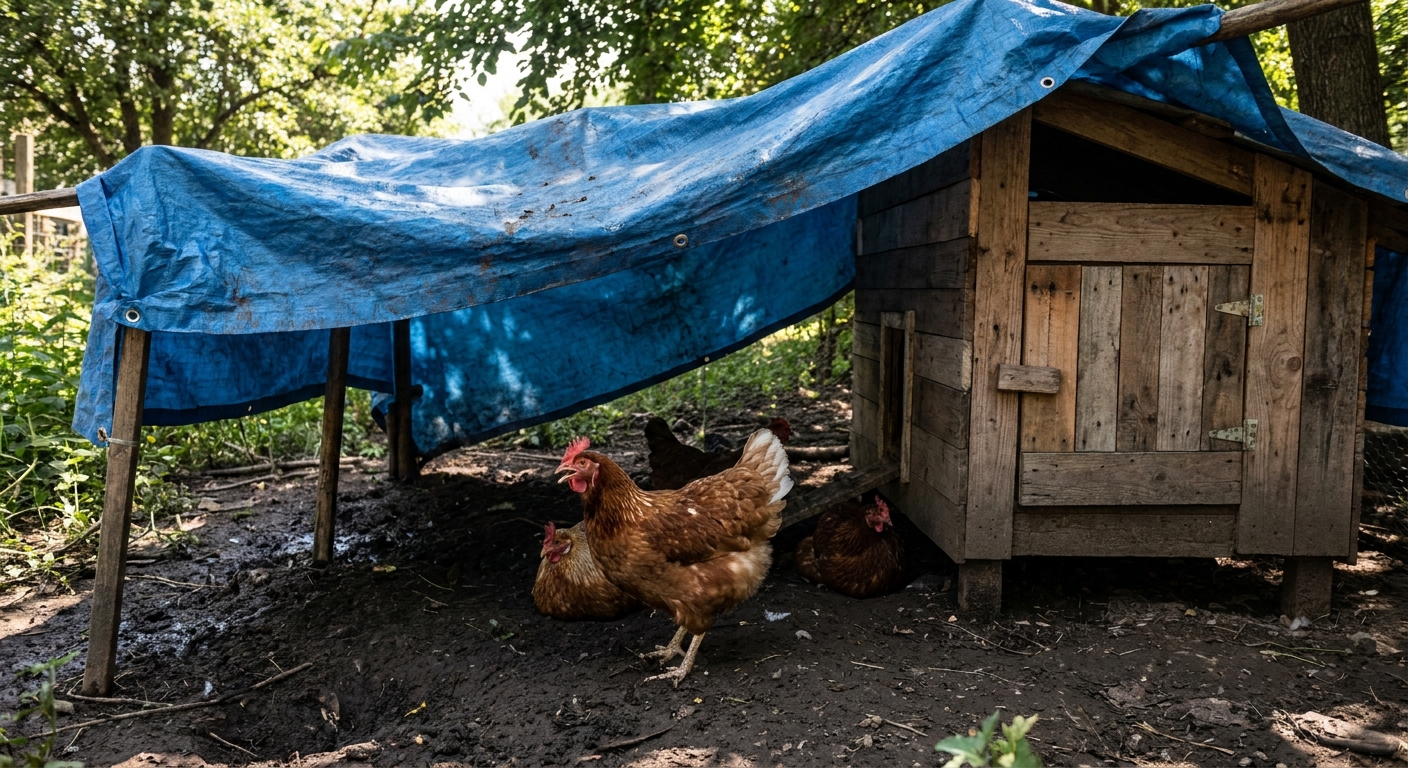
- Add a tarp or shade cloth over part of the run, especially the side that gets afternoon sun.
- Create low shade, not just high shade. Chickens like to tuck under things.
- Use shrubs, pallet lean-tos, or a simple table as a shaded hangout.
Airflow in the coop (and predator safety)
- Open vents fully and make sure they are predator-proof with hardware cloth.
- On extreme nights, consider leaving the coop pop door open only if your run is truly secure and predator-proof.
- Add a fan only if cords are protected and it cannot be pecked or tipped. Aim it to move air across the coop, not directly at roost level.
Cool ground and dust bathing
Chickens self-regulate by digging down to cooler soil. If your run is hard-packed or covered in hot sand, help them out.
- Keep a section of the run as bare dirt under shade.
- Offer a dust bath area in shade with dry soil and a bit of sand.
- In the hottest weeks, I lightly dampen a shady patch of dirt in the morning so it stays cool longer.
Frozen bottles and cool zones
Frozen water bottles are a low-effort win. Place them where birds rest, not where they will melt into a muddy mess.
- Freeze 1 to 2 liter bottles and lay them in shade.
- Put bottles behind a wire panel if you have relentless peckers.
- Swap midday on the worst days.
Who is most at risk
Some chickens handle heat better than others. If you have a mixed flock like mine, tailor your summer plan around the most vulnerable birds.
- Heavy breeds (Orpingtons, Brahmas, Cochins) tend to struggle sooner.
- Older hens and birds with ongoing health issues fatigue faster.
- Overweight birds have a harder time cooling.
- Dark-feathered birds can absorb more heat in direct sun.
- Crested or heavily feathered birds may need extra shade and airflow.
If you have a chronically heat-sensitive hen, do not be shy about bringing her into a cooled space during the hottest few hours. A chicken does not get a prize for toughing it out.
Aftercare
Once a chicken has overheated, I treat the next 24 hours as a recovery window.
- Keep her cool through the hottest part of the day, even if she seems normal.
- Offer plain water and electrolytes as described above.
- Watch droppings and appetite. Heat can temporarily reduce laying and feed intake.
- Check for underlying issues that heat can worsen, like respiratory trouble or heavy parasite loads.
If she remains weak, stops drinking, or shows breathing distress even in a cool area, call a vet. Heat can push a borderline problem into a crisis.
Heatwave checklist
- Shade over the run, especially afternoon sun side
- Two or more waterers, one in deep shade
- Midday water refresh on extreme days
- Cool dirt or dust bath area in shade
- Frozen bottles ready to rotate
- Know your at-risk birds and check them first
FAQ
At what temperature do chickens get heat stress?
It depends on humidity, airflow, shade, and the individual bird. Many backyard keepers start seeing panting and discomfort in the mid 80s F, and risk climbs quickly in the 90s F, especially with high humidity or still air. Use behavior as your real thermometer: panting at rest means it is time to intervene.
Should I put ice in my chickens’ water?
A few ice cubes are fine if it encourages drinking, but do not rely on it as your only strategy. Water warms quickly outside. It is usually more effective to add an extra shaded water station and swap fresh cool water midday.
Can I hose my chickens down?
Light misting on comb and wattles or wetting legs and feet is safer than soaking the whole bird. Evaporation is what cools, so water works best paired with shade and airflow. A drenched chicken can add stress, trap moisture without much cooling in humid still air, and may chill later if wind picks up or temperatures drop.
Why are my chickens not laying during a heatwave?
Heat stress often reduces egg production. The body prioritizes cooling and survival over making eggs. Production usually rebounds once temperatures stabilize, hydration improves, and the birds resume normal eating.