A backyard-keeper-friendly guide to spotting crop trouble early, checking the crop the right way, and using gentle, effective home care for sour crop or impa...
The Cluck Loom
The 5-Minute Chicken Health Check
A quick, beginner-friendly routine physical you can do on your chickens in about five minutes. Check behavior, eyes, beak, crop, feathers, feet, and vent to catch problems early.

Maggie Harper
Maggie Harper is a passionate backyard chicken keeper with over a decade of hands-on experience raising mixed flocks. Through CluckLoom, she shares practical advice on coop building, flock health, and egg production to help beginners and seasoned enthusiasts alike raise happy, healthy chickens.
Published
October 22, 2026
Last updated
October 22, 2026
If you keep chickens long enough, you learn a hard truth: most flock “emergencies” start as tiny clues. A slightly crusty nostril. A hen who suddenly looks a little too fluffed up. A crop that feels off when you scoop her up for bedtime.
The good news is you do not need a veterinary degree to notice those clues. You just need a consistent, quick routine. Here is the 5-minute chicken health check I do in my own backyard to catch issues early, while they are still easier to fix.
Before you start
When to do your check
- Best time: At roosting time, when chickens are naturally calmer and easier to handle.
- Frequency: Quick visual scan daily, hands-on check weekly. New birds, seniors, or anyone acting “off” get checked sooner.
What to have nearby
- A small flashlight or headlamp (great for vents and nostrils)
- A towel (helpful for wiggly birds)
- Disposable gloves if you are checking vents or suspect mites
- A small notebook or a note in your phone with a few baseline observations (weight feel, comb color, laying patterns)
How to hold a chicken safely
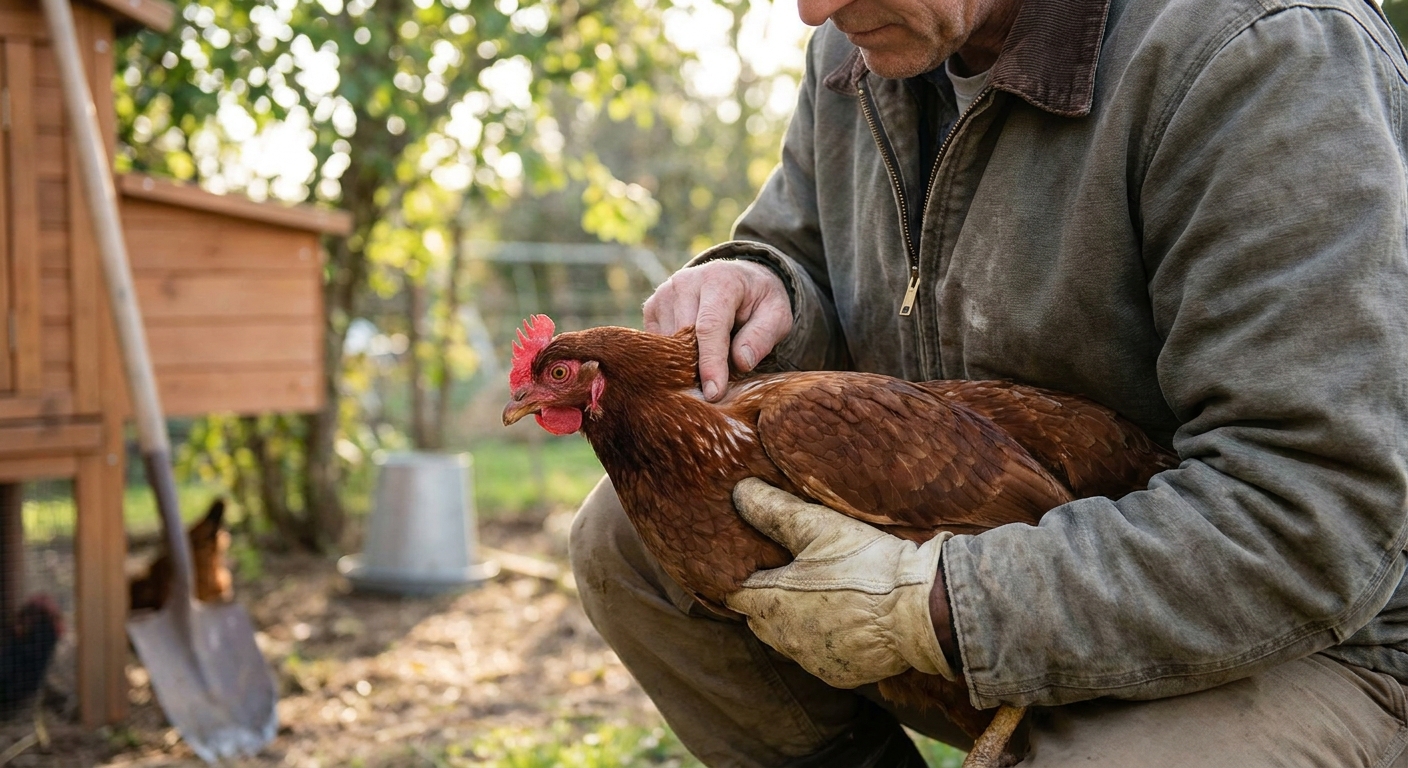
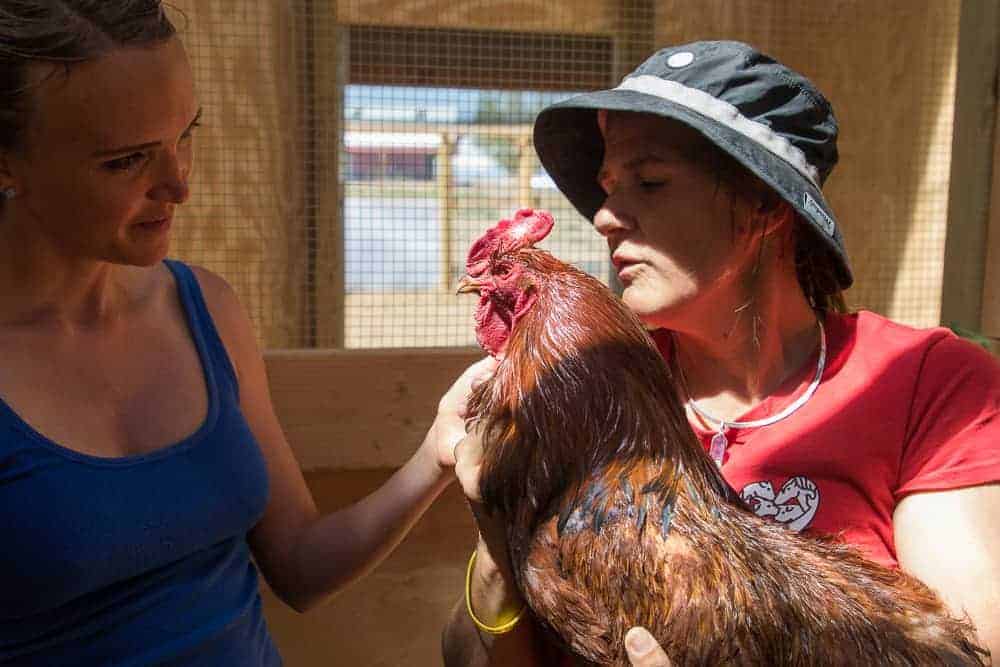
Slide one hand over the wings to keep them tucked, and support the body with the other hand. I like to hold the bird against my ribs like a football, head facing forward. Calm voice, calm movements. If you are tense, they know.
The 5-minute routine (head to tail)
This order keeps me from forgetting anything: behavior, eyes, beak and nostrils, comb and wattles, body condition, crop, feathers and skin, feet and legs, vent. If you only have time for three things, check behavior, crop, and vent. Those three catch a lot.
0) Behavior (20 seconds)
What healthy looks like: Alert, moving normally, interested in food, standing tall, breathing quietly.
Watch for:
- Hunched posture, puffed up for long stretches, or isolating from the flock
- Tail bobbing with each breath, persistent sneezing, or obvious effort breathing
- “Penguin stance” (upright, uncomfortable) or repeated straining
- Sudden drop in activity or appetite
My quick tip: If something looks off, trust that. Your eyes often catch illness before your hands do.
1) Eyes (15 seconds)
What healthy looks like: Bright, wide open, clear, no bubbles, no wetness.
Watch for:
- Foam, bubbles, or watery discharge (often respiratory irritation)
- Swelling around the eye
- One eye closed or squinting
- Crust stuck to eyelids
My quick tip: Compare both eyes. If one looks different, that is information.
2) Beak and nostrils (30 seconds)
What healthy looks like: Beak smooth and aligned, nostrils clean and dry, breathing quiet.
Watch for:
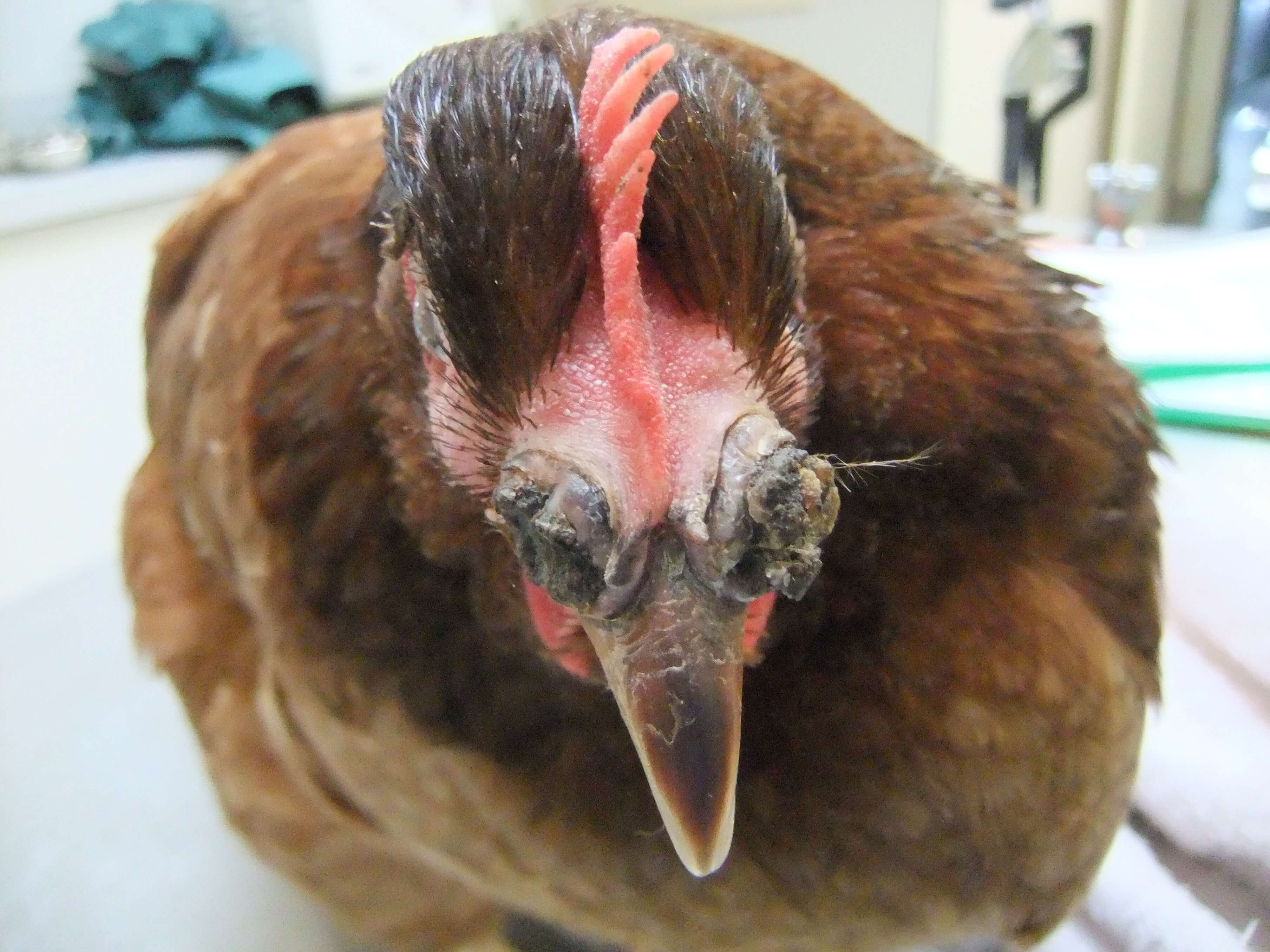
- Crusty nostrils or wet sneezing
- Bad odor from the beak (can point to oral or sinus infection, or crop problems)
- Scabs at the corners of the beak
- Open-mouth breathing when it is not hot
Also listen: Clicking, wheezing, or “gurgly” breathing is a reason to watch closely. Sometimes dust or ammonia irritation can cause a brief episode, but if it keeps happening or comes with discharge, lethargy, or poor appetite, I isolate and investigate.
3) Comb and wattles (20 seconds)
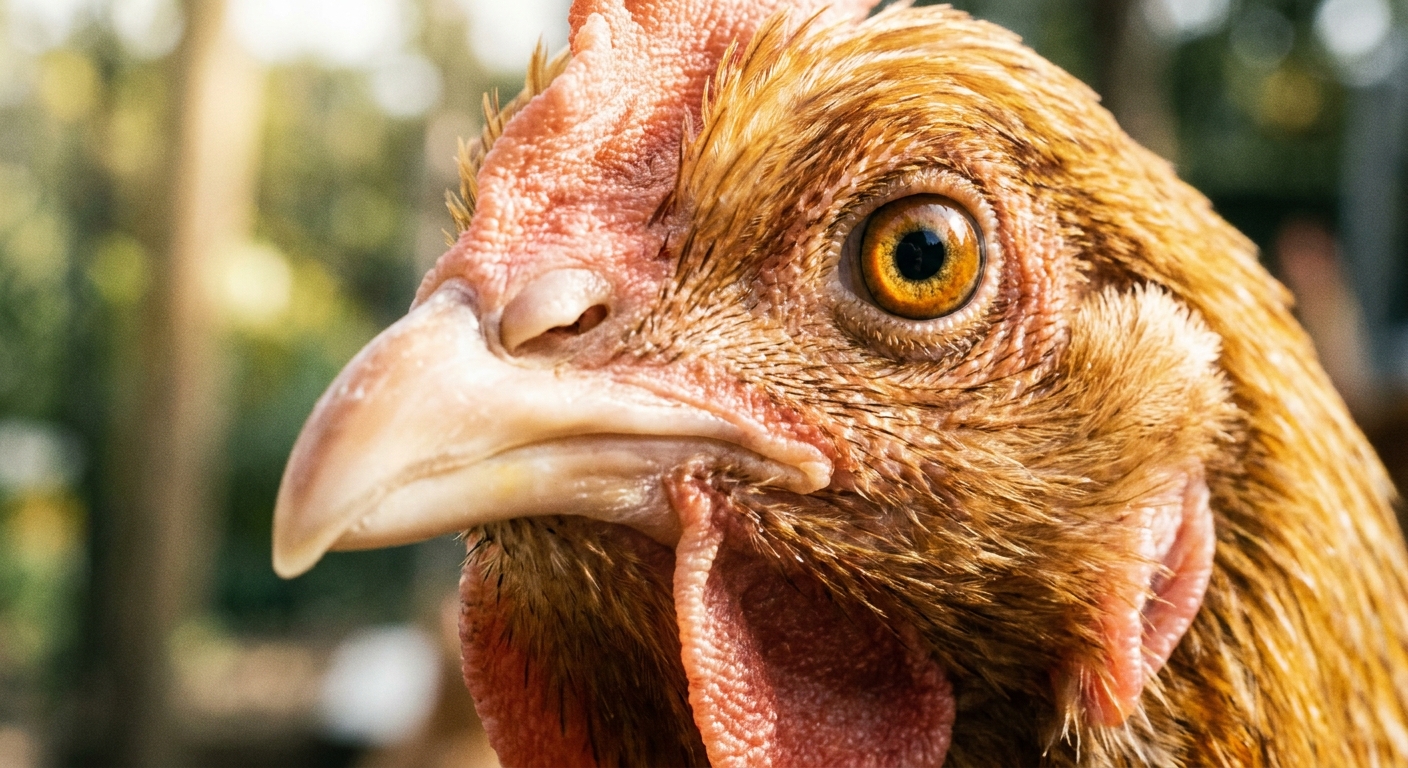
What healthy looks like: Color appropriate for the bird (often red in layers), warm but not hot, no swelling.
Watch for:
- Pale comb: can suggest anemia, heavy parasite load, or illness
- Purplish or very dark comb: can indicate circulation or respiratory trouble
- Black tips in winter: possible frostbite
- Scabby spots: can be pecking injuries, fowl pox, or mites depending on pattern
Baseline matters: Some hens run lighter combs when they pause laying. You are watching for sudden changes.
4) Body condition (30 seconds)
This is my quiet “chronic problem” detector. With your fingertips, feel along the breastbone (keel) under the feathers.
What healthy feels like: The keel is easy to find, but the muscle on either side feels rounded, not sharp or hollow.
Watch for:
- A sharp, prominent keel (weight loss, parasites, chronic illness, bullying)
- Sudden heaviness plus belly swelling (worth a closer look, especially in older layers)
My quick tip: You are not aiming for perfection, just noticing change from that bird’s normal.
5) Crop (45 seconds)
The crop is the little storage pouch at the base of the neck, usually slightly to the right. Checking it takes seconds and can save you from a nasty surprise.
What healthy feels like:
- In the evening: comfortably full and soft, like a beanbag
- First thing in the morning: mostly empty or flat
Watch for:
- Hard and tight crop at night: could be normal if she just ate, but note it
- Crop still full in the morning: possible impacted crop or slow digestion
- Squishy, sloshy crop with sour smell: possible sour crop (yeast overgrowth)
My quick rule: If you feel something odd at night, re-check that same bird early the next morning before breakfast. Morning tells the real story.
6) Feathers and skin (60 seconds)
Run your hands down the back and under the wings. You are not just admiring fluff, you are checking for parasites, wounds, and overall condition.
What healthy looks like: Clean feather shafts, smooth skin, no scabs, no bald patches beyond normal molting.
Watch for:
- Lice: often visible in daylight around feather shafts, plus irritation
- Mites: some are harder to spot during the day and can be worse at night, especially around the vent and under the wings
- Broken skin or scabs: can turn into infection quickly
- Sudden bare patches: bullying, rooster damage, or parasites
- Dirty feathers around the vent: diarrhea, vent issues, or worms possible
Where I look first: Along the skin under each wing and around the vent area. That is parasite central.
7) Feet and legs (40 seconds)
A chicken can be sick and still eat, but if she hurts, you will often see it in her feet first.
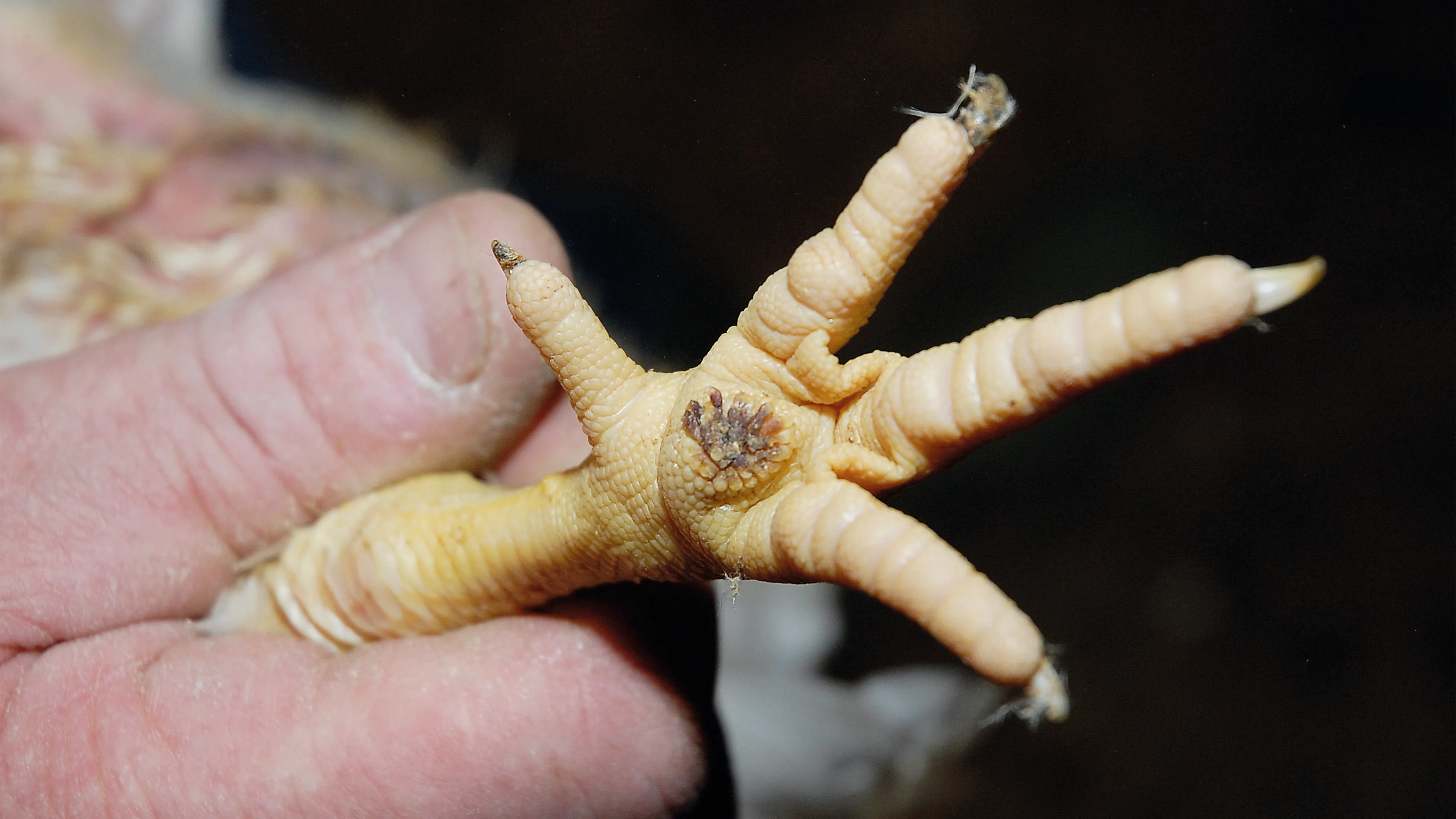
What healthy looks like: Smooth (breed-dependent) scales, no swelling, no heat, no limp, nails not curling into the footpad.
Watch for:
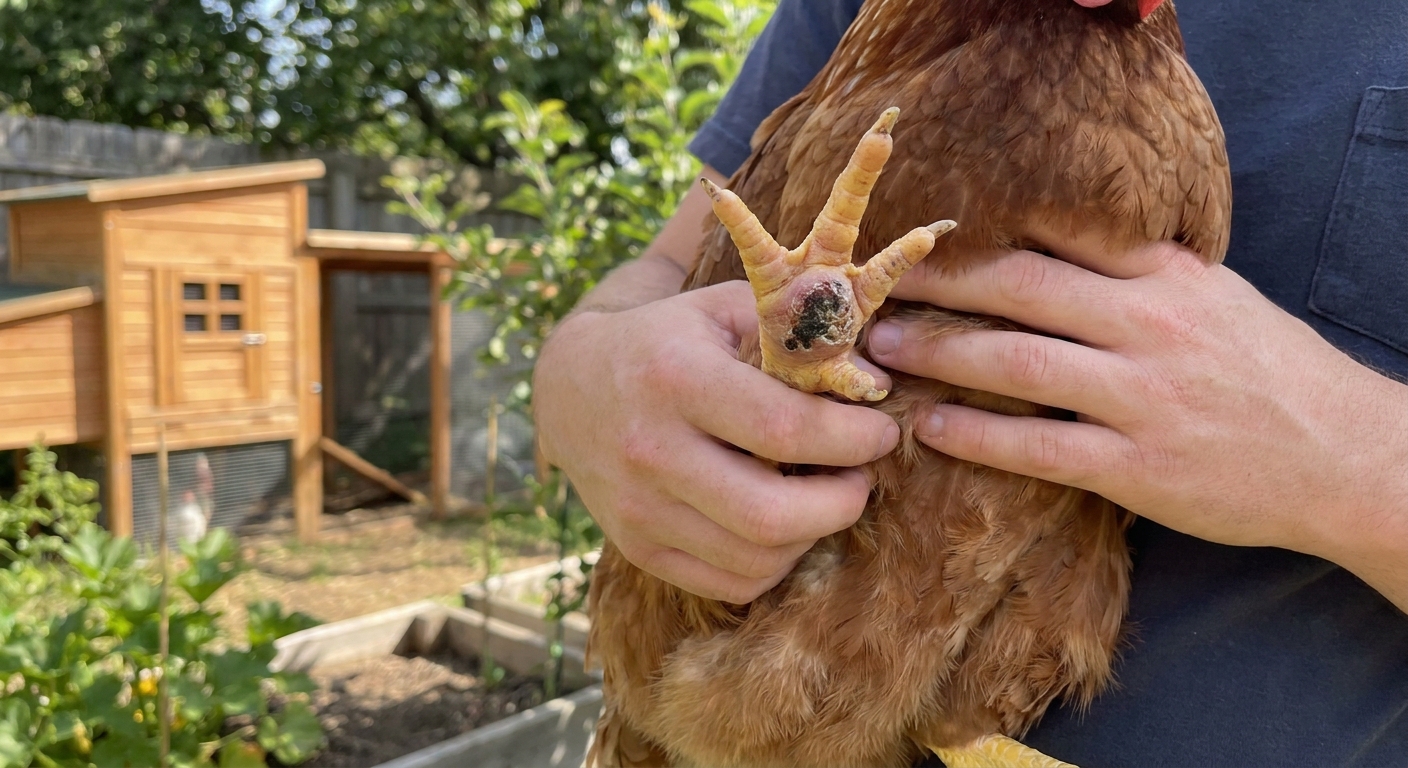
- Bumblefoot: swelling or a dark scab on the footpad
- Scaly leg mites: raised, crusty leg scales
- Sprains: warmth, tenderness, reluctance to bear weight
- String wrapped toes: hair or thread can cut off circulation fast
8) Vent (60 seconds)
This is the part new chicken keepers dread, but it is one of the most useful checks you can learn. A healthy vent should be clean, slightly moist, and free of swelling.
What healthy looks like: No poop build-up, no redness, no foul odor, feathers around it mostly clean.
Watch for:
- Pasty, stuck-on poop: diarrhea, stress, diet change, parasites, or illness
- Red, irritated tissue: could be irritation or the very beginning of a prolapse, treat it seriously
- Strong yeasty or rotten smell: can point to infection issues like vent gleet
- Visible worms or rice-like segments: parasite problem (and if you do not see them, it does not rule worms out)
Important: If you see pink tissue protruding (prolapse), keep the bird isolated and prevent pecking immediately. That one is urgent.
What normal looks like
New keepers often ask me, “But what if I do not know what I’m looking at?” The trick is building your own flock’s normal.
- Comb color: A laying hen’s comb can look redder after a warm afternoon and lighter during a molt.
- Molting: Scruffy feathers and a grumpy attitude can be normal in molt. Bald patches plus frantic itching is a different story.
- Poop: Chickens have normal variety poop, including the occasional smelly, mustardy cecal poop. Persistent watery poop or blood is not normal.
If you check one bird each night as you close the coop, you will have a solid baseline in a couple of weeks without feeling like you are running a chicken hospital.
Red flags to act on
- Not eating or not drinking
- Sitting puffed up and withdrawn for hours
- Labored breathing, open-mouth breathing when it is not hot, or blue or purple comb
- Crop still full in the morning, or sour smell from the beak
- Blood in droppings
- Black, tarry droppings, especially with lethargy or a pale comb
- Sudden limp with hot, swollen joints or footpad
- Prolapse, severe swelling, egg-binding signs (straining, penguin stance), or heavy bleeding
- Suspected poisoning (sudden collapse, tremors, severe weakness)
When in doubt, isolate the bird in a quiet, warm, safe spot with water. Isolation is not punishment. It is a way to monitor poop, appetite, and breathing, and it protects the rest of your flock while you figure out what is going on.
If a bird is in obvious distress or going downhill fast, call an avian vet or an experienced poultry vet. Backyard know-how is powerful, but there are moments when you want professional help right away.
New bird note
One small biosecurity habit that saves headaches: quarantine new birds before they join your flock. A separate space for about 2 to 4 weeks, plus a daily check for sneezing, mites, diarrhea, or lethargy, can keep one “new bird surprise” from becoming a whole-coop problem.
My simple checklist (save this)
- Behavior: alert, moving normally, no tail bobbing or straining
- Eyes: clear, bright, no bubbles or swelling
- Beak and nostrils: clean, dry, quiet breathing
- Comb and wattles: normal color for that bird, no swelling or scabs
- Body condition: keel not sharp, no sudden weight loss
- Crop: full-ish at night, empty in morning, no sour smell
- Feathers and skin: no crawling pests, scabs, or unusual bald spots
- Feet and legs: no scabs on footpad, no swelling, no limp
- Vent: clean, no redness, no stuck poop, no odor
FAQ
How long should a chicken health check take?
Once you get comfortable handling your birds, a full head-to-tail check takes about five minutes per chicken. If I am doing a weekly round, I will check 2 to 3 birds more thoroughly and do quick visual checks on the rest.
Do I need to check every chicken every week?
Not necessarily. In a calm backyard flock, I rotate. Everyone gets handled regularly, but I focus weekly hands-on checks on birds that are older, lower in the pecking order, recently integrated, or acting even slightly “off.”
What if my chicken fights being handled?
Try roost-time handling, keep wings tucked, and use a towel burrito for extra security. Short, calm sessions work better than wrestling matches. A few weeks of consistent gentle handling usually makes a huge difference.
Should I disinfect my hands between birds?
If you are doing routine checks on healthy birds, washing hands after is usually fine. If you suspect mites, respiratory illness, or diarrhea in one bird, change gloves or wash hands between birds to avoid spreading issues coop-wide.