Confused about grit and oyster shell? Here’s the practical backyard guide: what each does, which birds need them, and the simplest free-choice setup for a he...
The Cluck Loom
Sour Crop vs. Impacted Crop in Chickens
Learn how to tell sour crop from impacted crop by feel and smell, what causes each problem, and the safest at-home steps to help your hen’s crop start moving again.

Maggie Harper
Maggie Harper is a passionate backyard chicken keeper with over a decade of hands-on experience raising mixed flocks. Through CluckLoom, she shares practical advice on coop building, flock health, and egg production to help beginners and seasoned enthusiasts alike raise happy, healthy chickens.
Published
October 22, 2026
Last updated
October 22, 2026
If you keep chickens long enough, you will eventually meet the Crop Problem. One morning your hen looks puffy, grumpy, and not quite right. You pick her up, feel her chest, and there it is: a weird balloon of food sitting where it should not be sitting.
The good news is that most crop issues fall into two buckets, impacted crop (a physical blockage or stuck mass) and sour crop (crop contents that are fermenting, often yeast-associated, because the crop is not emptying normally). The tricky part is that they can look similar at first glance, and sometimes one turns into the other.
Quick safety note: This is backyard-keeper guidance, not a substitute for veterinary care. If your bird seems weak, is struggling to breathe, or you are unsure what you are feeling, call an avian vet.
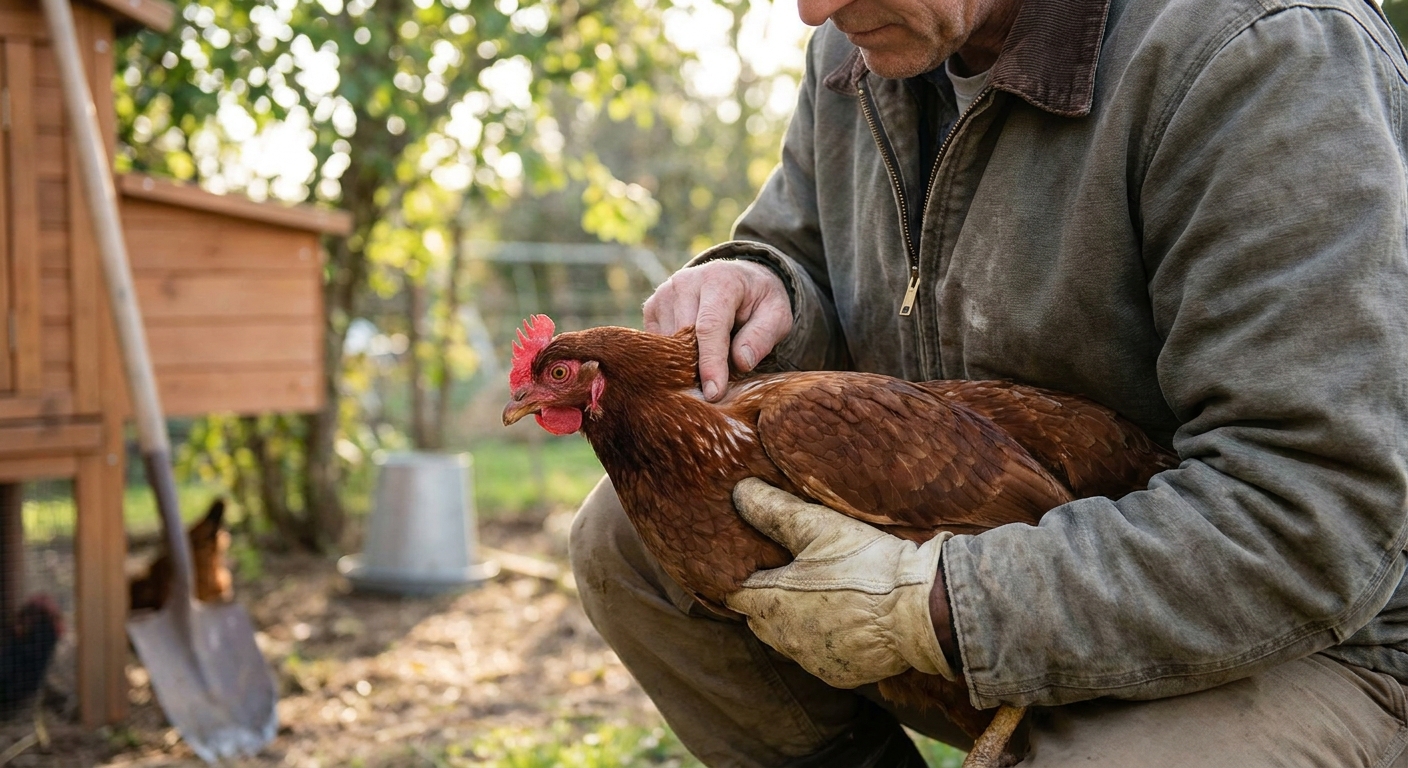
Let’s sort out what you are dealing with, how to check the crop safely, and what at-home help is actually useful.
Crop basics
The crop is a storage pouch at the base of your chicken’s neck, slightly to the right. It fills when they eat and should slowly empty as food moves into the rest of the digestive tract.
- Normal crop at bedtime: full or fairly firm, like a bag of feed.
- Normal crop first thing in the morning: mostly empty and flat.
The morning check is your best clue. A crop that is still quite full at dawn is waving a red flag, but it is not a diagnosis all by itself. Late-night snacking, very cold weather, stress, or limited water access can slow things down.
One more important note: a lump or swelling at the base of the neck is not always “crop contents.” Abscesses, tumors, or other issues can mimic crop trouble. If what you feel is hard, oddly placed, painful, or not changing at all over time, get it checked.
Sour vs. impacted
How it feels
- Impacted crop: usually feels firm, dense, and packed, like dough, a wad of grass, or a tight ball of feed. It may feel heavy.
- Sour crop: often feels puffy, squishy, or fluid-filled, like a water balloon or a sponge. Sometimes you can feel gas. (Also, a crop can feel sloshy if she drank a lot right before you picked her up, so check again later and compare to the morning trend.)
How it smells
- Impacted crop: little to no odor from the beak.
- Sour crop: breath may smell yeasty, fermented, sour, or like old beer. If she burps when you handle her, you will know.
Poop clues
- Impacted crop: often reduced droppings or small, dry droppings because not much is moving through.
- Sour crop: droppings may be watery, foamy, or foul-smelling. Sometimes you see more “off” poops from the gut being irritated.
Energy and posture
- Either problem: lethargy, standing puffed, not wanting treats (which is very rude of them), and reduced appetite are common.
Common causes
Impacted crop causes
- Long grass and tough weeds (especially springtime lawn buffet).
- Straw, hay, or wood shavings eaten out of boredom.
- Too many scratch grains with not enough balanced feed.
- Dehydration, which makes everything move slower.
- Not enough grit when birds are eating fibrous treats or ranging on plants.
- Underlying illness or pain that slows digestion.
Sour crop causes
- Crop not emptying (often from a mild impaction or other slow motility issue).
- Fermentation and microbial overgrowth (often yeast, sometimes mixed with bacteria) when feed sits too long.
- Antibiotic use sometimes disrupts normal gut flora.
- Moldy feed or consistently wet mash left out too long.
- Chronic slow motility from other health issues.
In plain backyard terms: impacted crop is often a “stuck wad,” and sour crop is what happens when the crop stays stuck long enough for the contents to ferment.
How to check the crop
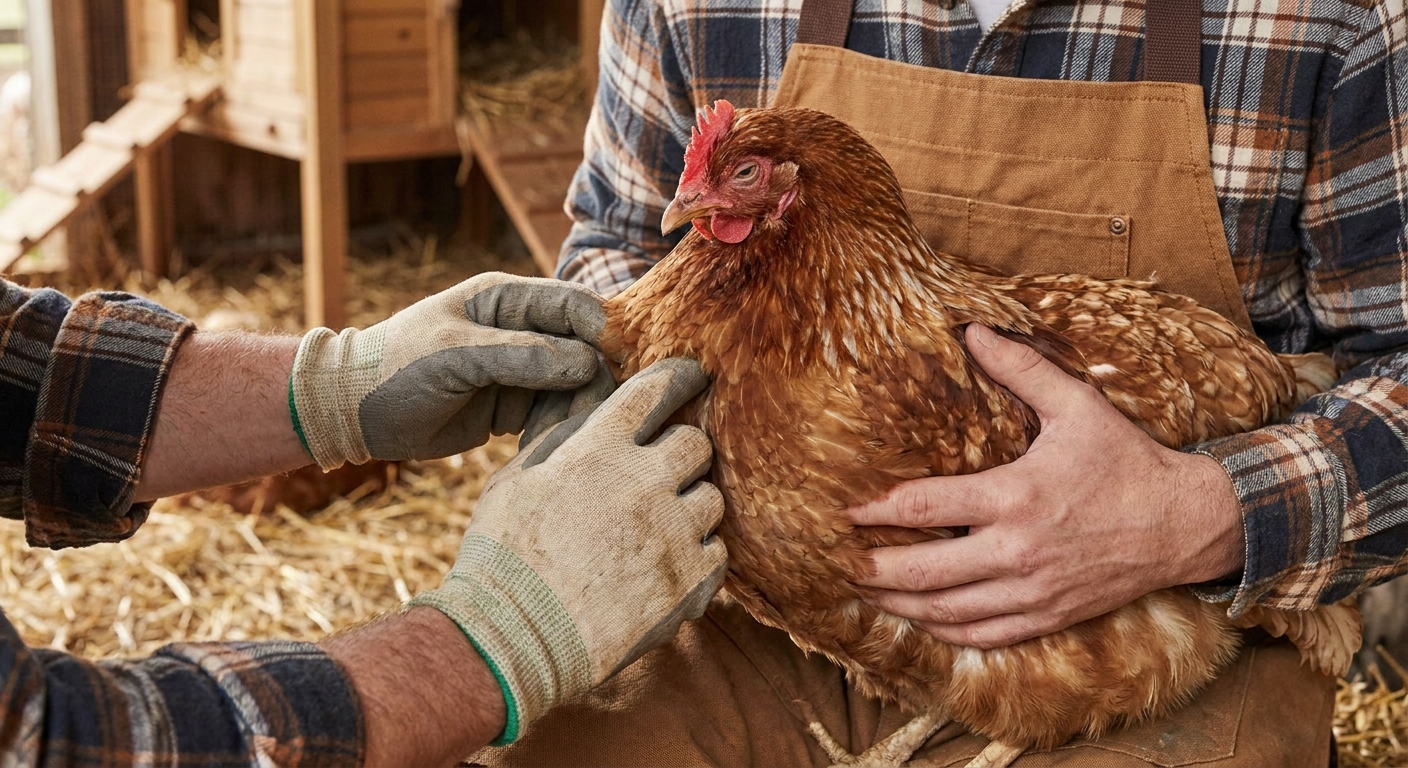
1) Do the morning crop check
Before breakfast, pick her up and feel the crop. If it is still very full, treat that as a strong clue something is not moving normally and start watching closely.
2) Look and smell
Gently bring her beak near your face and sniff. A strong fermented smell is a big sour crop clue.
3) Observe hydration
Is she drinking? Are her droppings very dry? Dehydration makes impaction more likely and recovery slower.
4) Check for “why”
Look around the run. Fresh grass clippings? A torn feed bag? A bored hen with access to bedding? The best treatment includes removing the repeat offender.
Impacted crop: home care
If the crop feels firm and packed and there is no strong sour smell, treat it like an impaction first. Your goal is to rehydrate and soften what is stuck, then encourage movement.
Step 1: Isolate and pause feed briefly
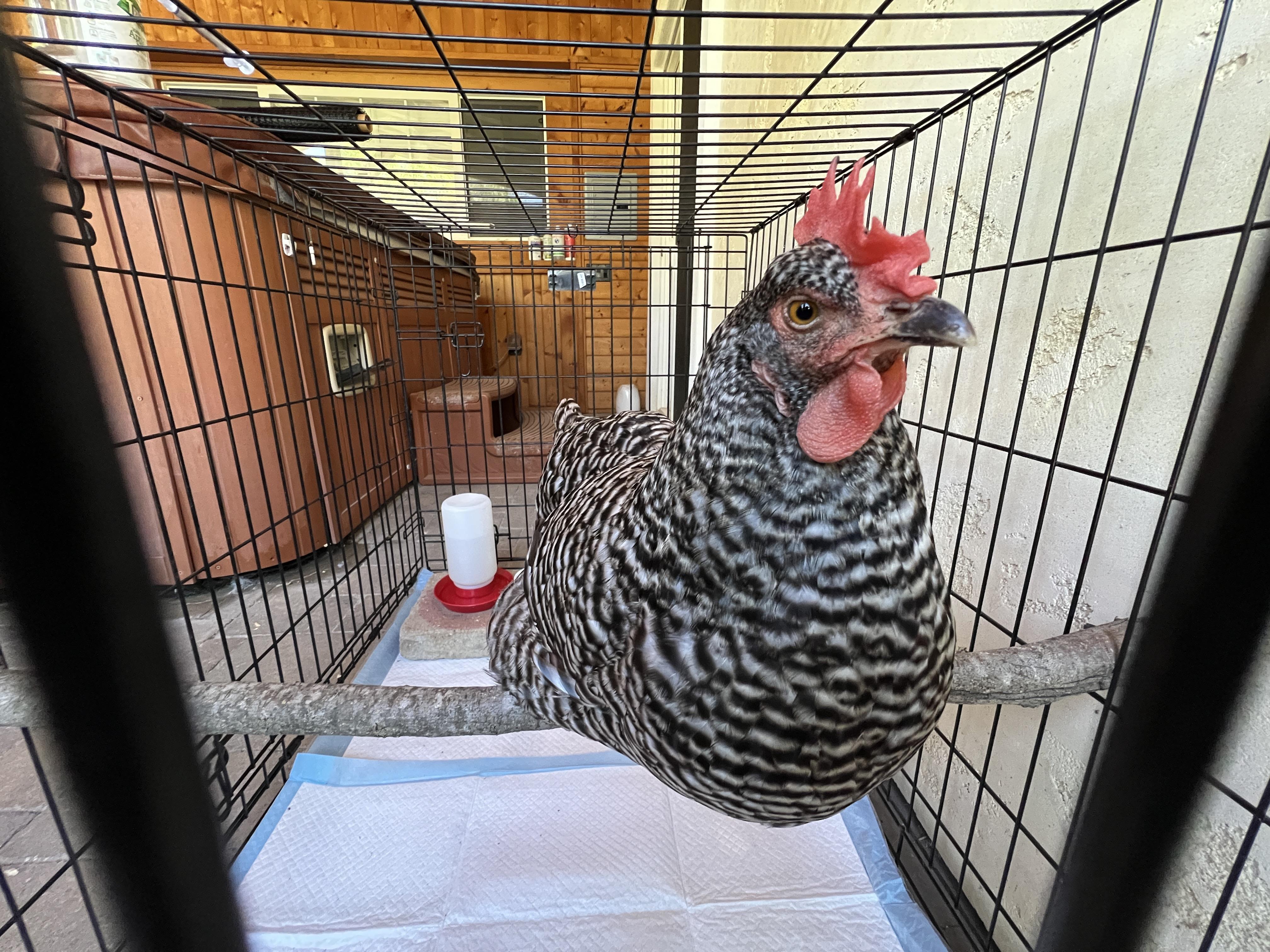
Bring her somewhere calm and safe. Offer water only for a short window so you are not piling more feed onto the traffic jam.
- Do not withhold water.
- If it is hot out or she is already weak, keep the water-only window shorter and prioritize hydration.
Step 2: Warmth and hydration
A slightly warm, quiet space does wonders for a stressed bird. Encourage drinking. If she will not drink, that is a line in the sand where I call a vet, because dehydration becomes dangerous quickly.
Step 3: Crop massage
I use a downward, kneading motion, working from the top of the crop toward the body, as if you are gently trying to move the contents along.
- Duration: 1 to 2 minutes at a time.
- Frequency: every few hours while you are actively monitoring.
- Pressure: gentle, like kneading soft dough, not squeezing a stress ball.
Important: Keep her upright during massage. If you tip a chicken upside down and fluid comes up, she can aspirate it into her lungs. Aspiration can be fatal.
Step 4: Recheck progress
If it is gradually getting smaller and softer over 12 to 24 hours and she starts pooping more normally, you are heading the right direction.
Step 5: Reintroduce easy food
Once the crop is moving, offer small amounts of regular layer feed (not scratch) and plenty of water. Avoid long grass, bread, and big fibrous treats for a bit.
What I avoid at home
- Forcing oils or liquids by mouth unless directed by an avian vet. It is easy to aspirate.
- Hard squeezing to “break it up.” Crop tissue is not a balloon you want to pop.
Sour crop: home care
If the crop is squishy or fluid-filled and you get that unmistakable sour smell, think sour crop. The aim here is to interrupt fermentation and get the crop emptying again, while remembering the bigger issue is usually stasis that needs a reason and a plan.
Step 1: Separate and remove feed temporarily
In some mild cases, a short feed break plus hydration and warmth helps the crop reset. Offer water and keep her comfortable.
Step 2: Keep her upright and monitor for regurgitation
Some sour crop birds will dribble fluid or act nauseated. Keep her upright. If she is actively regurgitating, I treat that as urgent and involve a vet.
Step 3: Gentle massage, extra caution
Massage can help move contents along, but if the crop is very liquidy, be conservative. Short sessions, upright bird, and stop immediately if she coughs, gurgles, or fluid appears at the beak.
Step 4: Call your vet sooner rather than later
I know this is the “at-home treatment” section, but sour crop often involves microbial overgrowth and sometimes needs prescription medication (commonly antifungals like nystatin) and an evaluation for why the crop is not emptying. If your hen smells sour and is not improving, is worsening, or the crop is still not emptying by the next morning check, it is time.
What not to do
- Do not tip her upside down to drain the crop. This is a common internet suggestion and a common way to cause aspiration.
- Do not rely on probiotics as the fix while the crop is stagnant. Probiotics can be helpful after motility improves, but they are not a primary treatment for a backed-up, fermenting crop and should not delay veterinary care.
- Do not give sugary foods. Sugar feeds yeast.
When to call a vet
I am all for practical backyard problem-solving, but crop trouble can go from manageable to dangerous. Get veterinary help if you notice any of the following:
- Open-mouth breathing, coughing, or gurgling (possible aspiration).
- Crop stays full overnight for more than 24 hours despite supportive care.
- Strong sour smell plus lethargy or weakness.
- No droppings or signs of pain and straining.
- Weight loss, repeated crop issues, or a crop that is constantly pendulous and never fully empties.
- Blue or pale comb, severe dehydration, or inability to stand.
Also: if your hen has a pendulous crop (a stretched, hanging crop that does not empty well), she may need a longer-term plan. Many birds do better with smaller, more frequent meals, fewer long fibrous greens, reliable water access, appropriate grit, and veterinary guidance to rule out underlying causes.
Prevention
Make feed the main course
A balanced layer feed (or all-flock with calcium on the side) should be the bulk of the diet. Scratch grains are the chicken version of chips.
Offer the right grit
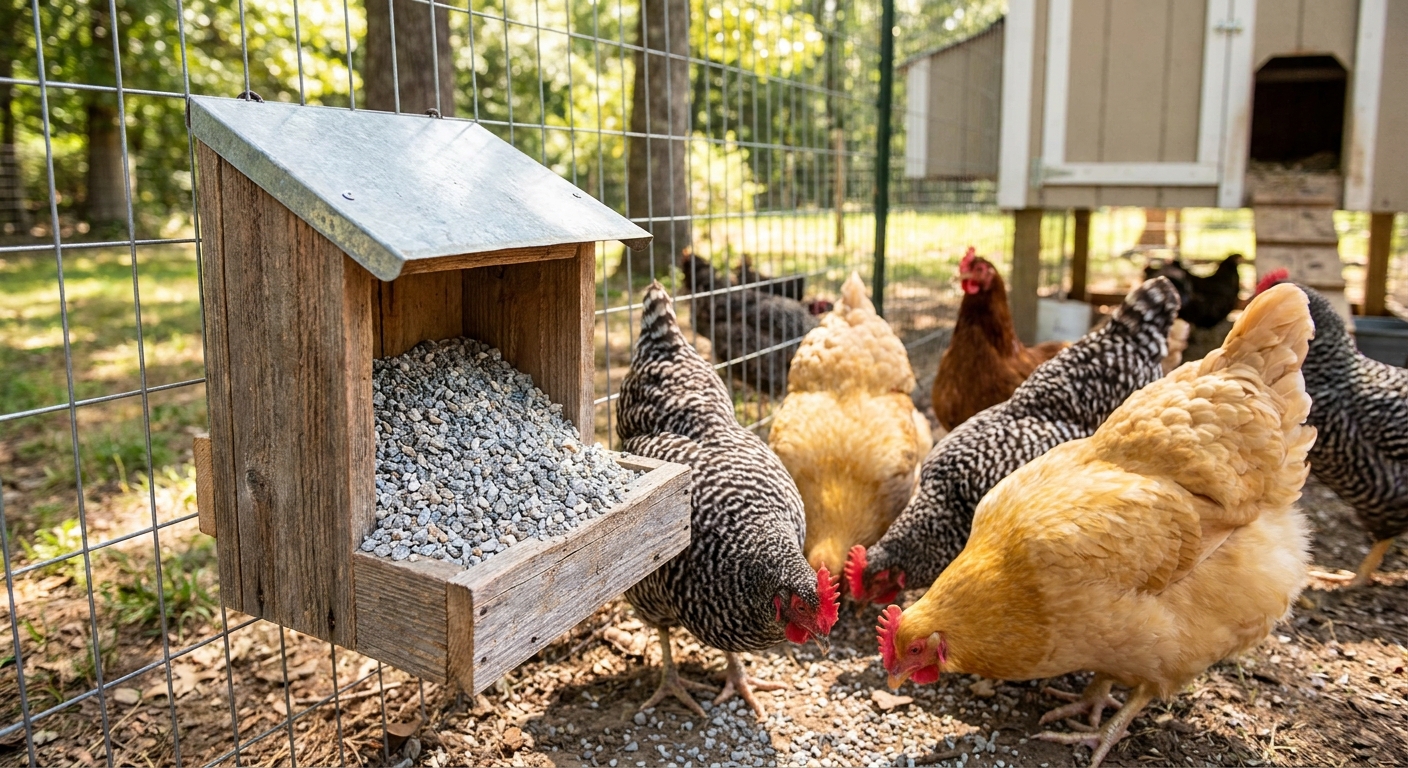
If your birds eat fibrous greens, weeds, or anything beyond crumble and pellets, make sure they have access to insoluble grit (often granite grit). Do not confuse grit with oyster shell, which is for calcium.
Watch the lawn buffet
Long grass is a classic impaction culprit. I keep an eye on spring growth spurts and avoid tossing lawn clippings into the run.
Keep feed dry and fresh
Moldy or damp feed invites digestive trouble. Store it in sealed containers and do not leave wet mash out all day.
Reduce boredom eating
Chickens who are under-stimulated may sample bedding. I like hanging a cabbage, scattering a small amount of scratch in deep litter (small amount), or giving safe pecking distractions.
FAQ
Can sour crop and impacted crop happen at the same time?
Yes. A partial impaction can slow emptying, then the trapped feed ferments and becomes sour. That is why early intervention matters.
How fast should a normal crop empty?
In a healthy bird, the crop should be mostly empty by morning. If it is consistently still full at dawn, something is off.
Is a hard crop at night always a problem?
Nope. A full crop at bedtime is normal. The question is what it feels like before breakfast.
Should I give olive oil or coconut oil?
I do not recommend forcing oils by mouth at home. The aspiration risk is real, and it can complicate sour crop. If a vet instructs you to use a specific product and method, follow their lead.
What does a healthy crop feel like?
Soft and flat in the morning, then gradually fuller during the day as they eat. Think “pouch,” not “permanent stress ball.”
My bottom line
If the crop is firm and packed, think impacted and focus on hydration, warmth, and gentle massage while you remove the cause. If it is squishy and stinky, think sour crop and be quicker to loop in a vet, because fermentation and poor motility can become a bigger spiral.
If you want a simple way to confirm you are truly improving, watch for this trio: the crop empties more by morning, droppings look more normal, and your hen starts acting like herself again.
And if you only remember one habit from this whole article, make it this: feel crops in the morning. It is the simplest early-warning system you have, and it can save you a lot of worry, and a hen a lot of misery.