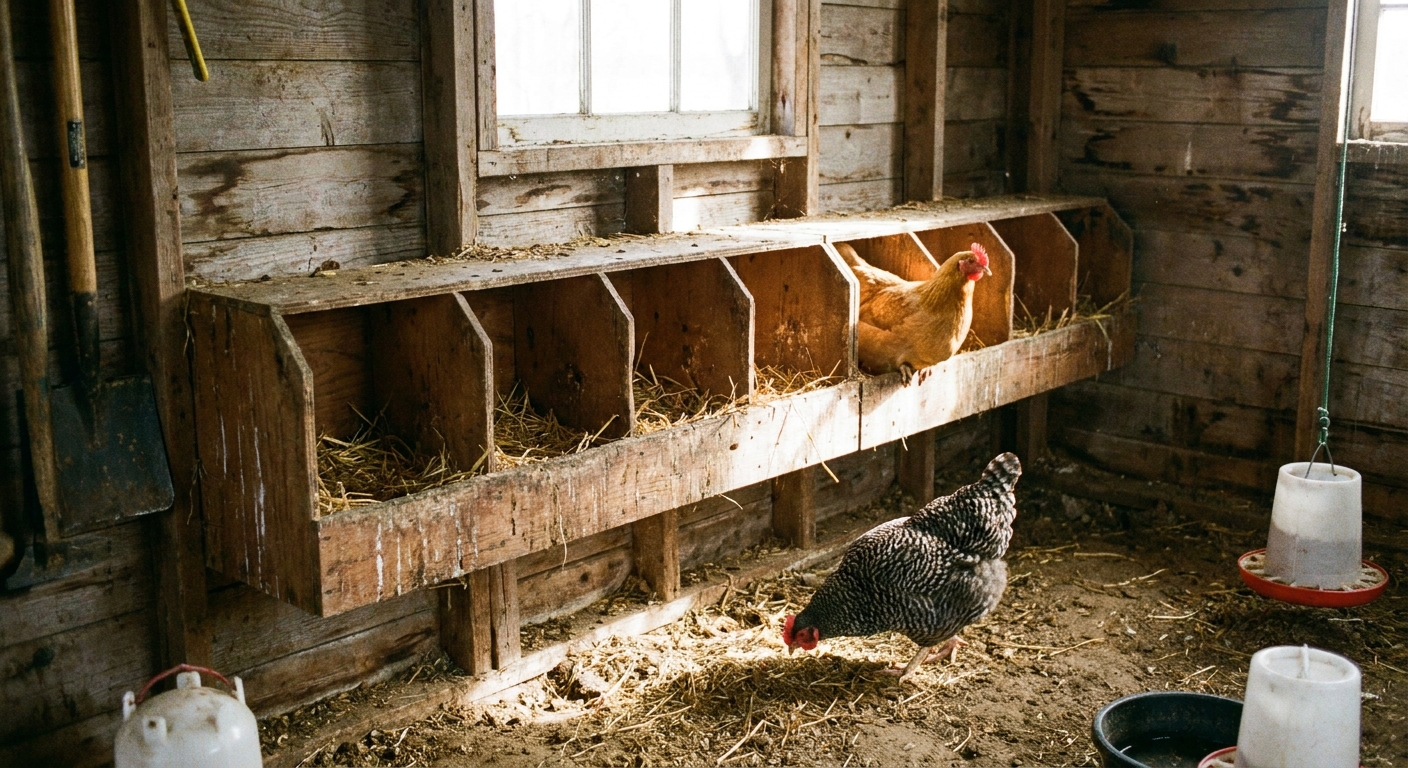
Size, placement, and bedding that keep eggs in the coop instead of under the hydrangeas. Practical tips to stop egg hiding, dirty eggs, and box squabbles.
The Cluck Loom
The Backyard Egg Hunt
Keep finding missing eggs in the bushes? Learn how to track down hidden chicken nests, protect the stash from predators, and retrain free-ranging hens to lay in the coop again.

Maggie Harper
Maggie Harper is a passionate backyard chicken keeper with over a decade of hands-on experience raising mixed flocks. Through CluckLoom, she shares practical advice on coop building, flock health, and egg production to help beginners and seasoned enthusiasts alike raise happy, healthy chickens.
Published
October 22, 2026
Last updated
October 22, 2026
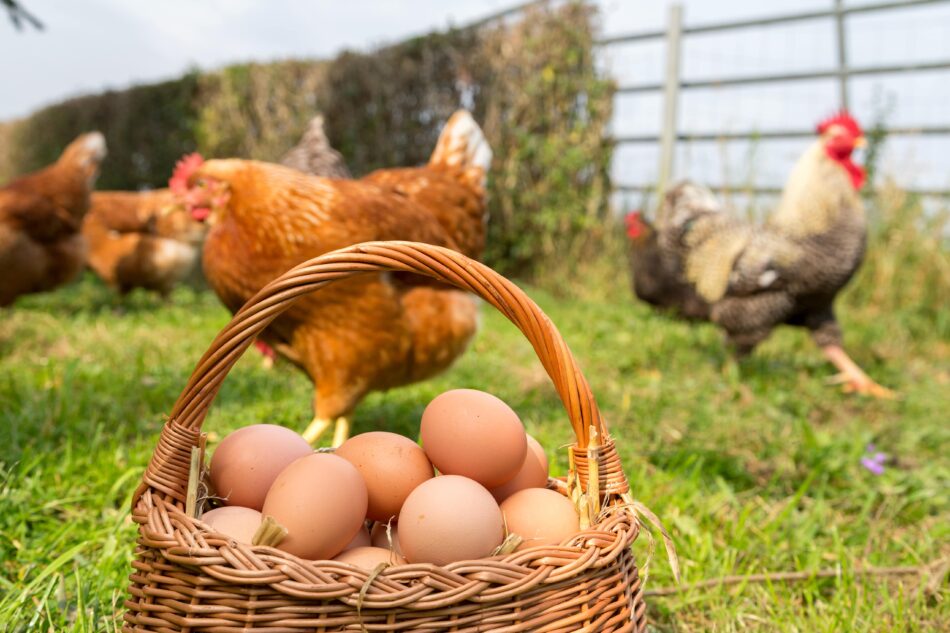
If you have free-ranging hens, sooner or later you will step outside with your coffee expecting a nice, polite egg in the nesting box and instead get… nothing. Meanwhile your girls are acting way too pleased with themselves.
Hidden nests are one of those classic backyard chicken mysteries. The good news is you can usually find the stash, and you can absolutely retrain most hens to lay where you want them to. You just need a plan, a little patience, and shoes you do not mind getting muddy.
Why hens hide nests
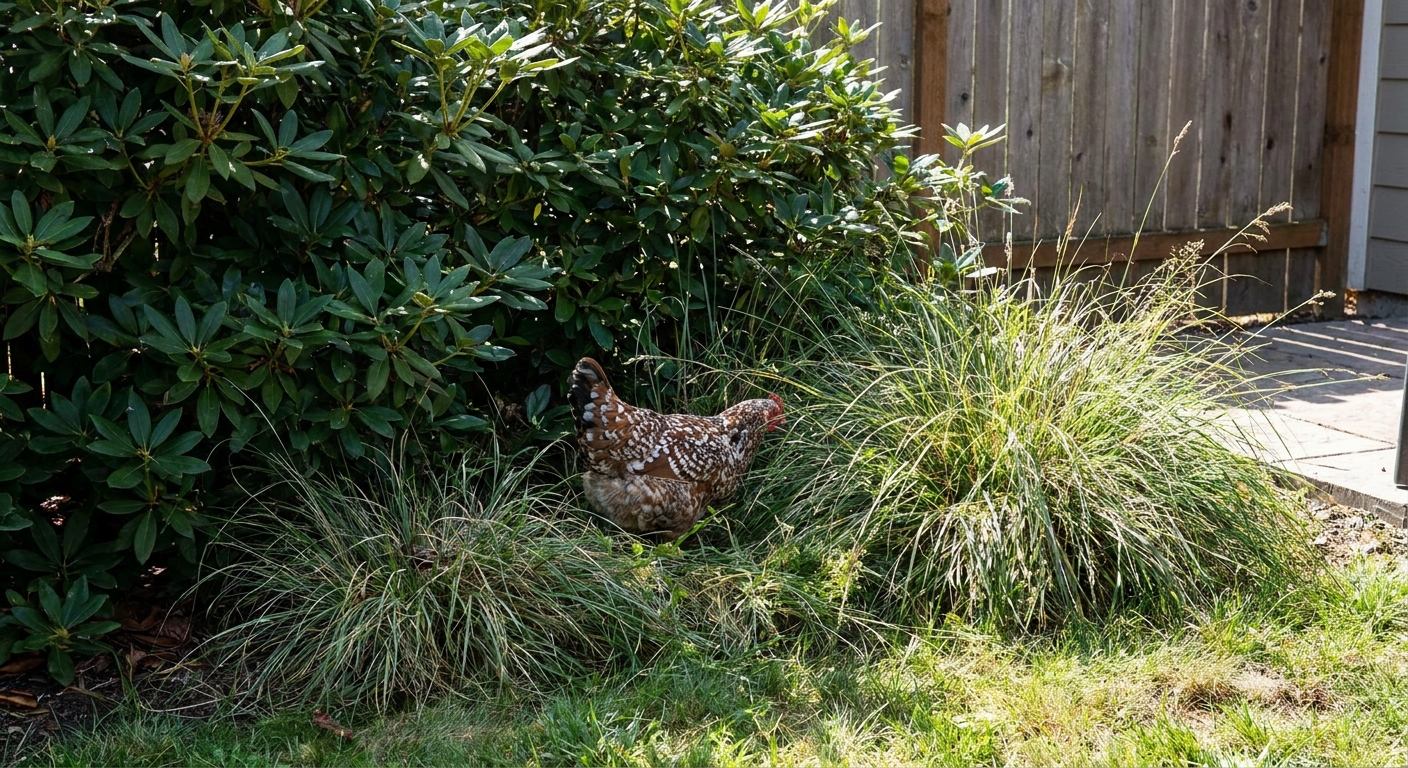
Hens are not being “bad.” They are being hens. In the wild, a safe nest is private, sheltered, and away from traffic. When we give our birds a whole yard to explore, some of them decide the coop is optional.
- They want privacy. Busy coops, nosy flockmates, and kids or dogs around the run can push a hen to find a quieter spot.
- The nest boxes are not appealing. Too bright, too few boxes, not enough bedding, or boxes that are too high or too low can all send them elsewhere.
- They got started outdoors. If a pullet lays her first few eggs in a hidden spot, she may keep returning to it out of habit.
- They were interrupted. A hen that gets bumped, bullied, or startled mid-lay sometimes relocates and then sticks with the new “safer” place.
- Seasonal cover appears. Spring weeds, summer shrubs, or a new pile of leaves can create perfect little hideouts overnight.
Clues you have a secret nest
Before you crawl under every bush, look for patterns. Hidden nests usually leave a few breadcrumbs.
- Egg production drops suddenly but your hens look healthy and are eating normally.
- One or more hens disappear for 30 to 90 minutes at about the same time each day.
- You hear the egg song from somewhere that is definitely not the coop.
- Dirty bellies or stained feathers on a hen that has been sitting in damp grass or leaves.
- More interest from predators like crows, rats, raccoons, skunks, opossums, or snakes cruising areas they used to ignore.
How to find the stash
My most reliable strategy is simple: stop searching randomly and start following a hen like you are her determined little sidekick.
1) Figure out who is laying off-site
If you have a mixed flock, you may only have one “problem layer.” Watch for the hen that peels off from the group as the day gets going. Many hens lay in the morning through early afternoon, but timing varies a lot by breed, age, season, and routine. Some hens are very much “early shift.”
Quick tip: Check nest boxes early. If you collect what is there, any hen still determined to lay will go looking for her preferred spot, which makes her easier to catch in the act.
2) Do a calm stakeout
Pull up a chair where you can see most of the yard, and watch for the hen that starts doing the “about to lay” routine: pacing, squatting, muttering, slipping behind cover. When she commits to a direction, follow at a distance. Do not rush her. A spooked hen will abort the mission and try again later somewhere even sneakier.
3) Search where a hen would choose
When you do need to search, focus on spots that check hen boxes: dry, shaded, tucked away, and with overhead cover.
- Under decks, porches, and sheds
- Inside tall ornamental grasses
- At the base of dense shrubs and hedges
- In brush piles, compost edges, and leaf piles
- Behind stored lumber, tarps, or patio furniture
- In unused dog houses, kiddie pools, or open-bottom planters
- Along fence lines where weeds grow thick
- In barn corners, garages left ajar, or garden beds with heavy mulch
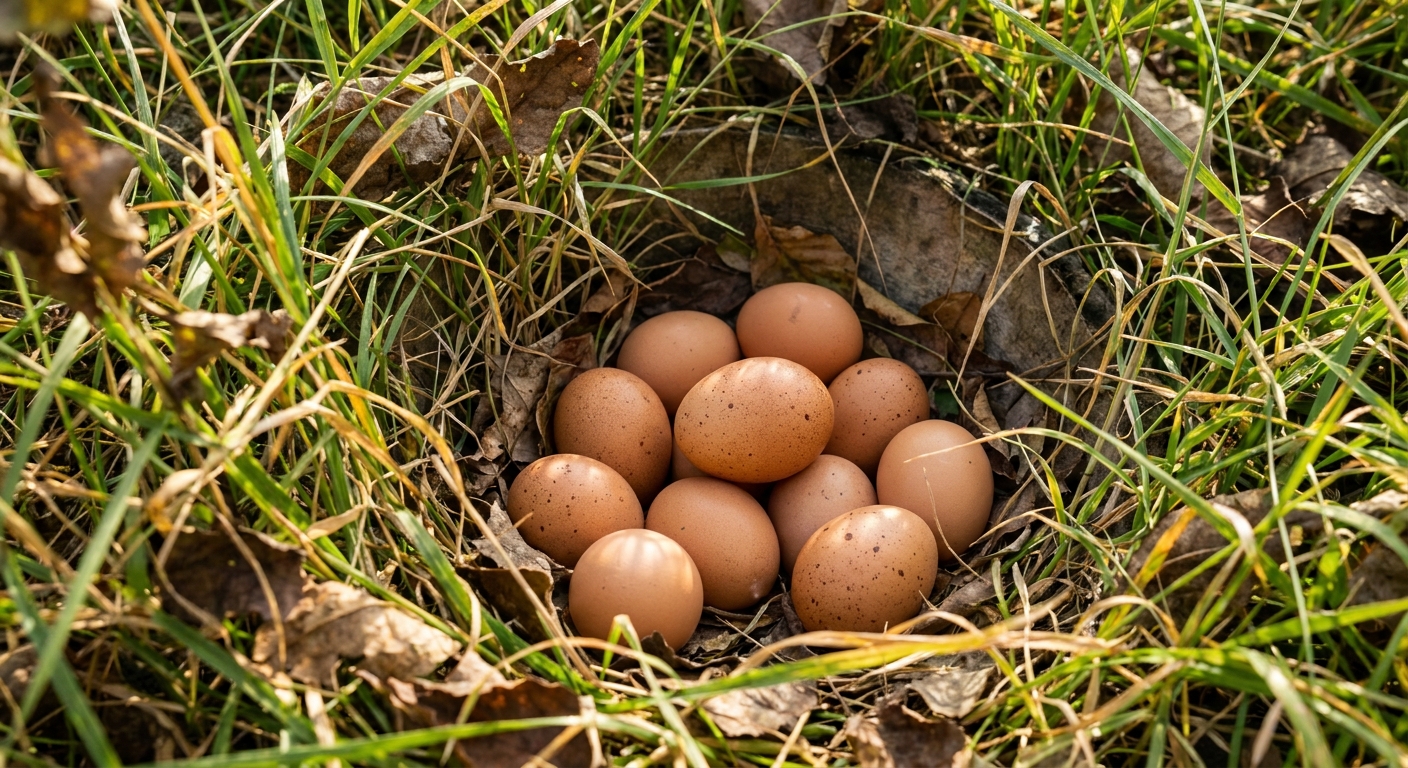
4) Look for chicken-made evidence
Hidden nests usually have a little “hen styling.” You may see:
- A round, pressed-down bowl in grass or leaves
- Feathers stuck to twigs or mulch
- Fresh scratch marks leading into cover
- Droppings nearby from a hen waiting her turn
5) Use a simple containment trick
If you cannot find it, change the playing field for a few days:
- Morning coop time: Keep hens in the coop and run until late morning or early afternoon for 3 to 7 days. This often gets most eggs laid before you release them, but not every hen lays on the same schedule, so a few may still try to stash one later.
- Temporary fencing: Use poultry netting to block off the densest “nesty” areas while you retrain.
Safety note: When you are poking around under decks, in brush piles, or behind stored stuff, wear gloves and sturdy shoes, and use a flashlight. Watch for nails, wasps, and the occasional surprised snake.
When you find the nest
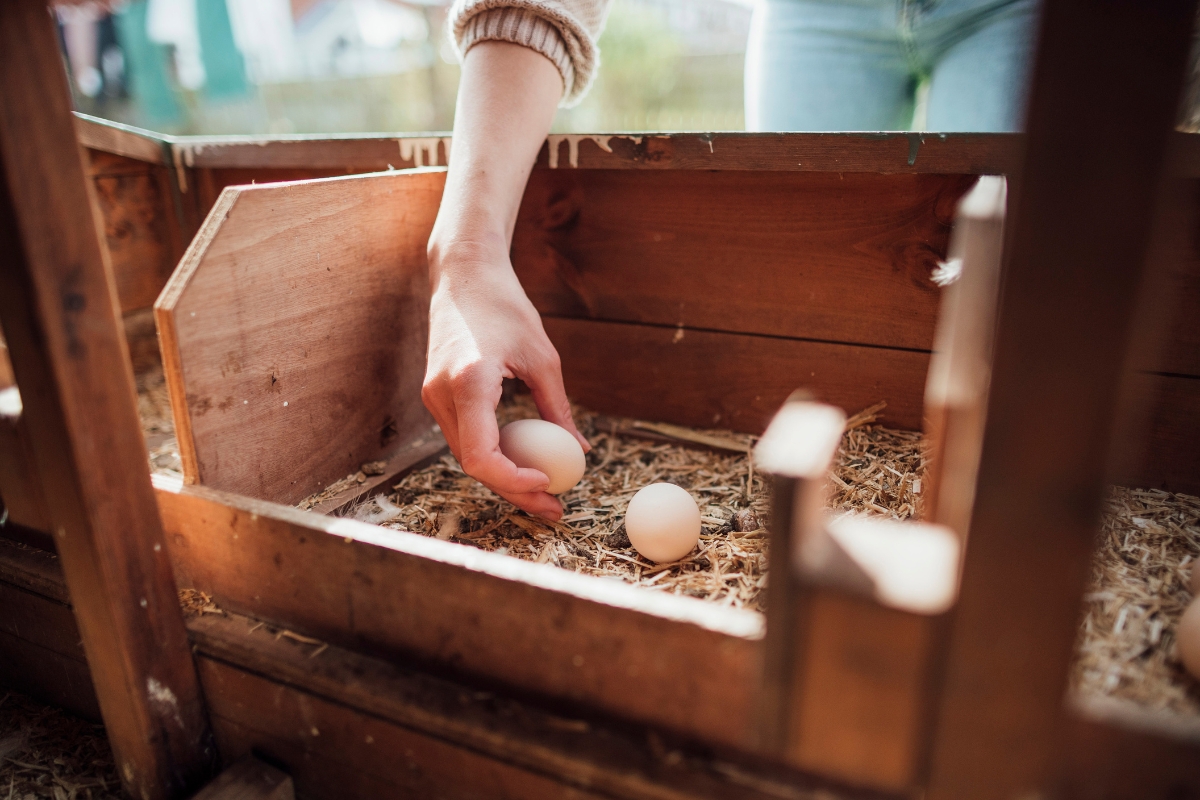
Finding the stash is half the battle. Now you want to collect safely, check egg quality, and keep hens from restocking the same spot.
Collect eggs and evaluate them
- Do a sniff test first. A rotten egg will usually announce itself, but a normal smell does not guarantee an egg is safe.
- Check for cracks. Hairline cracks happen easily outdoors. Discard cracked eggs.
- Consider age and heat. Eggs left for days in warm weather can spoil faster. When in doubt, throw it out.
- Optional float test: If you are unsure how long the eggs have been out, a float test can help estimate age. Fresh eggs tend to sink and lie flat; older eggs may tilt or float. It is not a safety guarantee, just a clue.
If the eggs look clean and intact and you are confident they are recent, refrigerate them and use them soon. Refrigeration slows spoilage, but it does not make a bad egg good again. Outdoor nests also mean eggs have been exposed to temperature swings, moisture, and curious critters.
Remove the “nest feel”
Hens return to a spot that feels right. Your goal is to make it feel wrong.
- Remove all bedding material, leaves, and feathers from the depression
- Fill the bowl with rocks or coarse mulch
- Open up sight lines by trimming back vegetation
- Block access with a board, wire panel, or temporary fencing
Check for broody behavior
A hidden nest sometimes turns into a broody headquarters. If you find a hen glued to the eggs, puffed up and growling at you, you have a broody. Broodiness can happen with or without a rooster. Without a rooster, those eggs will not be fertilized, so they will not hatch.
Decide whether you want to allow a hatch (only if you have a rooster and a safe plan) or break the broodiness and move her back to the coop routine.
How to prevent hidden nests
The secret to preventing hidden nests is making the coop the easiest, safest, most pleasant option. Hens are practical. If the nest boxes are clearly superior, most girls will choose them.
Make nest boxes irresistible
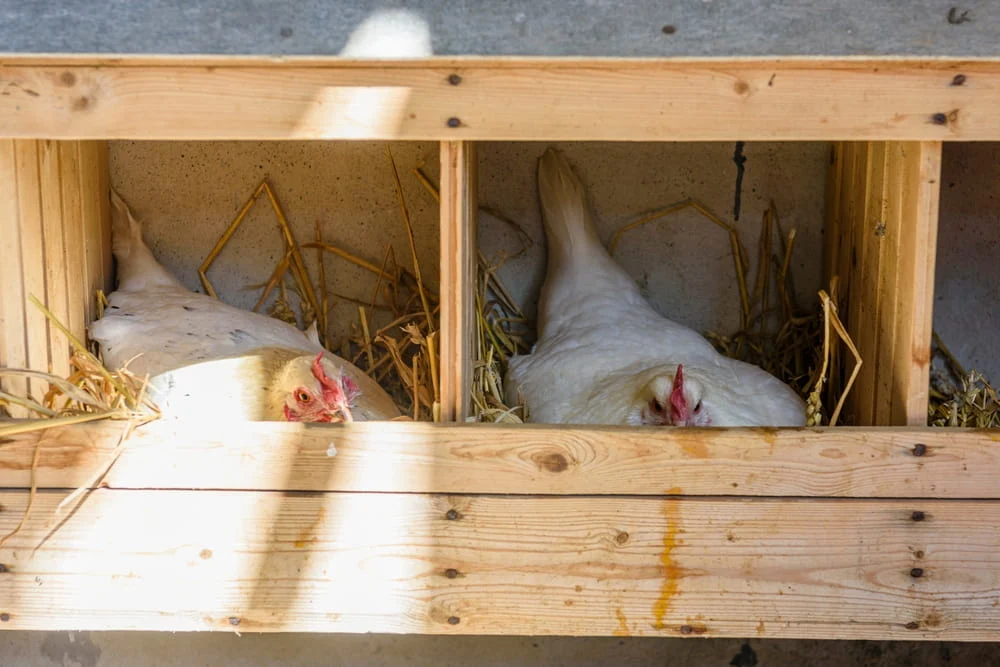
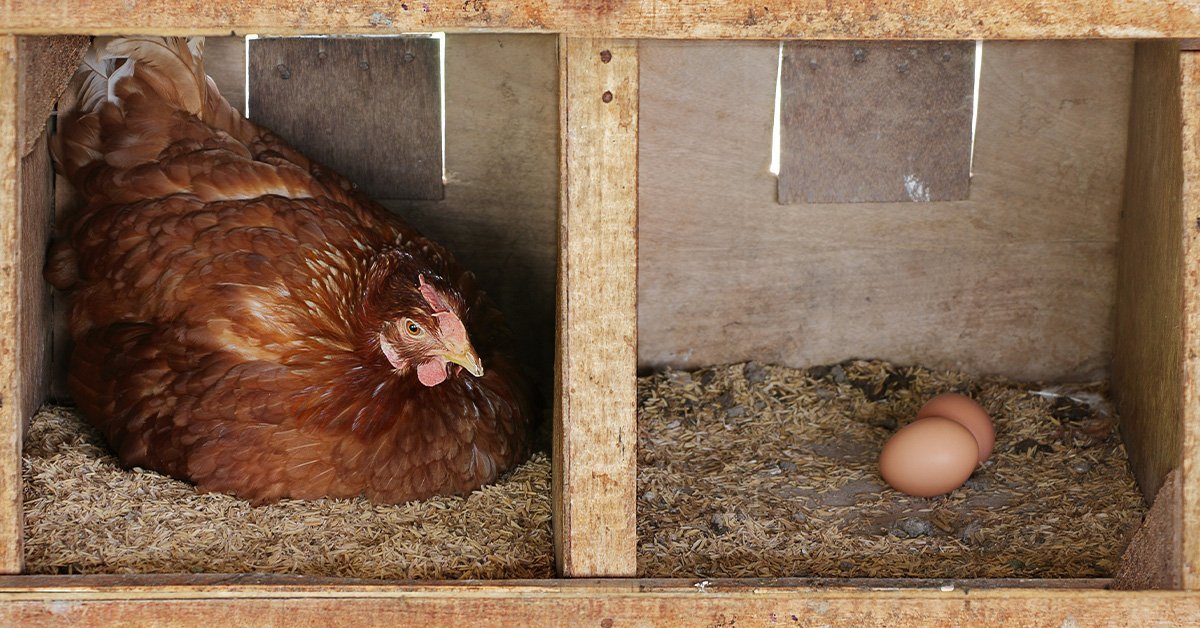
- Enough boxes: A good rule is 1 box per 3 to 4 hens, but tight flocks often want more.
- Right height: Nest boxes should be lower than roosts so hens do not sleep in them all night.
- Dim and cozy: Shade matters. If boxes are bright, add a curtain strip or adjust lighting so it feels more private.
- Comfortable bedding: Keep it clean, dry, and deep enough to feel plush. I like a generous layer so eggs do not crack.
- Easy access: If a hen has to hop awkwardly into a box, she may choose a shrub instead.
- Clean and pest-aware: Dirty boxes and mite issues can make hens avoid the coop. Regular cleanouts help more than you would think.
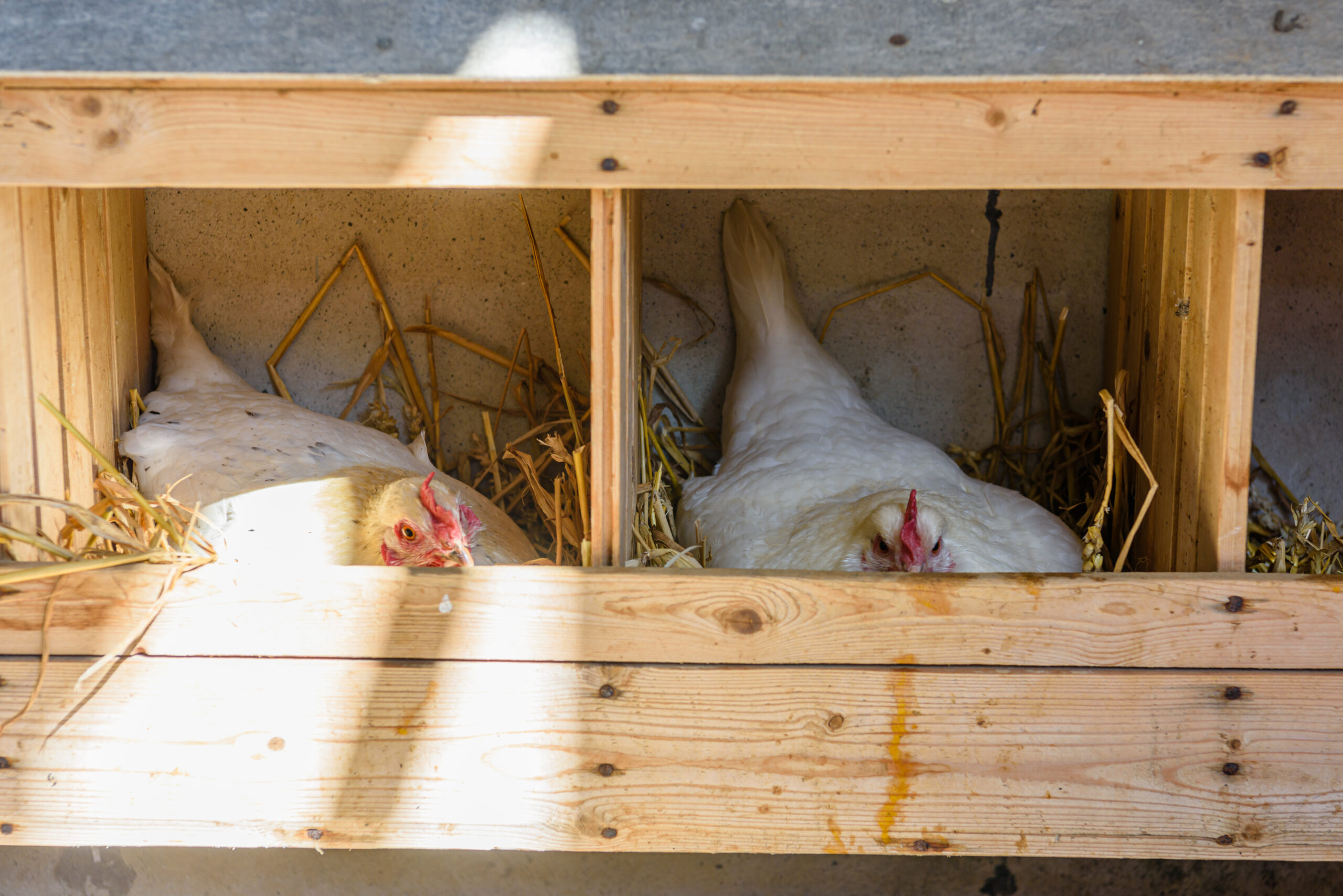
Use decoy eggs
Fake eggs, wooden eggs, or even a few golf balls in each nest box can help teach hens where eggs belong. It is the chicken version of leaving a helpful sticky note.
Time free-ranging strategically
If your hens are consistent earlier-day layers, consider delaying free-range time until late morning or early afternoon. That way the prime egg-laying hours happen in the coop, not behind the hydrangeas.
Collect early and often
Eggs left sitting invite copycat laying and draw predators. A morning check and an afternoon check go a long way, especially during peak laying seasons.
Manage flock stress and nest box drama
Bullying at the nest box is real. If one hen is guarding boxes like a tiny bouncer, others may go lay in the yard to avoid conflict.
- Add an extra box or two
- Spread boxes out if your coop allows it
- Watch for a dominant hen camping in the boxes
- Make sure there is enough coop space so lower-ranking hens can move around comfortably
Predator-proof the areas that tempt nesting
Sometimes a hen chooses a hidden nest because it feels safer than the coop or run. If predators have been sniffing around, address that first.
- Secure coop latches with predator-proof hardware
- Use 1/2 inch hardware cloth where needed, not chicken wire
- Close access to crawlspaces under sheds and decks
- Clean up spilled feed that attracts rodents
Retraining stubborn outdoor layers
Some hens need a short “reset.” This is especially common with young pullets and stubborn older girls who have discovered the luxury of private outdoor real estate.
The 7-day reset (my go-to)
- Confine to coop and run until late morning or early afternoon for one full week.
- Keep nest boxes pristine with fresh bedding and decoy eggs.
- Collect eggs daily and give yourself a quiet high-five for winning.
- After a week, reintroduce free-range later in the day first, then gradually earlier if you want.
This works because it rebuilds routine. Chickens love routine, even when they act like tiny agents of chaos.
Comfort note: If you are keeping hens in the run longer than usual, make sure they have shade, good ventilation, plenty of water, and enough space to stay calm, especially during heat.
If one hen is the ringleader
When you identify the specific hen, you can confine just her for a few days in a safe crate or small pen inside the run, with food, water, shade, and access to a nest box. Do not isolate her where she cannot see the flock, since that can increase stress. The goal is routine, not punishment.
Hidden nests and egg safety
Backyard eggs are wonderful, but hidden nests add extra risk because you do not know how long the eggs sat outside or what visited them.
- Heat matters. In hot weather, eggs can spoil faster. If the eggs are warm to the touch and you suspect they have sat for days, discard.
- Wash only if needed. If an egg is dirty, it is usually better to wipe with a dry cloth or very lightly clean right before use. Washing can remove the bloom. Refrigeration is smart for eggs you are not fully confident about, but it cannot reverse spoilage.
- Do not eat eggs with cracks. Outdoor nests mean more cracks, and cracks mean bacteria risk.
FAQ
Will hens stop laying in a hidden nest on their own?
Sometimes, especially if vegetation changes or you collect the eggs and disrupt the spot. But if the nest is comfortable and private, many hens will keep using it until you block it off and make the coop more appealing.
Why do my hens lay in the coop some days and outside on others?
It is usually a timing issue or a comfort issue. If the boxes are occupied, too bright, or the coop is busy, a hen may go outdoors. Adding boxes, dimming the nest area, and delaying free-range time often fixes the inconsistency.
Should I worry about snakes or rats if I have hidden nests?
Yes, hidden eggs can attract opportunistic predators and pests. If you find a stash, assume something else could find it too. Clean up the area, remove the temptation, and tighten up feed storage and coop security.
My hen is hiding and sitting on a pile of eggs. What now?
That is classic broody behavior. If you do not want chicks, remove access to the hidden nest, collect the eggs, and use broody-breaking strategies in the coop setup. If you do want chicks, make sure you have a rooster, a plan for housing, and a safe, contained nesting area that is protected from predators.
A quick pep talk
If you feel ridiculous crawling under shrubs looking for eggs, welcome to the club. Every seasoned chicken keeper I know has done the backyard egg hunt at least once, usually while muttering, “I swear I built you perfectly good nesting boxes.”
Find the stash, make the secret spot inconvenient, and make the coop irresistible. Within a week or two, most flocks get back on track and your daily harvest stops disappearing into the landscaping.