Calculate the right coop size, roost space, nesting boxes, and run area for backyard chickens with simple formulas, examples, and practical tips that help pr...
The Cluck Loom
Perfect Nesting Boxes for Backyard Chickens
Set up nesting boxes your hens actually use. Get the right size, number, placement, and bedding options, plus fixes for egg hiding, sleeping in boxes, and dirty eggs.

Maggie Harper
Maggie Harper is a passionate backyard chicken keeper with over a decade of hands-on experience raising mixed flocks. Through CluckLoom, she shares practical advice on coop building, flock health, and egg production to help beginners and seasoned enthusiasts alike raise happy, healthy chickens.
Published
October 22, 2026
Last updated
October 22, 2026
If you have ever found a warm stash of eggs under the porch or behind the compost bin, you already know the truth: hens are very opinionated about where they lay. The good news is you can stack the odds in your favor with nesting boxes that feel safe, private, and easy to reach. When your setup is right, laying becomes boring and predictable, which is exactly what we want.
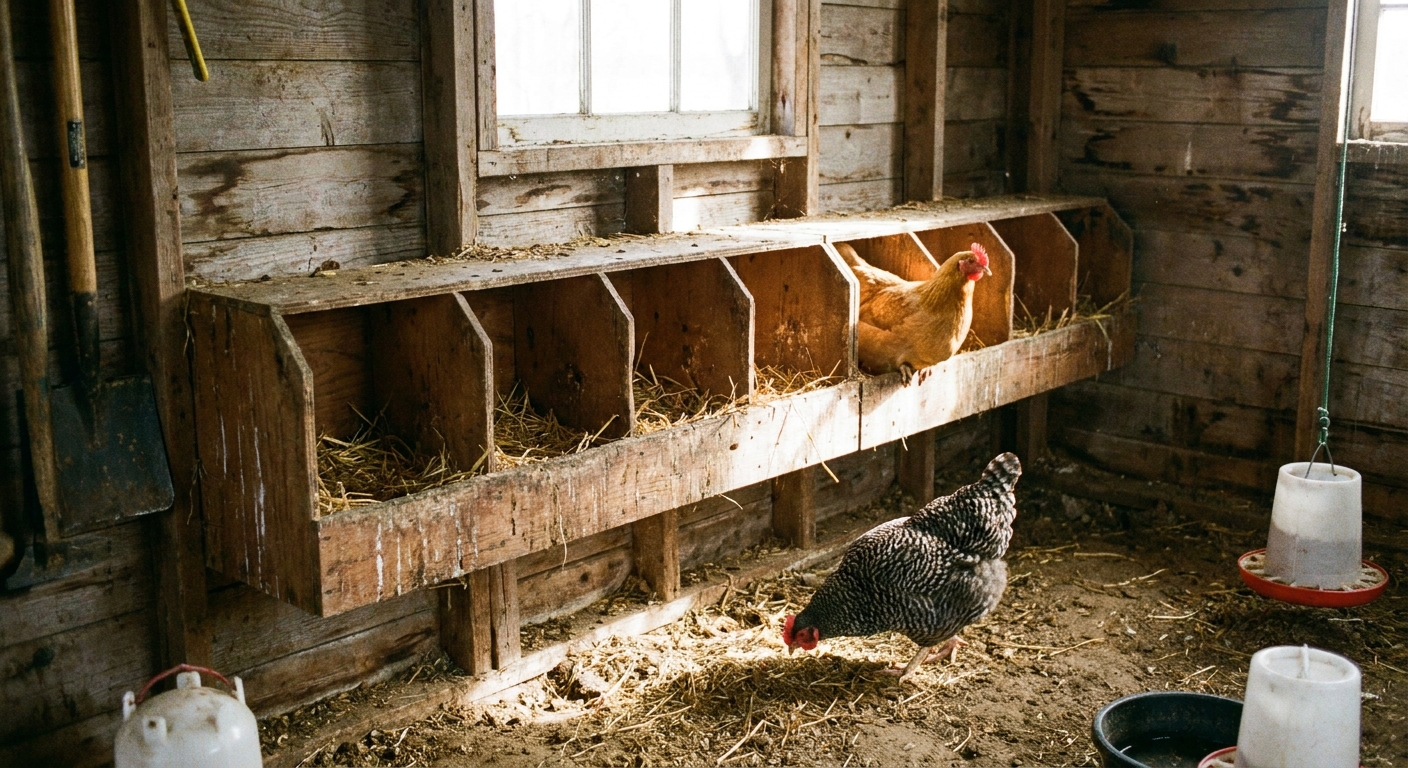
Below is how I set up nesting boxes for my mixed flock so eggs land in the coop, not scattered like an Easter egg hunt I did not sign up for.
Nesting box basics
Hens do not need fancy. They need privacy, comfort, and security. If a box feels exposed, too bright, drafty, cramped, or busy with coop traffic, they will go looking for a better option.
- Dim and tucked away beats bright and front-and-center.
- Soft, dry bedding beats hard plastic or bare wood.
- Easy entry beats hopping like a gymnast with a full belly.
- Predictable routine beats constant changes in bedding type or box location.
One quick nuance: good ventilation is a must, but you want it above roost level and not as a direct breeze hitting the nesting area. Fresh air, yes. Draft blowing into a box, no.
Right size
A nesting box should feel like a cozy cubby, not a studio apartment. Oversized boxes invite two common problems: hens laying together and cracked eggs from crowding, or hens deciding it is a great place to sleep and poop.
Typical nesting box dimensions
These are solid starting points. Your birds may prefer slightly bigger or smaller depending on breed, featheriness, and attitude.
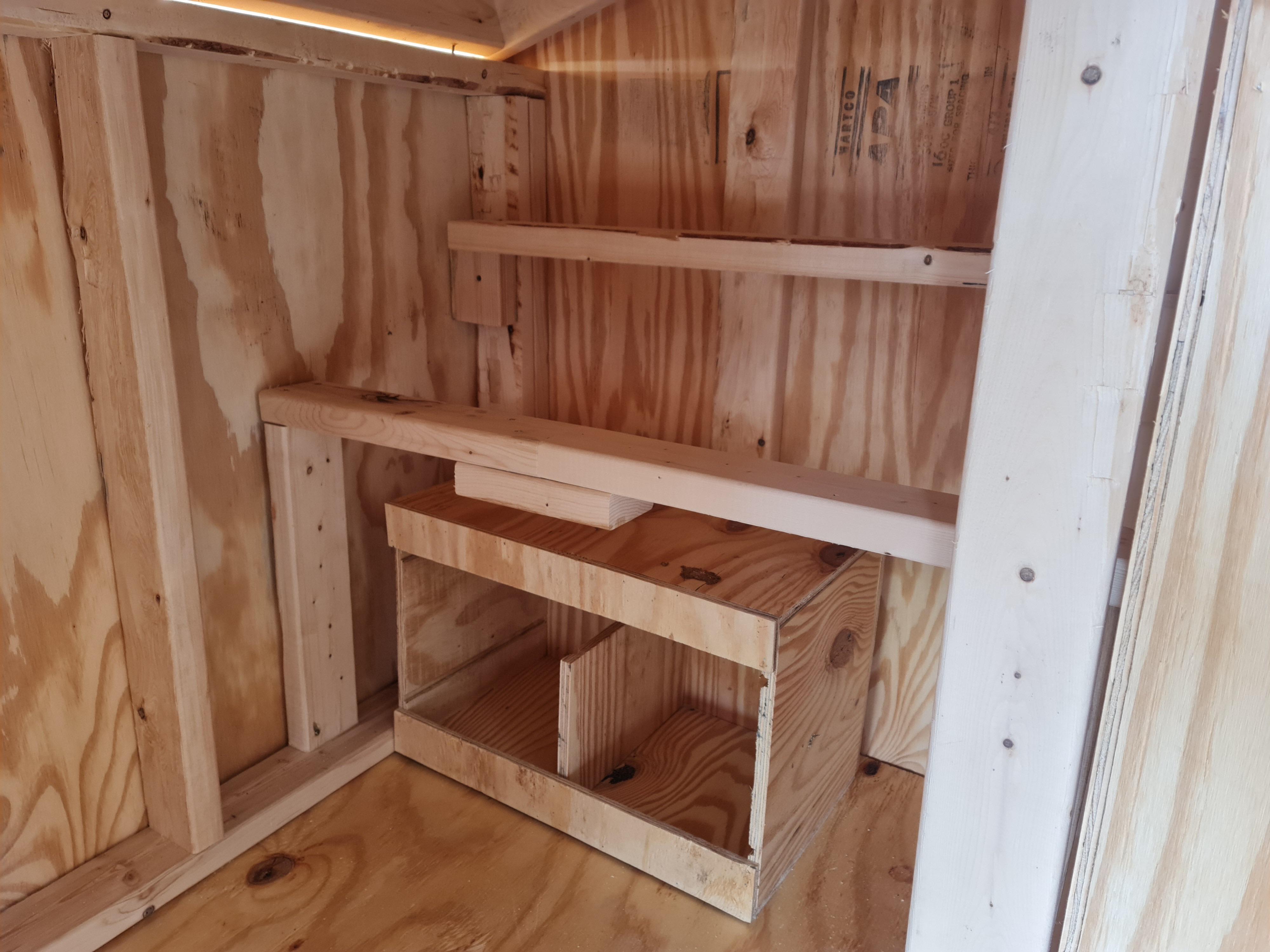
- Most standard breeds (Rhode Island Red, Wyandotte, Ameraucana, etc.): about 12 inches wide x 12 inches deep x 12 inches tall
- Large, fluffy breeds (Orpingtons, Jersey Giants, Brahmas): about 14 inches wide x 14 inches deep, with roughly 12 to 14 inches of height
- Bantams: about 10 inches x 10 inches x 10 inches
Entry and lip
Give the front opening enough space for an easy step-in, and add a small “egg saver” lip to keep bedding and eggs from rolling out.
- Opening height: about 8 to 10 inches above the lip is comfortable for most hens (some boxes use a full open front with a lip, which is also fine)
- Front lip: 3 to 5 inches high (higher if you use deeper bedding)
One box, one hen (in theory)
Hens love to pile into the same favorite box like it is the hottest brunch spot in town. You cannot fully stop that, but right-sizing helps discourage crowding and reduces cracked eggs.
How many boxes
A widely used rule of thumb is one nesting box for every 3 to 4 hens. Some flocks do fine with 1 per 4 to 5, but if you have enthusiastic young layers, heavy breeds, or a lot of synchronized morning laying, having an extra box can save you a daily soap opera.
- 3 to 4 hens: 1 box
- 5 to 8 hens: 2 boxes
- 9 to 12 hens: 3 boxes
If you have a larger flock or very synchronized layers (common with younger pullets in peak production), add an extra box to reduce line-ups and the occasional “move your feet, I am laying” drama.
Placement
If I could only give one nesting box tip, it would be this: put them where a hen feels hidden and safe. Most egg hiding starts because the coop feels too exposed, too busy, or too uncomfortable during the main laying window.
Best height
Many keepers have good luck mounting boxes about 12 to 24 inches off the floor. High enough to avoid floor dampness and drafts, low enough to prevent awkward jumps and injuries. If you have heavy breeds or older hens, aim lower with an easy step-up.
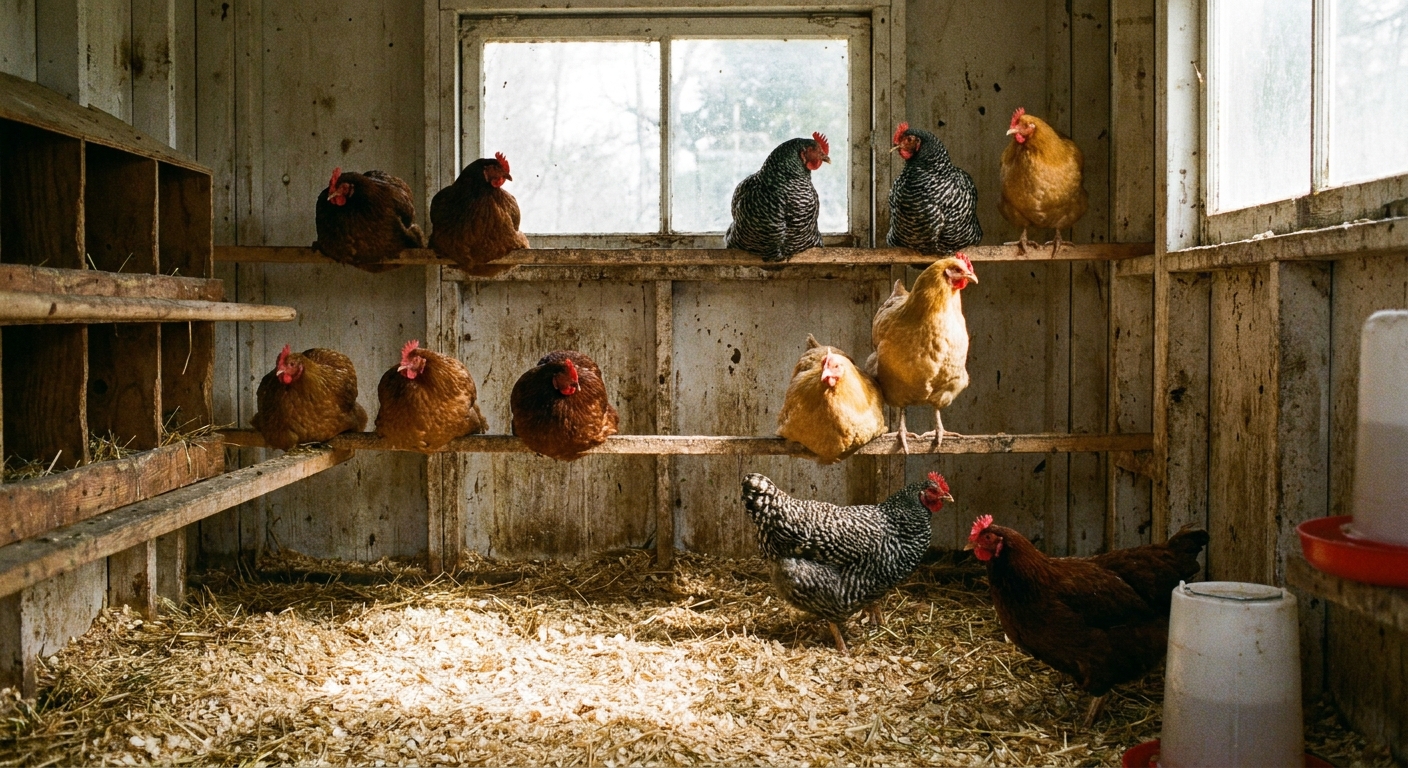
Important: Keep nesting boxes lower than the roost bars. Chickens want to sleep on the highest point. If the boxes are higher, your hens will sleep in them and you will collect eggs with a side of poop.
Dark, quiet corner
Choose the calmest spot in the coop, away from:
- Pop doors (the little chicken door in and out of the coop) and main traffic lanes
- Feeders and waterers (spills equal damp bedding and dirty eggs)
- Direct drafts and wind
- Bright windows or harsh overhead light
Easy access, not exposed
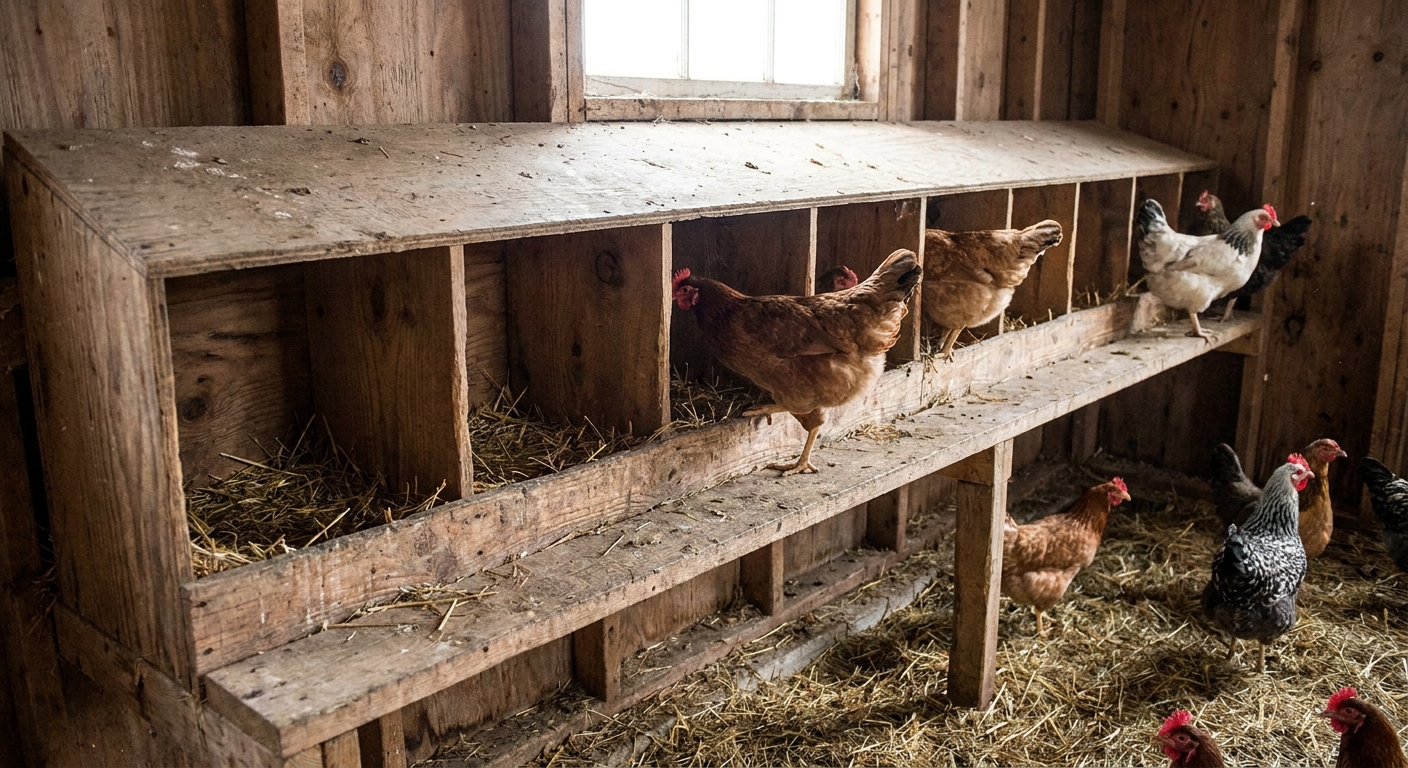
A short perch or “landing strip” in front of the boxes helps. Think of it like a front porch. It gives hens a place to hop up, look around, and step in without panic.
Inside or outside access
External egg doors are wonderful for your back and your morning routine, but they are not required for hen approval. If you do add outside access, make sure the lid seals tight and latches securely. A raccoon can open more things than you would think.
Bedding options
Bedding is half chicken comfort and half egg cleanliness. Your goal is dry, cushiony, and easy to refresh. If you open a box and it smells damp or feels packed down, swap it out.
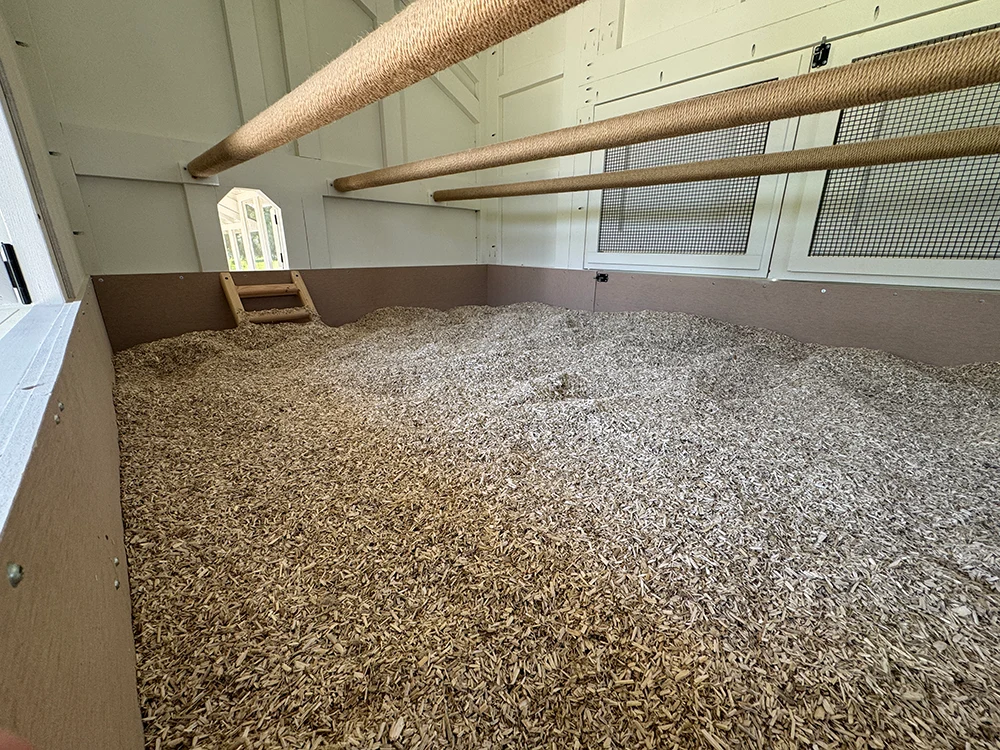
Pine shavings (my everyday choice)
- Pros: Absorbent, widely available, easy to fluff, hens accept it readily
- Cons: Can scatter, needs topping off and occasional full clean-out
Aim for about 1 to 2 inches of bedding, or enough to form a shallow “bowl” shape so eggs settle instead of rolling.
Straw (classic, but be picky)
- Pros: Cozy, looks tidy, hens like to nestle
- Cons: Can hide mites, can get moldy if damp, can mat down quickly
If you use straw, keep it very dry and replace it more often. I like straw best in drier seasons or very well-ventilated coops.
Hemp bedding (excellent for odor and moisture)
- Pros: Highly absorbent, lower odor, composts nicely
- Cons: Costs more and availability varies
If you struggle with damp boxes or frequent dirty eggs, hemp can be a noticeable upgrade.
Aspen shavings (good alternative)
- Pros: Softer and lower odor than some shavings, generally coop-friendly
- Cons: Not always as absorbent as pine, can be pricier
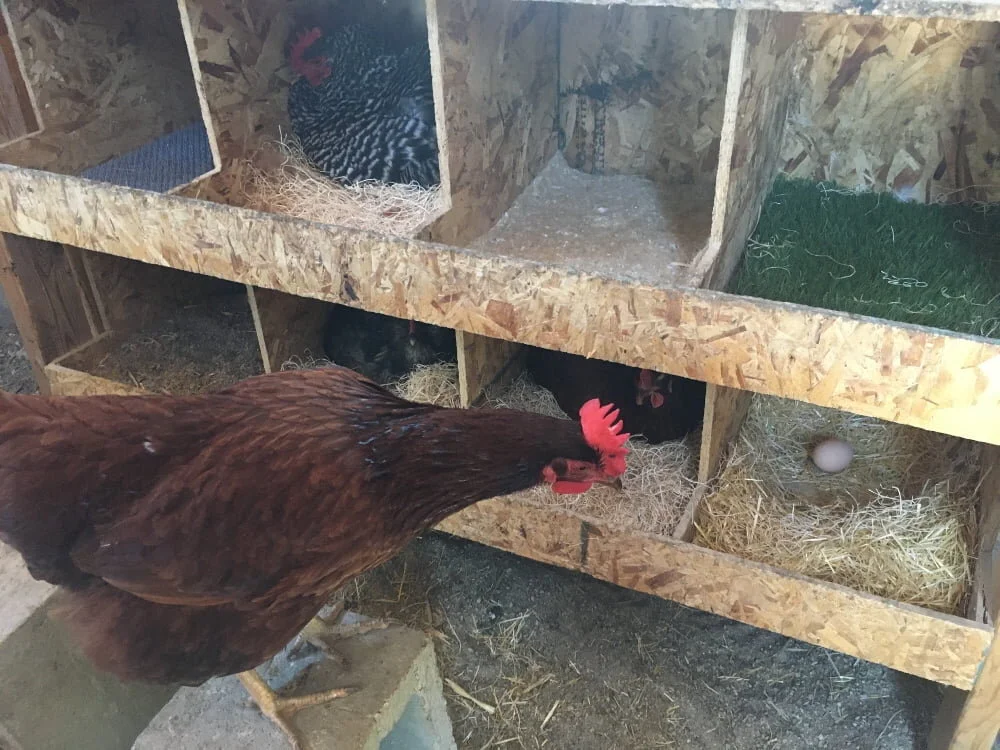
Nesting pads (washable or disposable)
These can work well, especially in roll-out boxes. For standard boxes, I still like a little loose bedding on top so eggs do not bounce and hens can “arrange” the nest.
What I skip
- Cedar shavings: The aromatic oils can irritate chicken respiratory systems, especially in a closed-up coop.
- Dusty sawdust or fine particles: More respiratory irritation, and it clings to damp eggs.
- Slippery bare plastic: Eggs crack more easily and hens do not love it.
Small details that matter
Add curtains
Nesting box curtains are not just for cute coop photos. They help hens feel hidden and reduce squabbles. A simple flap of burlap or an old feed sack cut into strips works great. Keep fabric out of reach of chewing, avoid long loose strings, and check it occasionally for mites.
Use a training egg
If you have new pullets or hens that are freelancing their lay locations, place one fake egg or a golf ball in each box. Chickens are intensely influenced by what looks like a good idea another chicken already had.
Make boxes the cleanest spot
If the litter on the floor is cleaner than the nesting boxes, hens may lay on the floor. Refresh box bedding on a schedule, not only when it gets gross.
Block boxes at night if needed
If your flock insists on sleeping in the boxes, block them after dusk for a week or two. A simple board leaned across the front works. Once they break the habit and sleep on the roost, you can usually stop blocking.
Roll-out boxes
Roll-out boxes have a sloped floor so eggs gently roll into a covered tray. They can be fantastic for reducing cracked eggs and egg eating, especially in larger flocks or if you cannot collect eggs until late afternoon.
- Pros: Cleaner eggs, fewer cracks, helps deter egg eating
- Cons: Higher cost, needs correct angle, some hens take time to accept them
If you go roll-out, keep the nest surface soft enough for comfort (pads or a thin layer of bedding approved for your system) and make sure the roll is gentle, not a drop.
Stop yard eggs
When hens hide eggs, it is usually one part habit and one part “this spot feels safer.” Here is my no-drama reset plan.
Step 1: Confine until late morning
For a week, keep hens in the coop or a covered run until late morning (often around 10 or 11 a.m.). Many hens lay earlier in the day, though some individuals and breeds lay later. The goal is to keep them close to the boxes during their usual laying time.
Step 2: Make boxes irresistible
- Fresh bedding
- Dim lighting
- Curtains if possible
- Fake egg or golf ball
Step 3: Collect eggs often
Eggs left sitting invite egg eating, cracked eggs from crowding, and “everyone pile in the same box” chaos. Leaving eggs in the nest can also encourage broodiness in hens that are already inclined that way. If you can, collect once mid-morning and again later in the day.
Step 4: Remove outside temptation
Check common hiding spots: tall grass, under sheds, behind planters, inside open garages. If you find a stash, remove it promptly and block access if you can.
Common problems
Problem: Dirty eggs
- Fix: Add more bedding depth and refresh it more often.
- Fix: Keep boxes away from water spills and damp corners.
- Fix: Address muddy feet by improving run drainage and adding dry litter.
Problem: Cracked eggs
- Fix: Cushion the nest more (especially under large hens).
- Fix: Add another box to reduce crowding.
- Fix: Collect eggs earlier so fewer eggs pile up.
Problem: Everyone fights over one box
- Fix: Make all boxes identical in bedding and darkness.
- Fix: Put a fake egg in the less popular boxes.
- Fix: Add a visual divider between boxes so hens feel more private.
Problem: Hens sleep in the boxes
- Fix: Make sure roosts are higher than the boxes.
- Fix: Block boxes at night for 1 to 2 weeks.
- Fix: Improve roost comfort and spacing so the roost is the obvious choice.
Problem: Floor eggs inside the coop
- Fix: Add a low step or perch in front of boxes for easier entry.
- Fix: Lower the box height if it is an awkward hop.
- Fix: Keep boxes dim and reduce bright light near them.
Problem: A broody hen hogs the best box
- Fix: Mark the box she is camping in and collect eggs frequently so other hens are not tempted to add to the clutch.
- Fix: If she is determined, consider setting up a separate broody area so the rest of the flock can use the regular boxes in peace.
Cleaning routine
You do not need to overthink this. Consistency beats perfection.
- Daily: Remove obvious poop clumps and broken shell bits.
- Weekly: Top off with fresh bedding and fluff it.
- Monthly (or as needed): Empty boxes completely, scrape corners, and refill with clean bedding.
If you ever deal with mites, do a deeper clean, replace all bedding, and treat the coop according to a method you trust. Mites can make hens avoid boxes fast.
Quick checklist
- About 12x12x12 inches for most hens (larger birds often prefer a bigger footprint)
- About 1 box per 3 to 4 hens (some flocks manage with fewer)
- Mounted about 12 to 24 inches off the floor
- Lower than roost bars
- In a dim, quiet corner away from traffic and drafts
- Dry, soft bedding (pine shavings, hemp, or clean straw)
- Curtains or some privacy help a lot
- Fake egg for training new layers
FAQ
Should nesting boxes be on the floor?
In most backyard coops, no. Floor boxes get damp, dirty, and drafty. Raising them 12 to 24 inches keeps bedding drier and eggs cleaner. The exception is for a hen with mobility issues, in which case a low, easily accessible box can be a kindness.
Can I put nesting boxes in the run?
You can, but it is harder to keep them clean and dry, and privacy is usually worse. Inside the coop is typically the better choice. If your run is fully enclosed, weather-tight, and predator-proof, a run-side nesting area can work, just keep it shaded and dry.
When should pullets get access to nesting boxes?
I like to open nesting boxes when pullets are close to point-of-lay, often around 16 to 18 weeks for many breeds, though it varies. If you open boxes too early, youngsters sometimes treat them like hangout lounges or sleeping spots.
What is the fastest way to stop egg eating?
Collect eggs more often, keep boxes darker, and consider roll-out boxes or very cushioned bedding to reduce cracks. If eggs are cracking due to thin shells, double-check nutrition and offer free-choice oyster shell for laying hens.