A backyard-chicken keeper’s practical guide to cleaning and storing fresh eggs: bloom basics, dry cleaning, safe washing, counter vs refrigerator, and realis...
The Cluck Loom
Blood Spots and Bullseyes: Are Your Backyard Eggs Fertilized?
Learn how to tell if an egg is fertilized by checking the yolk for a bullseye and how candling helps spot development. Plus, what blood and meat spots really mean.

Maggie Harper
Maggie Harper is a passionate backyard chicken keeper with over a decade of hands-on experience raising mixed flocks. Through CluckLoom, she shares practical advice on coop building, flock health, and egg production to help beginners and seasoned enthusiasts alike raise happy, healthy chickens.
Published
October 22, 2026
Last updated
October 22, 2026
The first time I cracked an egg from my own hens and saw a tiny red dot, I froze like I had just discovered a chicken-keeping scandal in my mixing bowl. Spoiler: I still made breakfast. If you keep backyard chickens long enough, you will eventually meet the whole cast of characters: the mysterious blood spot, the little tan “meat” fleck, and the much-debated bullseye on the yolk that makes people wonder, is this egg fertilized?
Let’s clear it all up in plain backyard terms. I’ll show you how to candle eggs, what the bullseye actually looks like, and why most odd spots in eggs are harmless and more common in truly fresh eggs.
Fertilized vs. developed
This is the key distinction that calms most nerves.
- Fertilized means a rooster mated with the hen and a tiny disc on the yolk could begin development under the right conditions.
- Developed means the fertilized egg was kept warm enough long enough (think broody hen or an incubator) for embryonic growth to actually start. As a rough guide, forced-air incubators are commonly run around 99.5°F, while still-air models are often closer to 101 to 102°F.
Most eggs you collect daily are cooled quickly, either by outdoor temps, your kitchen counter, or the fridge. Cooling basically hits pause before anything meaningful can happen. So yes, your eggs can be fertilized if you have a rooster, but they are not going to turn into chicks sitting in your carton.
Do you need a rooster?
Yes. Hens lay eggs with or without a rooster, just like humans ovulate with or without a baby on board. A rooster is only needed for fertilization.
- No rooster: Your eggs are not fertilized, period.
- Rooster present: Some (often many) eggs may be fertilized, but not every single one is guaranteed.
Also, hens can store sperm for a while. If you recently removed a rooster, eggs can potentially be fertilized for about 1 to 3 weeks afterward (it varies by hen, flock, and season).
The yolk bullseye
The bullseye conversation usually comes up when you crack an egg onto a plate and stare at the little pale spot on the yolk.
That pale spot is called the germinal disc. Every egg has one.
Unfertilized: the “white dot”
In an unfertilized egg, the germinal disc usually looks like a single pale dot or a tiny, slightly cloudy spot. It is subtle.
Fertilized: the “bullseye”
In a fertilized egg, you may see a pale dot with a faint ring around it, like a little target. The ring can be delicate and not always obvious, especially if the yolk breaks or the lighting is poor.
Two things can be true at once: an egg can be fertilized, and you still might not get a clear, textbook bullseye when you crack it. Visual ID is helpful, but it is not perfect.
Important: Seeing a bullseye does not mean there is a chick in there. It just means fertilization happened at some point.

Candling eggs
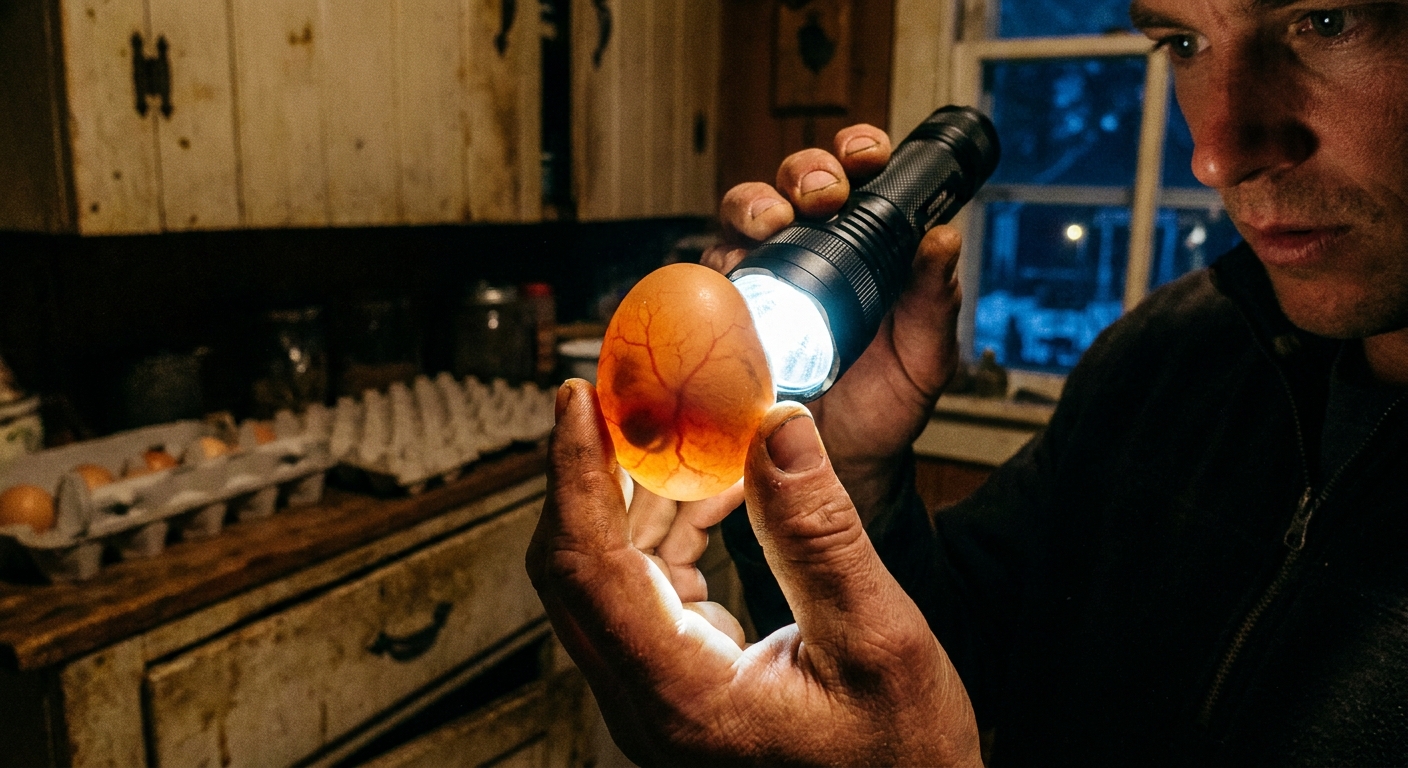
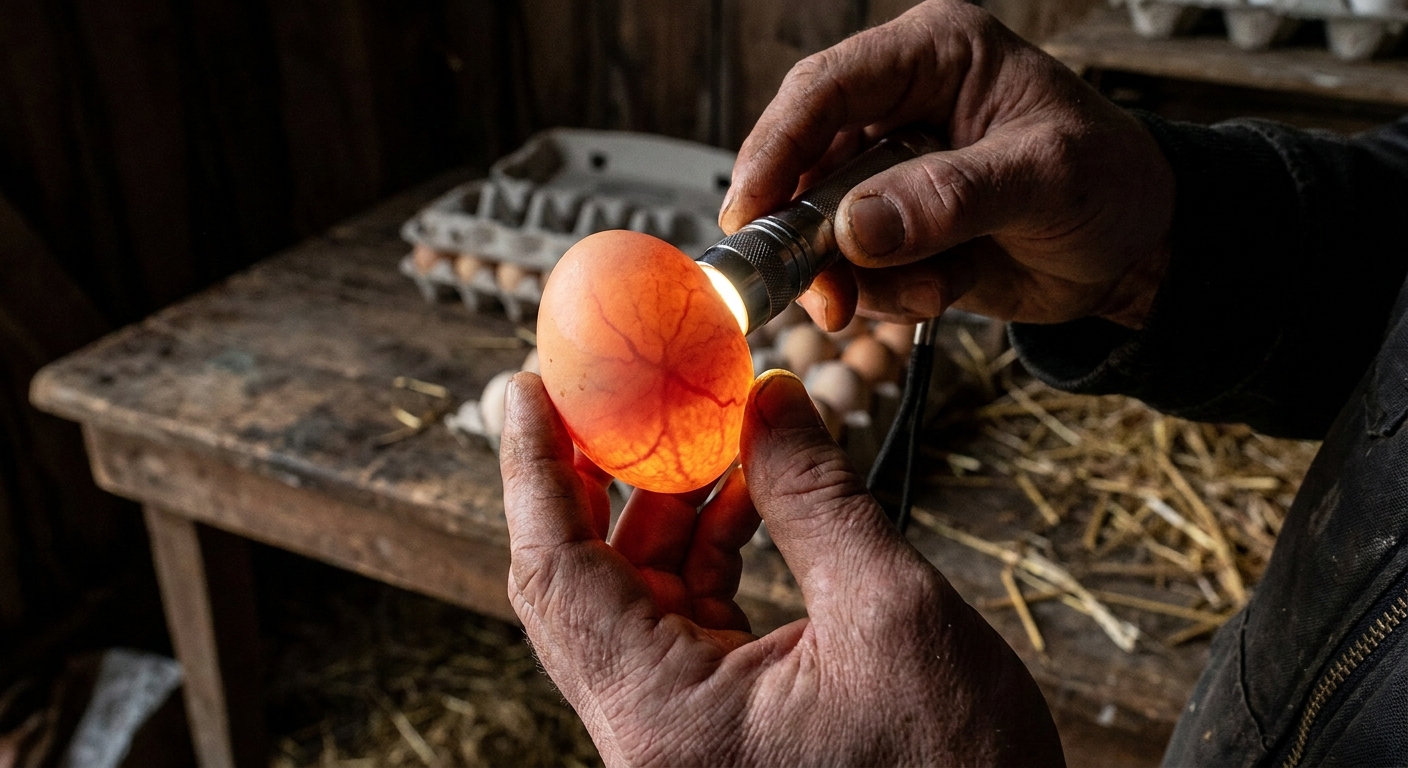
Candling is when you shine a bright light through the shell to see what is going on inside. It is most useful when you are incubating or letting a hen sit, because you are checking for development.
What you need
- A bright flashlight (a small LED works great)
- A dark room or closet
- Clean hands and a gentle grip
How to candle
- Darken the room. The darker, the easier it is to see details.
- Hold the egg upright (big end up is easiest).
- Press the flashlight to the shell near the side or under the egg to reduce light spill.
- Rotate slowly so the contents shift.
- Look for an air cell at the big end and any veins or dark spots.
What you might see
- Fresh edible egg: Mostly glowy and uniform, with a small air cell. You will not see a “bullseye” through the shell.
- Early development (incubated): Fine red veins spreading from a darker point, often visible by day 3 to 5 (and usually clearer by day 7).
- Clear egg (no development): No veins, just glow and shadow from the yolk.
- Blood ring (often nonviable): A red circle can indicate early development that stopped.
If your goal is simply “are my breakfast eggs fertilized,” candling is not the best tool. Candling shines when you are monitoring hatch eggs.
Blood spots
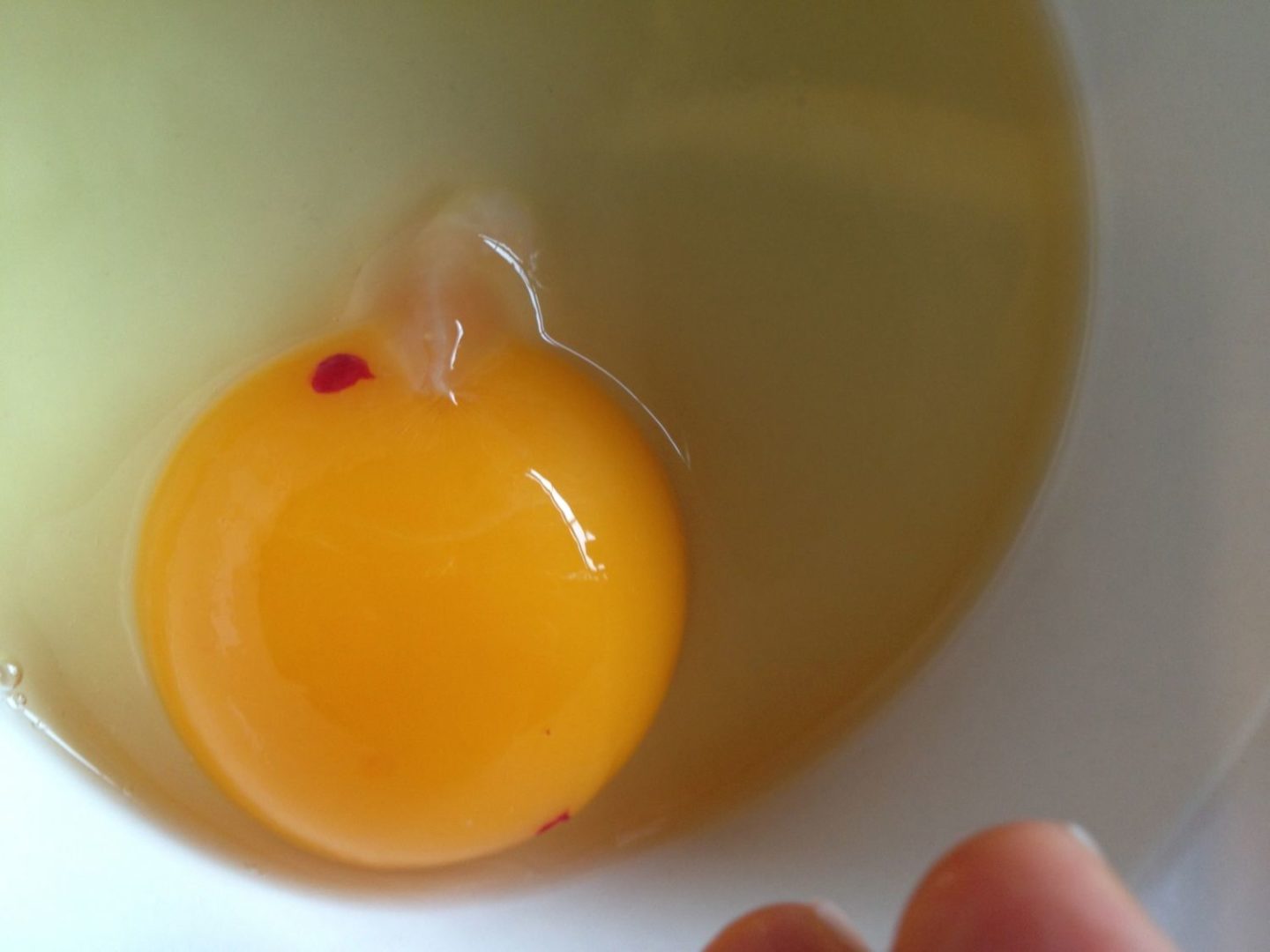
Blood spots are usually tiny red dots or smears in the egg, often near the yolk. They are caused by a small blood vessel rupturing in the hen’s reproductive tract during ovulation. It is a bit like a popped capillary.
Do blood spots mean fertility?
No. Blood spots have nothing to do with fertilization. You can see them with or without a rooster.
Are blood spots safe?
In a normal, fresh egg, yes. If the egg smells normal and looks otherwise normal, a blood spot is considered a quality issue, not a safety issue. If it bothers you, you can scoop it out with the tip of a spoon.
Why backyard keepers see them more
Commercial eggs are usually candled and graded, so eggs with visible defects are filtered out. Backyard eggs are honest. They show you everything.
Meat spots
Meat spots are small brown, tan, or sometimes reddish bits in the white or attached near the yolk. Despite the name, it is not “meat” like chicken flesh.
Meat spots are usually tiny pieces of tissue from the hen’s oviduct, and they can also be related to minor bleeding that has oxidized (turned brown).
Safe or not?
Again, if the egg is fresh and smells normal, meat spots are typically safe to eat. Most of us just flick them out and move on.

Other oddities
The ropey white string
The white, twisty strand attached to the yolk is the chalaza. It is a normal structure that helps keep the yolk centered. In super fresh eggs, it can look extra thick and prominent. It is not a baby chick starter kit.
Cloudy egg whites
Cloudiness is often a sign of freshness. As eggs age, carbon dioxide escapes and the whites become clearer. Cold storage, diet, and individual hens can also nudge the look one way or another, so treat it as a clue, not a verdict.
Double yolks
Double yolks happen when a hen releases two yolks close together. It is more common in young hens starting to lay or in certain high-producing birds. It is not a fertilization sign.
Can you eat fertilized eggs?
Yes. If the egg is collected regularly and stored like any other egg, fertilized eggs are eaten all the time without anyone noticing a difference.
The moment it becomes a different conversation is if an egg was incubated or kept warm long enough to begin development. That is why I always recommend collecting nest box eggs at least once a day, and more often in hot weather.
Storage rules vary by country and whether eggs are washed, so follow local guidance. Wherever you live, the goal is the same: keep eggs clean, keep them from sitting hot, and when in doubt, keep them cold.
Avoid surprises
- Collect often. Daily is good. Twice daily is better in summer or if you have a broody hen.
- Mark your cartons. If you are saving eggs for hatching, store them separately so breakfast eggs do not get mixed in.
- Store cool. Refrigeration is your friend if you are not actively incubating (and if that matches local recommendations for your eggs).
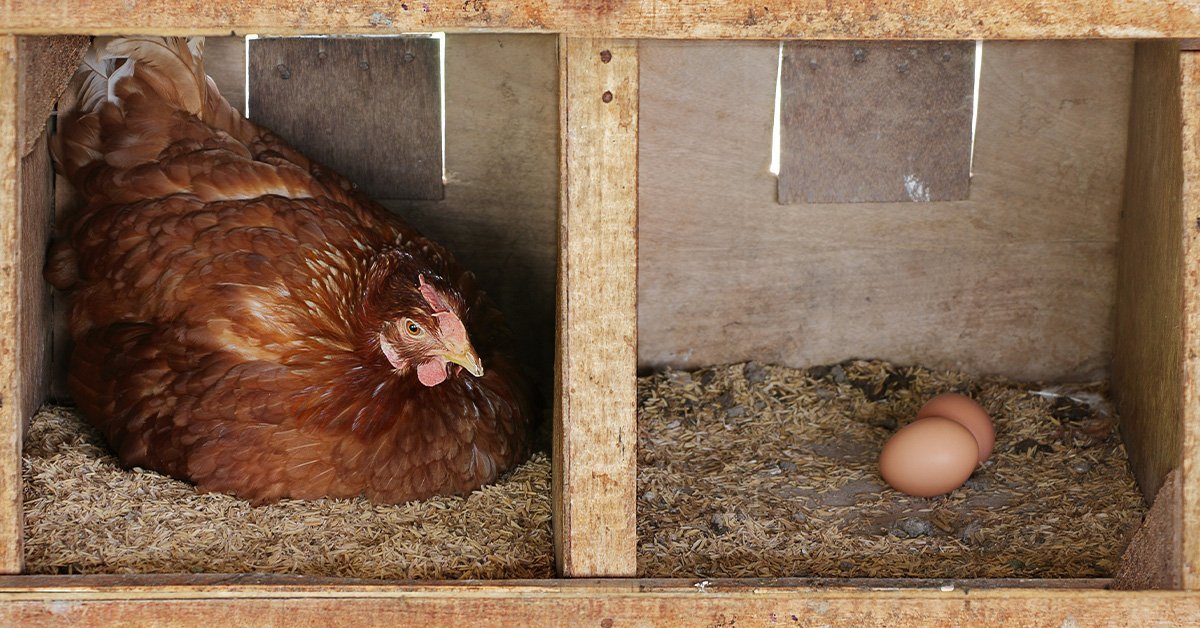
- Watch broody behavior. A hen who camp-outs in the nest box can warm eggs enough to start development if you let eggs pile up under her.
When to toss an egg
Spots are usually no big deal. Smell and storage are the big deal.
- Toss it if it smells sulfurous, rotten, or “off” when cracked.
- Toss it if the shell is badly cracked and it sat dirty or warm.
- Use caution with eggs that are extremely dirty or were laid in mystery conditions you cannot verify.
If you want a simple habit, crack eggs into a small bowl one at a time before adding to your recipe. It saves the whole batch if you hit one questionable egg.
FAQ
Will a blood spot turn into a chick?
No. A blood spot is typically a tiny broken vessel during egg formation, not an embryo.
Can I candle a store-bought egg to see if it is fertilized?
You can candle it, but you likely will not learn much about fertility. Most store-bought eggs are not fertilized because roosters are not kept with laying flocks in typical commercial egg operations.
Do fertilized eggs taste different?
Not in any consistent way. Diet, freshness, and breed differences tend to affect flavor more than fertilization.
If I have a rooster, are all my eggs fertilized?
Not always. Fertility rates vary with rooster health, age, mating frequency, season, and flock dynamics. Many backyard flocks do see high fertility, but it is not 100 percent guaranteed.
What is the safest way to check for a bullseye?
Crack the egg into a shallow bowl in good light and look at the pale spot on the yolk. Remember, every egg has a germinal disc. The “bullseye ring” is what suggests fertilization, even though it is not always crystal clear.
The takeaway
If you crack a fresh backyard egg and spot a tiny red dot or a little brown fleck, you are not alone, and you probably are not in danger. Blood and meat spots are usually harmless quirks of egg-making. If you want to know whether your eggs are fertilized, the yolk bullseye is your clue (when it shows up clearly). If you want to know whether an egg is developing, that is where candling shines.
And if you need me, I will be in the coop negotiating with an Orpington who believes the nesting box belongs to her, her sisters, and the entire concept of private property.