Calculate the right coop size, roost space, nesting boxes, and run area for backyard chickens with simple formulas, examples, and practical tips that help pr...
The Cluck Loom
Mixing Chicken Breeds in One Backyard Flock
Want a mixed flock that actually gets along? Learn how to choose compatible breeds, manage the pecking order, and integrate different sizes and feather types without bullying.

Maggie Harper
Maggie Harper is a passionate backyard chicken keeper with over a decade of hands-on experience raising mixed flocks. Through CluckLoom, she shares practical advice on coop building, flock health, and egg production to help beginners and seasoned enthusiasts alike raise happy, healthy chickens.
Published
October 22, 2026
Last updated
October 22, 2026
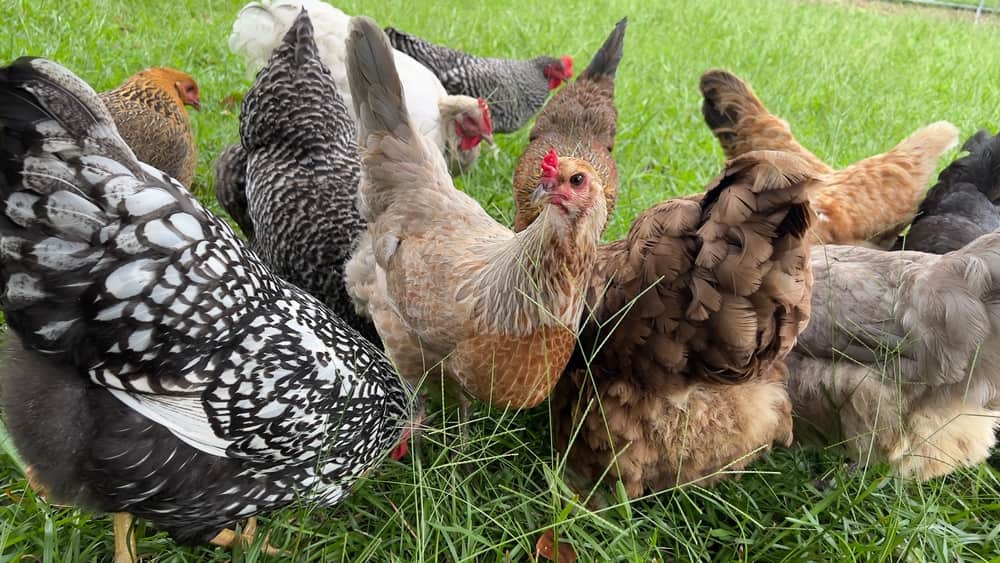
I started chicken keeping with three Rhode Island Reds and the confidence of someone who had never met a bored hen with opinions. Fast forward a dozen years, and my yard is home to a friendly chaos of Orpingtons, Wyandottes, and Ameraucanas. Mixing breeds can be delightful and it can also turn into a tiny soap opera with feathers. The good news is that most “breed mixing problems” are really space, timing, or management problems in disguise.
This guide walks you through how to pick compatible breeds, set up your coop and run so different body sizes and feather types can live together, and introduce new birds without turning your backyard into a pay-per-view event.
Start with compatibility
It is completely normal to fall for a breed because you want blue eggs, fluffy cheeks, or that “big friendly golden retriever” vibe some hens give off. But when you are building a mixed flock, temperament compatibility matters more than feather pattern.
What you are really mixing
- Energy level: Busy, high-strung foragers can stress out slower, calmer breeds.
- Assertiveness: Confident breeds may bully timid ones if resources are tight.
- Body size: Large birds can unintentionally injure smaller birds, especially at feeders and roosts.
- Feather type: Silkied, frizzled, or heavily feathered birds can become targets.
- Climate tolerance: Large single combs and tight-feathered, lighter-bodied birds are more vulnerable to cold and frostbite risk; heavy, fluffy birds can struggle in heat.
My simple mixing rule
Try to keep your flock within the same neighborhood for size and temperament. You can mix across those lines, but you need more space, more stations for food and water, and more supervision during introductions.
If you want an easy blend, aim for breeds known for being calm, steady, and people-friendly. If you want to include a spicier or more assertive breed, plan for a little extra management up front.
Bullying triggers
Chickens do not read breed profiles, but they do notice who looks “different,” who moves differently, and who is easy to push off resources. These traits do not guarantee bullying, but they raise the odds.
Size gaps
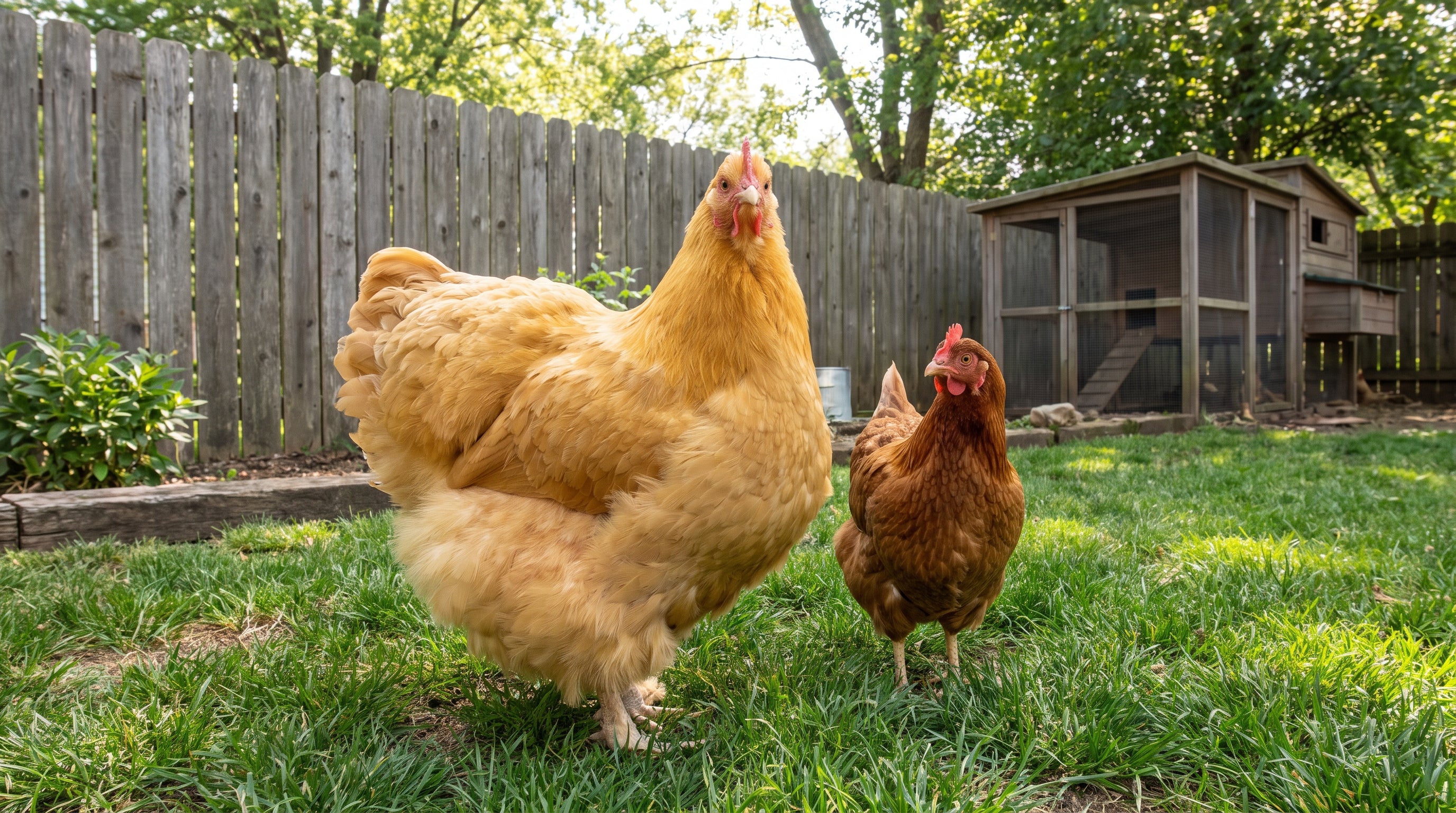
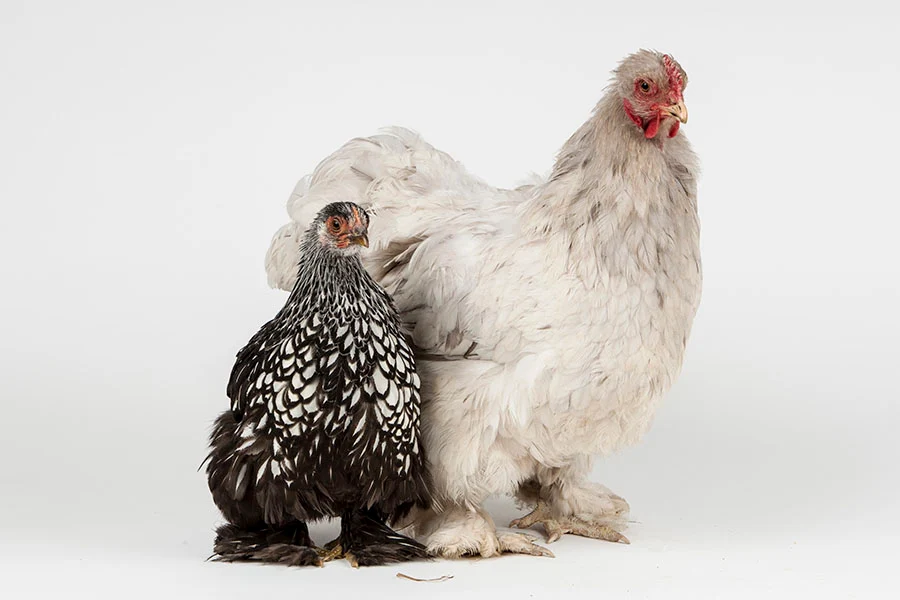
You absolutely can keep bantams with standard hens, but the margin for error is smaller. A standard hen can pin a bantam without meaning to, and bantams can get blocked from feed and roost spots more easily.
- Plan for extra feeding and watering stations.
- Make sure bantams have lower roost options and an easy escape route.
- Watch introductions closely for the first week.
Feather quirks
“Different” feathers can invite pecking, especially if the flock is bored or crowded. Crested breeds can also have limited vision, which makes them easier to startle and harder to defend themselves.
- Crests: Provide calm corners and avoid sudden grabby handling during integration.
- Silkies: Soft feathers can be pecked and pulled. They often do better with other gentle birds.
- Feathered legs: Mud, mites, and pecks can become a recurring issue if the run is wet or tight.
Roosters and mating pressure
If you keep a rooster, breed mixing gets trickier. Overmating can tear up hens’ backs and sides, and smaller hens are at higher risk. If you have a large rooster, pairing him with petite hens is not a great idea.
People often use a baseline of roughly one rooster per 8 to 12 hens, but it truly varies by breed, season, and the individual rooster. Some boys are perfect gentlemen. Others act like they have a schedule.
If mating damage shows up, you may need to:
- Address rooster-to-hen ratio issues by adding hens (if your setup can support it) or rehoming the rooster.
- Use hen saddles temporarily while you fix the underlying problem.
- Separate the rooster if one or two hens are being targeted.
If you are in town, also check local rules before you commit. Rooster ordinances and noise complaints are a whole separate kind of drama.
Set up the coop
Most flock tension comes down to bottlenecks. If one feeder or one favorite roost becomes the only “good spot,” your birds will argue about it. Mixed breeds just make those power struggles more obvious.
Give them room
More space fixes more behavior issues than any supplement ever will. These are often recommended minimums, and you will want more if your birds spend long stretches confined due to weather, predators, or your schedule.
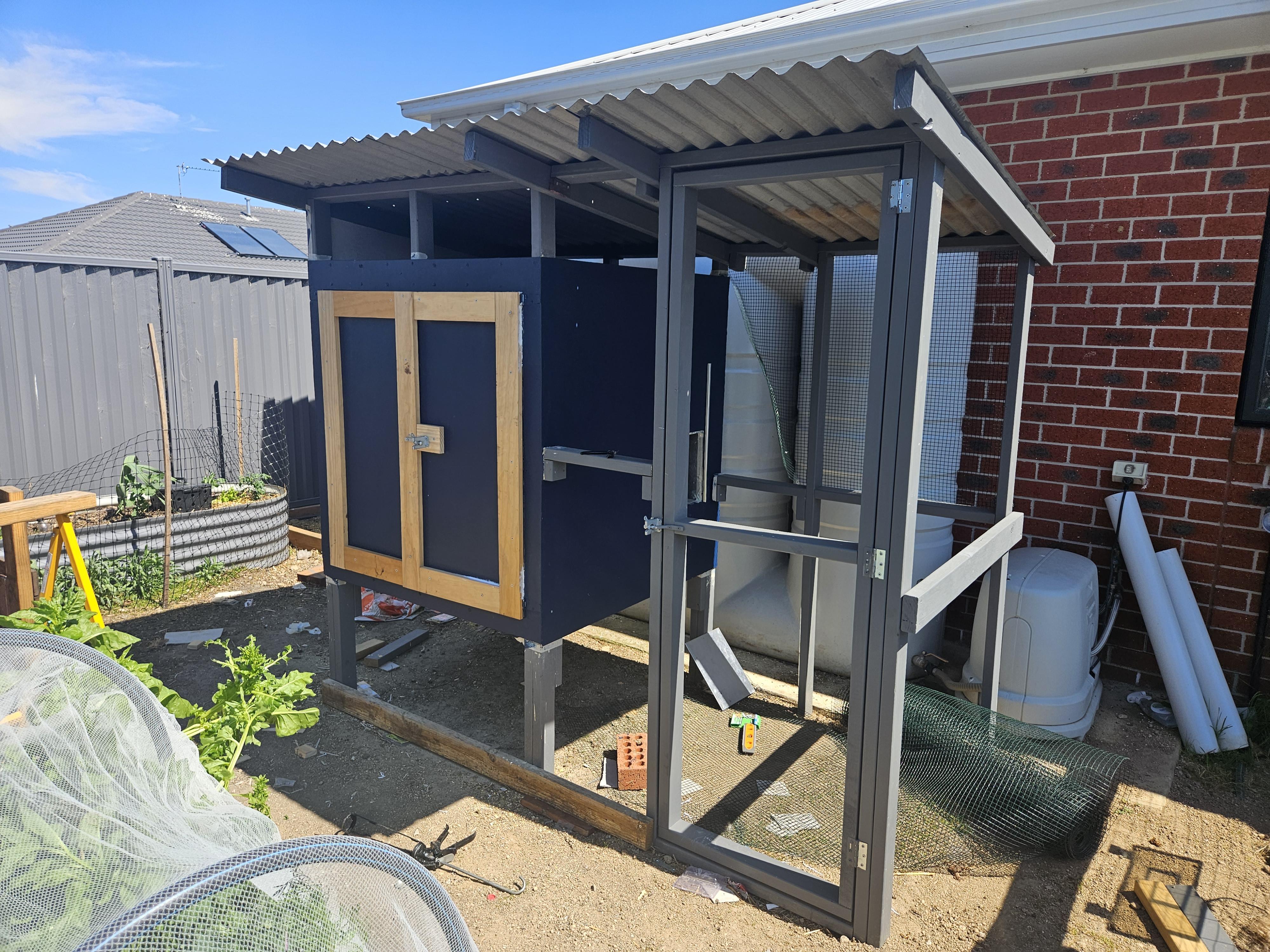
- Coop space: Often recommended minimum is about 4 square feet per standard hen inside the coop.
- Run space: Often recommended minimum is about 10 square feet per bird in the run.
More than one food and water spot
I like at least two stations for small flocks, and three if there is a big size gap or a known bossy hen. Place them far enough apart that a bully cannot guard them all.
Roosts for different sizes
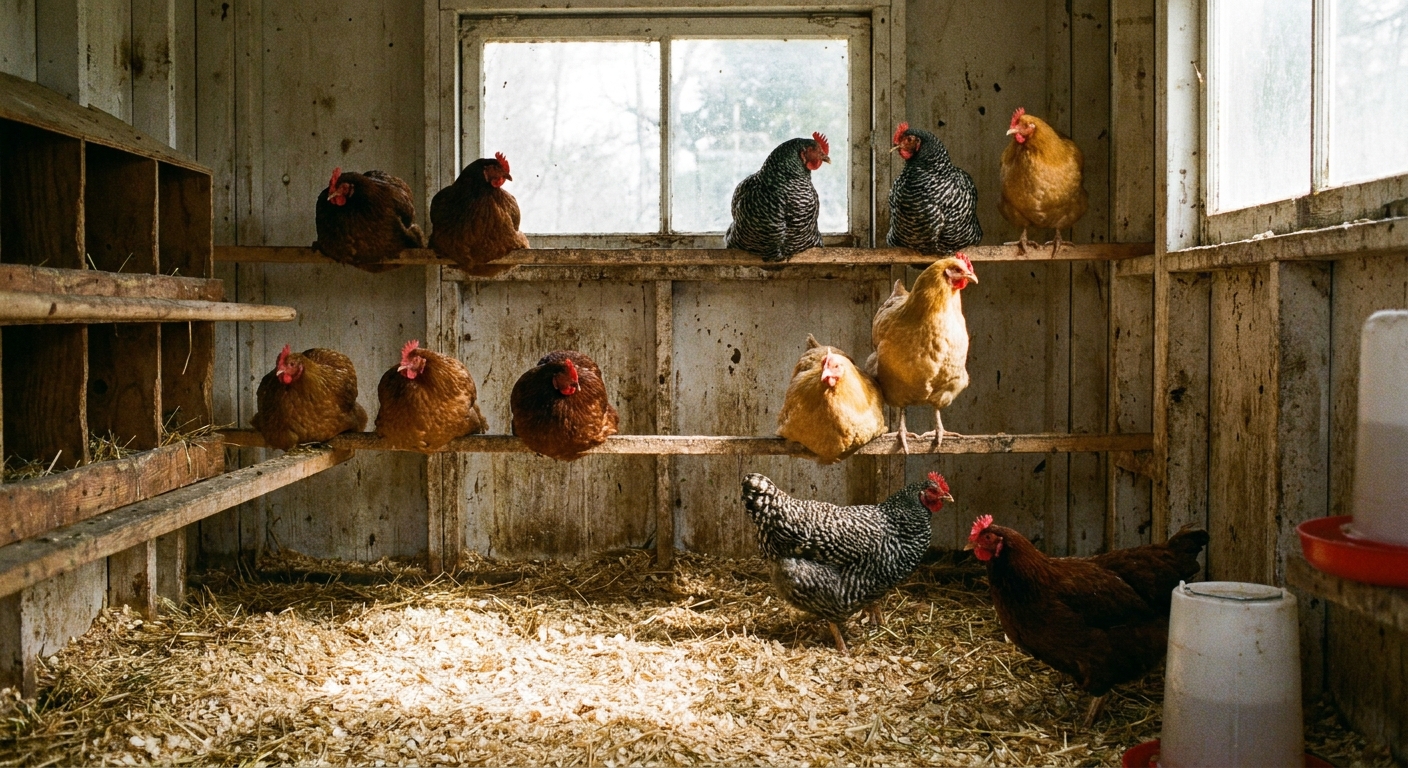
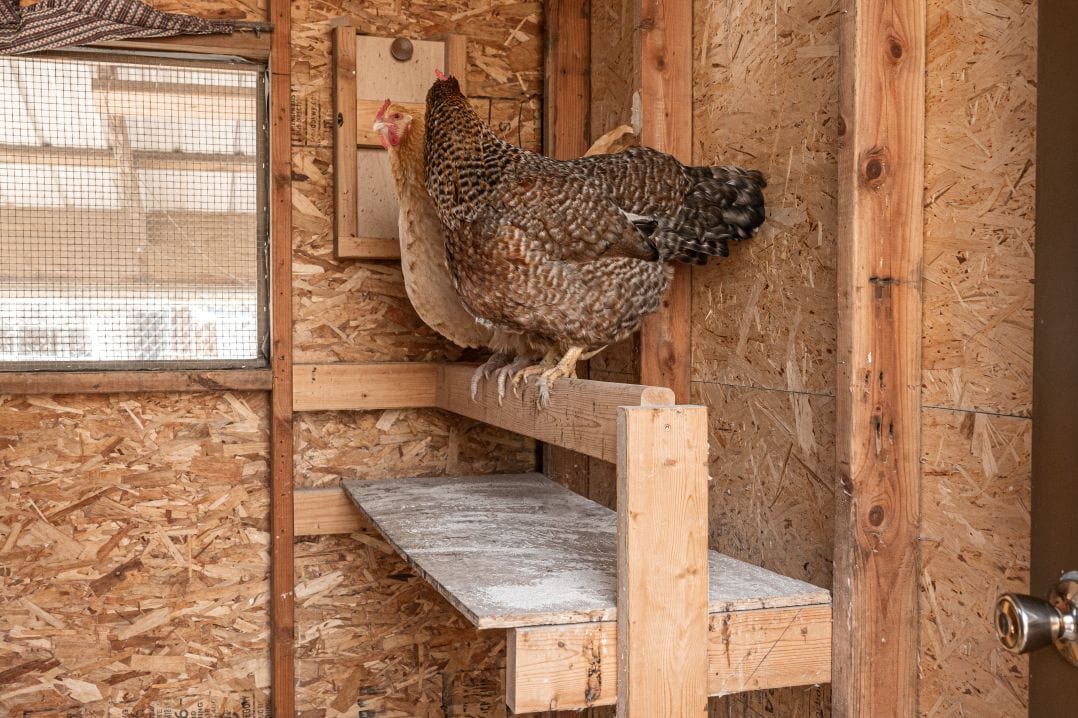
- Width: A 2x4 laid flat is comfortable for many standard breeds.
- Height options: Provide at least two roost heights so smaller or heavier birds are not forced to compete for the top bar.
- Space: Provide 8 to 12 inches of roost space per bird.
Visual barriers
Add line-of-sight breakers in the run so a picked-on bird can step out of view. Think:
- Leaned pallets
- A low table or stump cluster
- Branches or shrub cover in safe planters
- A small partition panel
When a bully cannot keep a victim in sight, the intensity often drops fast.
Nesting boxes and traffic jams
In mixed flocks, laying patterns and nesting habits can differ by breed, age, season, and individual preference. Provide enough boxes, and make them easy to access so a large hen is not blocking the entrance like a bouncer.
- Rule of thumb: 1 box per 3 to 4 hens.
- Consider two nesting areas if your coop allows it.
Pecking order basics
The pecking order is not evil. It is chicken social organization. The problem is when the order is being negotiated nonstop because the flock is crowded, under-stimulated, or constantly changing.
Normal vs. bullying
Normal: brief pecks, minor squabbles, occasional chasing that ends quickly, some feather loss during a new integration.
Bullying: repeated targeting of one bird, preventing access to food and water, drawn blood, cornering, relentless chasing, or a bird hiding all day.
Blood changes everything. A visible wound can trigger more pecking and a pile-on effect. Step in immediately: isolate the injured bird, clean and treat the wound, and reduce visibility with an anti-peck cover product or a safe wrap until the skin is no longer a bright target.
Integrate new birds
Whether you are adding a few pullets to an established flock or bringing home a totally different breed, introductions work best when you slow down. Chickens do not need a meet-cute. They need time.
Before you start: age and size
A lot of “breed problems” are actually age and size problems. Avoid putting much smaller juveniles in with full-sized adults until the youngsters are close enough in size to hold their own. Point-of-lay pullets usually integrate more safely than little chicks, but they still benefit from a gradual process.
Step 1: Quarantine
Any new bird should be quarantined for 2 to 4 weeks, with 30 days preferred when possible. This is how you protect your existing flock from mites, lice, respiratory illness, and other hitchhikers. Keep quarantine far enough away that shared airflow is minimized.
Also, be strict about the boring stuff that actually works:
- Do not share feeders, waterers, or bedding between quarantine and the main coop.
- Handle your main flock first, then new birds.
- Use separate footwear or a disinfecting footbath when moving between areas.
If you are raising chicks, it is also worth talking to your hatchery or local poultry folks about region-appropriate vaccination practices, including Marek’s vaccination where it is relevant and available.
Step 2: See but do not touch
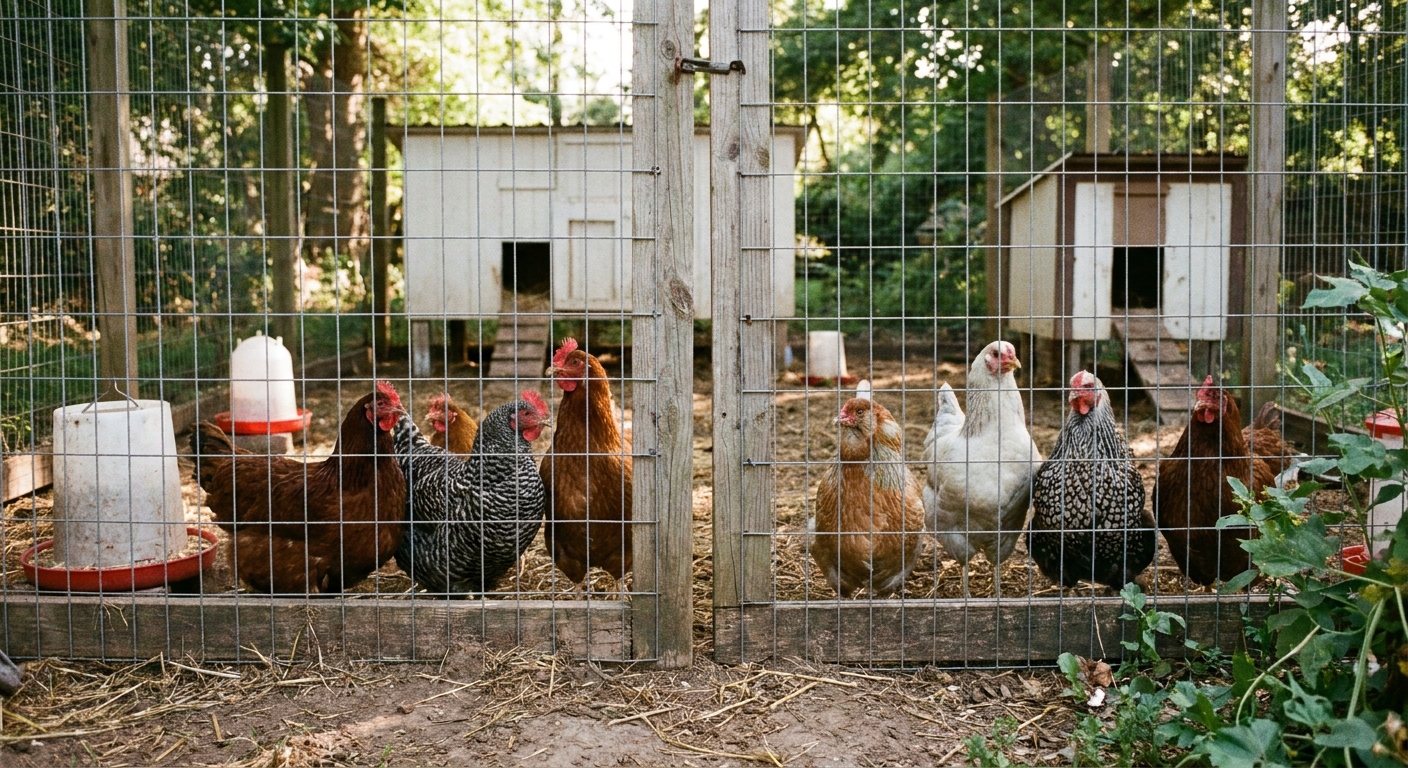
After quarantine, set up a look-but-don’t-touch zone. A wire partition in the run works well. The goal is for everyone to observe and adjust without being able to land a hit.
- Do this for 7 to 14 days.
- Feed treats on both sides of the barrier so “new birds” becomes a positive event.
Step 3: Supervised mingling
If you can, let them mingle in a space the established flock does not consider theirs. Even a different section of the yard helps. Keep it short at first, like 10 to 20 minutes, and increase time over several days.
Step 4: Move in at night
When birds are calmer and mostly ignoring each other at the barrier, you can place new birds on the roost at night. Chickens wake up together and often accept the new arrangement more easily.
One caution: some flocks will still decide to throw hands at dawn. Be ready to supervise the next morning, and be willing to revert to barrier time if the welcome is not actually welcoming.
Morning is when the committee meets.
Step 5: Expect a reset
Even one new pullet can reshuffle ranks. That is normal. Your job is to ensure the reshuffle does not become a prolonged targeting campaign.
Special cases
Bantams with large fowl
- Provide escape routes: low perches, small doorways, and places a bantam can slip through.
- Feed separately if needed: sometimes a bantam-only feeder station saves a lot of stress.
- Watch roost time: if a large hen repeatedly knocks a bantam off the roost, adjust roost spacing and heights.
Crested birds
Crested birds can be startled easily and may not see a peck coming. Reduce ambush points by providing clear pathways, and avoid stuffing them into tight corners at bedtime.
Silkies and frizzles
Silkies and frizzles can be the sweethearts of the yard, but their feathers make them vulnerable. If you see feather pulling, you need to:
- Increase run space and add enrichment.
- Add additional protein if the flock is actively molting.
- Separate the aggressor temporarily if one bird is driving the problem.
Prevent boredom
A bored flock is a naughty flock. When I see pecking ramp up, the fix is usually: more to do, more room, and fewer choke points.
Enrichment that works
- Scratch scatter: toss scratch into deep litter so they have to work for it.
- Hanging greens: cabbage, lettuce heads, or weeds from the garden hung at head height.
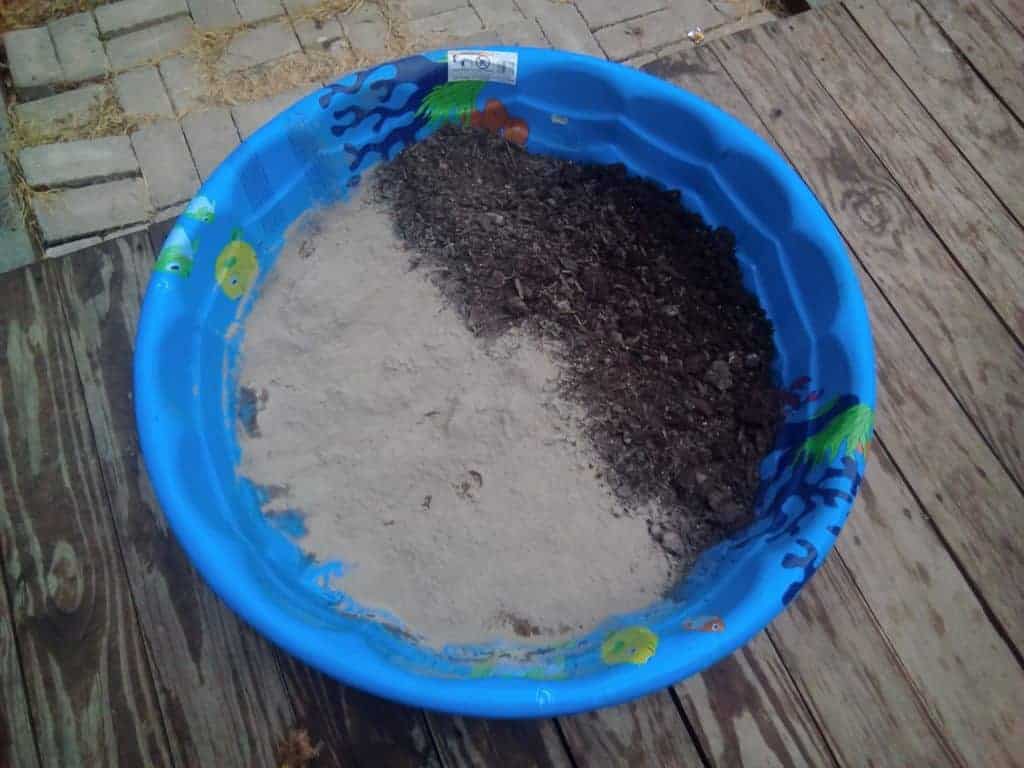
- Dust bath upgrades: a big tote with sand and dry soil, kept under cover.
- Roaming time: supervised free-ranging, even 20 minutes, can take the edge off.
Troubleshooting
If your mixed flock is not settling, run through this list before you blame the breed mix.
Check the basics
- Is there enough space in the coop and run for your climate and confinement time?
- Do you have at least two feed and water stations?
- Are there enough roost spots and nesting boxes?
- Are you seeing mites, lice, or signs of illness?
- Is there a diet issue, like low protein during molt?
Red flags
- Blood: separate immediately, clean and treat wounds, and prevent re-pecking until healed.
- One bird isolated: a hen hiding all day is not “just shy.”
- Blocked resources: if a bird is losing weight, you have a management problem now.
What to do next
- Pinless peepers: can help chronic feather pickers (use carefully and monitor).
- Temporary separation: sometimes removing the bully for a week resets social dynamics.
- Reintroduction: treat it like a new integration with barrier time.
- Last resort: if one bird is persistently aggressive, rehoming may be the kindest solution.
Breeds that blend
Every bird is an individual, but in backyard settings, some breed groups tend to be easier to mix because they are calm and less likely to escalate.
Often easier mixers
- Orpingtons
- Australorps
- Cochins
- Plymouth Rocks
- Wyandottes (often steady, sometimes a bit bossy depending on the line)
- Easter Egger and Ameraucana types (personality varies, usually manageable in mixed flocks)
Need more planning
This does not mean never. It means bring your A-game on space, timing, and introductions.
- Very assertive or high-energy lines
- Breeds with prominent crests or unusual feathering
- Bantams mixed with much larger standard birds
If you already have a dominant hen, adding another assertive breed can turn every day into “let’s renegotiate the constitution.” Sometimes the easiest path is adding birds with a similar calm vibe to your current flock.
FAQ
Can I mix different breeds in the same coop?
Yes. Most backyard keepers run mixed coops successfully. The keys are enough space, multiple food and water stations, and a slow introduction process.
Will chickens bully a different-looking breed?
They can, especially if the bird has crested feathers, silkied texture, or is much smaller. Usually the different look is not the real cause. Crowding, boredom, and resource guarding are the usual culprits.
How long does it take a mixed flock to settle?
Minor squabbles can settle in a week or two. Full social stability can take a month. If you are seeing relentless targeting after a couple of weeks, you likely need to adjust space, resources, timing, or the integration method.
Is it easier to add multiple birds at once?
Often, yes. Adding two or three new birds gives them companionship and reduces the single target effect. Just quarantine them first.
The mixed flock goal
A mixed flock is not a flock with zero pecking. It is a flock where every bird can eat, drink, roost, and relax without fear. If you build your setup to reduce bottlenecks, match ages and sizes thoughtfully, and introduce newcomers slowly, you can absolutely keep different breeds together and enjoy all the fun parts of chicken keeping, like colorful eggs, quirky personalities, and the daily comedy show that comes free with feed.